Kilchoman tasting with Anthony Wills

Five expressions from Islay’s newest distillery

It doesn’t matter quite how busy my week gets, I always look forward to the whisky tastings held at the Oak Barrel in Sydney. The other week was no exception, so as soon as 6.30pm hit, into the tasting cave we ventured for a rather special Kilchoman masterclass.

Kilchoman brochure

The Oak Barrel’s whisky expert, Dave, normally runs the tastings. But occasionally he takes a seat with the rest of us and invites someone along to present instead. It’s fair to say that he keeps pretty good company, because the other week we were privileged to have someone pretty special presenting for us – the founder and owner of Kilchoman Distillery, Mr Anthony Wills.

Kilchoman: The story 

You may know of Kilchoman as the first new distillery to be built on Islay in 125 years, but here are a few things you may not be aware of.

Kilchoman (pronounced kil-ho-man) is the brainchild of former independent whisky bottler, Mr Anthony Wills. After finding that it was becoming increasingly difficult for him to get his hands on quality single cask whiskies to bottle, Anthony came to the conclusion that there was only going to be one way for him to secure his own supply of whisky well into the future. How? To build his very own distillery of course!

I’m sure there are a lot of people out there who’ve had similar dreams, but the number who’ve actually turned that dream into reality? My guess is that you can probably count them on one hand.
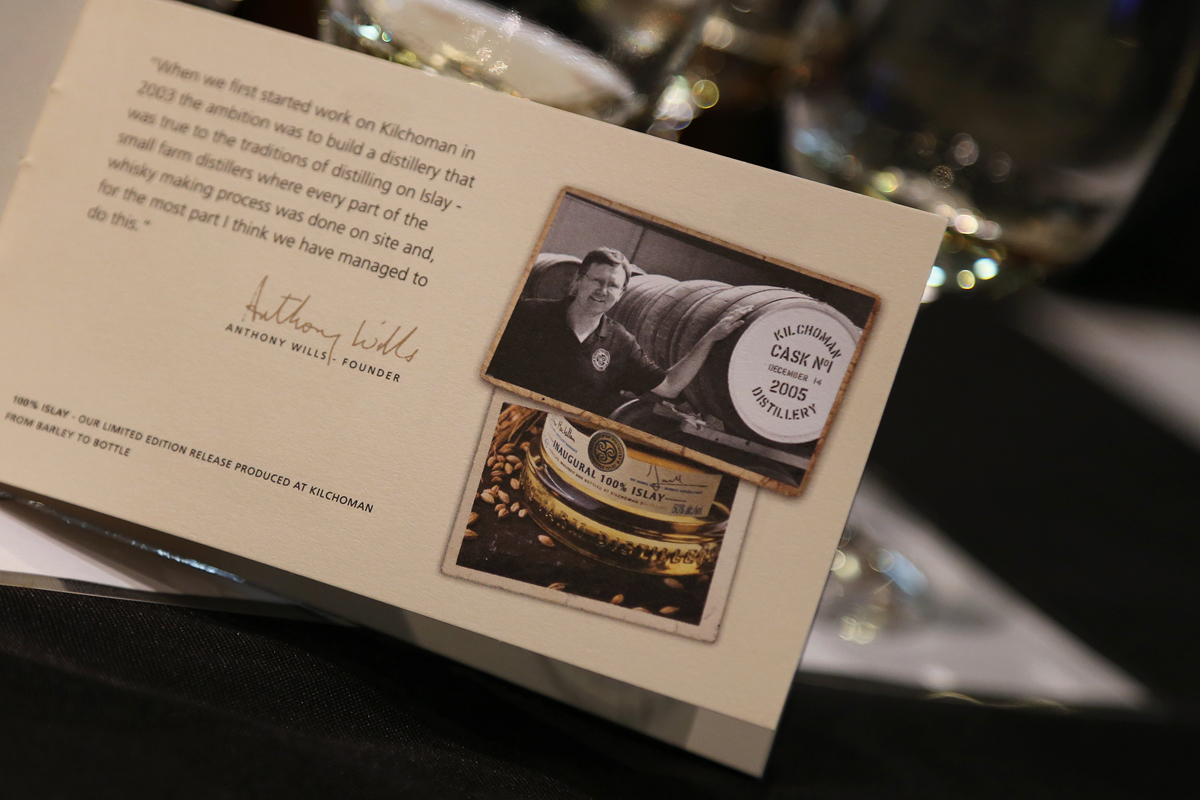
Kilchoman - Brochure Anthony

With the financial and moral support of his family, in 2005 Anthony & Co. sunk a million pounds into refurbishing and rebuilding the distillery’s buildings and purchasing the required equipment.

With no money left for production (and no actual distilling experience), Anthony managed to convince John Maclellan to leave his secure, long-term job as Master Distiller at Bunnahabhain and come and work for him. He was joined by Dr Jim Swan, whom Anthony brought on-board to help define and craft a specific spirit for Kilchoman, one Anthony describes as ‘clean, floral, sweet and peaty’. And so by the end of 2005, the stills were run for the first time and Kilchoman’s very first American Oak cask was filled on 14 December 2005.

Kilchoman managed to make a trading profit after just five years in business and last year they produced over 130,000 litres of spirit – coming a very long way from their first year of production where they produced 50,000 litres of spirit and filled just 12 casks a week!

Edit: I’ve been reliably informed that John Maclellan didn’t actually join Kilchoman until 2010, well after the stills started running. Thanks to Andrew for clearing that up for me!

Kilchoman: The whiskies

After Anthony delivered this interesting and informative intro, it was time to get down to business and taste some whisky.

Kilchoman tasting glasses

Before we get into each one though, here are some Kilchoman fast facts:

  • The barley for all of their expression (except 100% Islay) comes from Port Ellen Maltings (who also supply to the likes of Ardbeg and Lagavulin).
  • The barley from Port Ellen Maltings is malted to standard Ardbeg specs, which is around 50 PPM
  • Kilchoman fill their barrels at 63.5% ABV
  • All of Kilchoman’s first fill bourbon barrels are sourced from Buffalo Trace in Kentucky
  • Their sherry casks are all from Miguel Martin in Jerez, Spain (the same supplier Glenfarclas use for all of their casks)
  • All Kilchoman bottlings (which are bottled on-site mind you) are Non-Chill Filtered and natural colour.

Summer 2010 Release 

You may have guessed it from the name, but this expression was released in the Summer of 2010 (Winter, if you were in Australia at the time.. it was probably the same temperature as a Scottish summer!) This release was matured in first fill bourbon barrels and after three years was bottled at a respectable 46% ABV.

Kilchoman - Summer 2010 

Quite fresh and light on the nose with some floral notes, light sweetness, hints of citrus and maybe some pineapple. Quite crisp and not overly peaty. This translated to a medium oily palate, with some sweet creamy floral vanilla and a big wave of fresh peat that hung around for a good while. A light salty tang on the finish. Delicate, but not my favourite. 

Interestingly, this expression was bottled in their original generic style bottle, before they had their own bespoke bottle mould produced. Ever wondered what a bottle mould costs? Kilchoman paid a cool 20,000 pounds! 

100% Islay 2nd edition 

The second expression personified what Kilchoman was all about when Anthony originally envisaged it – making a whisky that was 100% Islay. And so from the barley grown at Rockside Farm next door to the distillery, to the in-house malting using local peat, to the distilling, maturation and eventual bottling – it’s all done on Islay.

Kilchoman - 100 Islay

Does that actually give it a different profile though? You bet it did. A vatting of three and four year old whiskies, bottled at 50% ABV, 100% Islay had a noticeably different nose.

I got some malty grassy notes, vanilla, crème caramel and bananas nicely balanced out by the peat. This carried through to a lovely creamy and oily palate, vanilla and floral with peat sitting at the back of the palate. It finished with waves of warmth and hints of spice.

In case you’re wondering, the Rockside Farm barley is peated on-site using local peat for around 20 hours. This results in a level of around 10-20 PPM (parts per million). The barley is malted in two tonne batches and the whole malting process takes around 12-14 days. 

Machir Bay 2012 edition 

The first of Kilchoman’s core expressions, Machir Bay was released in 2012 as a vatting of three and four year old whiskies, with ‘a splash of five year old’ as Anthony put it. All came from first fill American Oak ex-bourbon barrels, however the vatting was finished in 20 year old ex-Oloroso casks for a couple of months prior to bottling.
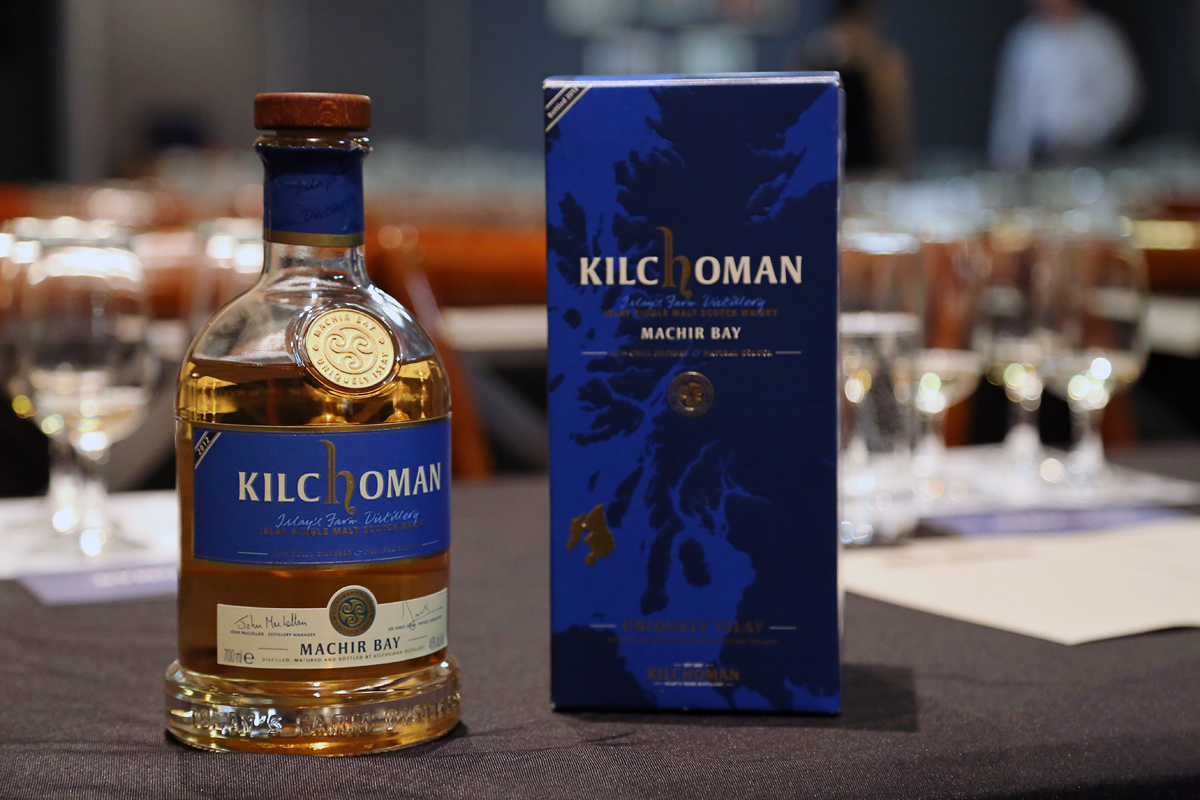
Kilchoman - Machir Bay 

This has a noticeably heavier nose to the two before it – I got some hints of kiwi, a pleasant sourness, some fruitiness, light peat and hints of spice (presumably from the sherry finishing). Slightly thinner on the palate, but still creamy and sweet followed by a pronounced wave of vibrant peat.

Still a remarkably fresh and bright whisky, with none of the tarry medicinal notes often associated with bolder peated whiskies. 

Loch Gorm 1st release 

First released in 2013, Loch Gorm is a five year old Kilchoman solely matured in ex-European Oak sherry casks. In case that wasn’t enough, it’s then finished for a few months in fresh, first fill Oloroso casks, imparting the lovely dark liquid amber colour seen here.
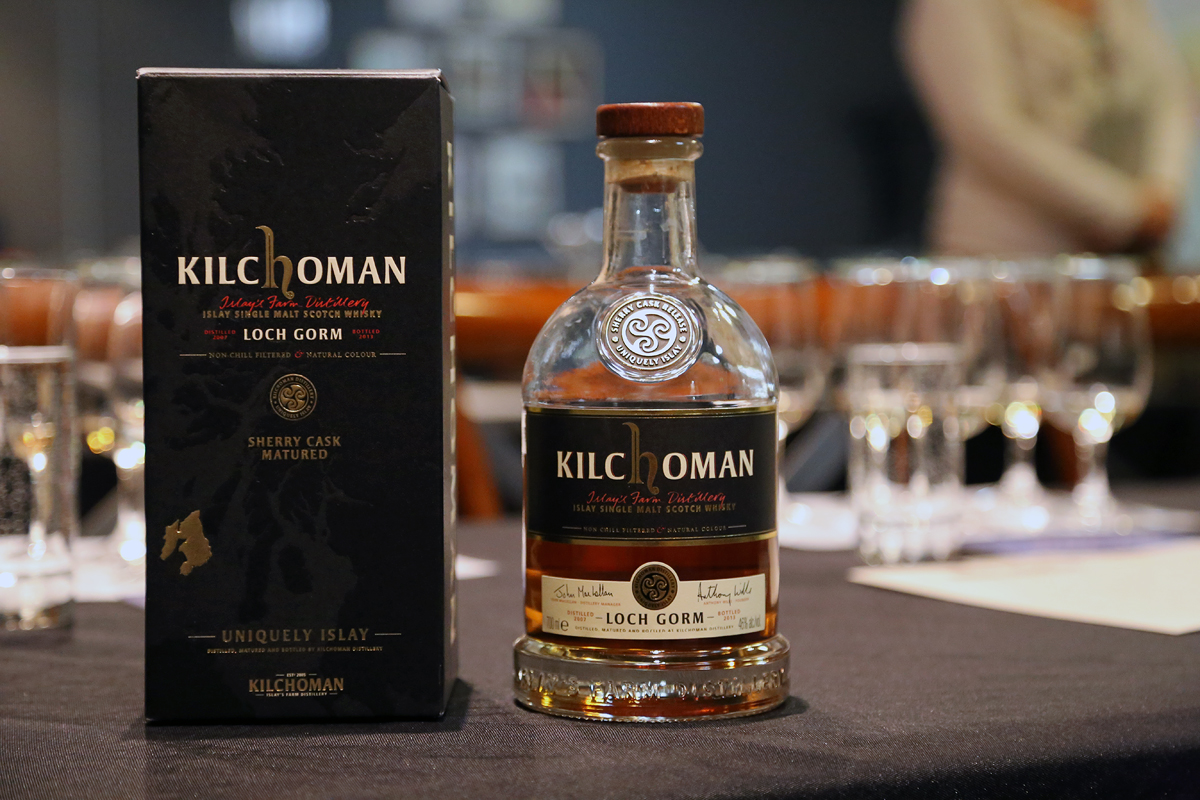
Kilchoman - Loch Gorm

Compared to the three before it, Loch Gorm has a much weightier, heavy, meatier nose. You can see some more of my notes here but I want to mention something that I couldn’t articulate last time I tried Loch Gorm.

On our previous encounter, Loch Gorm confused me slightly. On initial nosing, it wasn’t the peat monster I was expecting, nor was it a fruity sherry bomb. The more I concentrated, the more these flavour profiles played hide and seek with one another.

Whilst I couldn’t put my finger on it at the time, I now feel as though this was simply a hallmark of a rather well-balanced nose. Indeed, Anthony was quite proud of Loch Gorm and mentioned that he felt much the same.

Cask strength small batch release

As far as I’m aware, this is the first time a single cask Kilchoman has been on taste in Australia. Another five year old, but this time matured in first fill bourbon barrels, then finished for around six weeks in Oloroso sherry casks. As for strength? A big and gutsy 58.2%…

Kilchoman - Small Batch

…but you wouldn’t have picked it from the nose! Certainly noticeable as a higher ABV whisky, but I wouldn’t have picked it being that high at all. Amazingly fresh, creamy nose with big waves of milk chocolate, mars bars and coffee beans, magically mixed with some grassy notes, pine trees, fresh peat and vanilla.

Much of this translated straight to the palate – lovely round, creamy flavours. More vanilla, milk chocolate, hints of salted caramel and a nice helping of peat looming in the background. Long, warming, creamy finish.

You should have seen the flurry of people filling in order forms for this one. It was seriously good!

Some final thoughts 

In many ways, the story of Kilchoman reminds me of some of Australia’s very own young distilleries. And like some of Australia’s young distilleries, Kilchoman’s output really is testament to the fact that young whisky can be bloody good whisky.

Anthony took the time to explain that he and Jim Swan set out to produce a spirit that would mature reasonably quickly and taste great when bottled young. With that in mind, I think he and his team have really hit the mark with their latest round of releases.

As for the evening – It’s always great to hear from brand ambassadors, especially those who are knowledgable and enthusiastic. But there’s something different about listening to someone who’s been there from day one, someone who had an idea and saw it become reality and someone who knows the ins and outs of every aspect of their distillery and is happy to share every little detail.

Anthony Wills

On that note, I’d like to say a sincere thanks to Mr Anthony Wills for flying half way across the world to share the story of Kilchoman with us. A special thank you is also in order for Dave and The Oak Barrel for hosting another fantastic tasting and to Island2Island for bringing Kilchoman and Anthony to our shores.
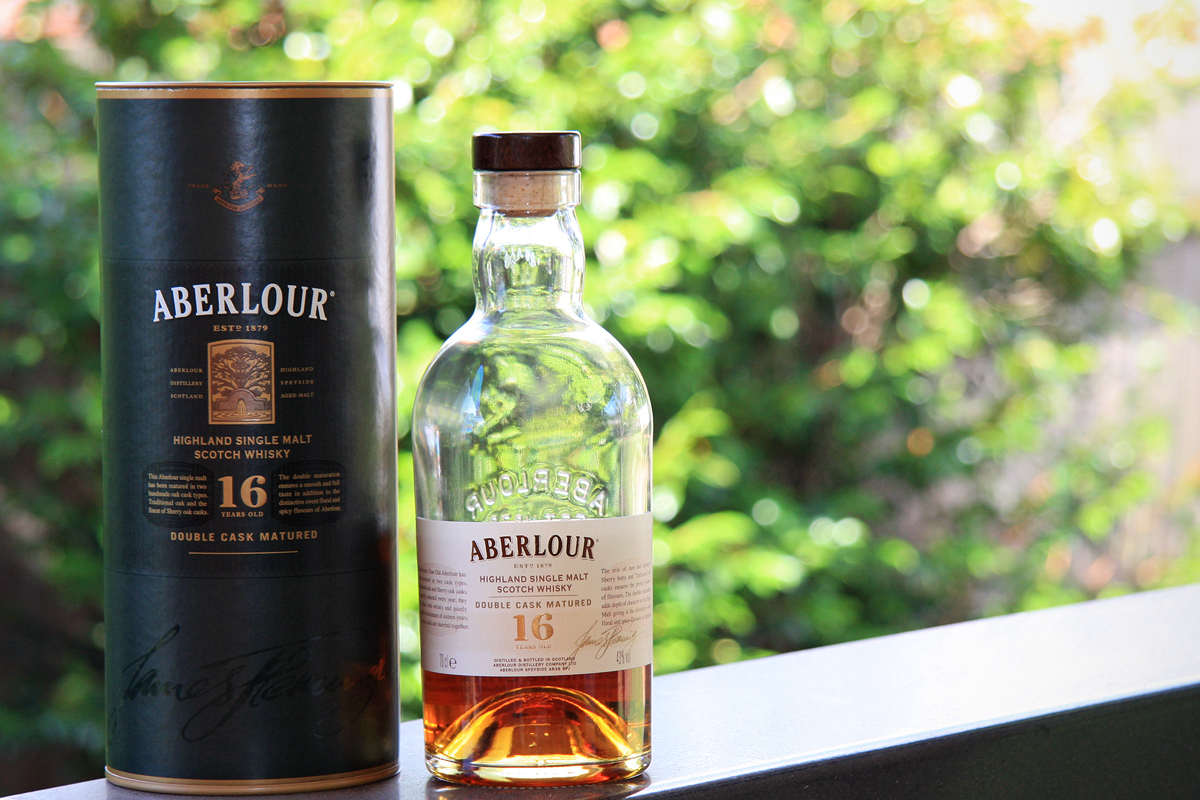
Aberlour 16 year old double cask

16 years old, 43% ABV, Oloroso and American Oak casks, Speyside, Scotland

The Aberlour distillery is nestled away in the Speyside region of Scotland in the town of Aberlour – a couple of minutes down the road from Craigellachie.

Aberlour 16

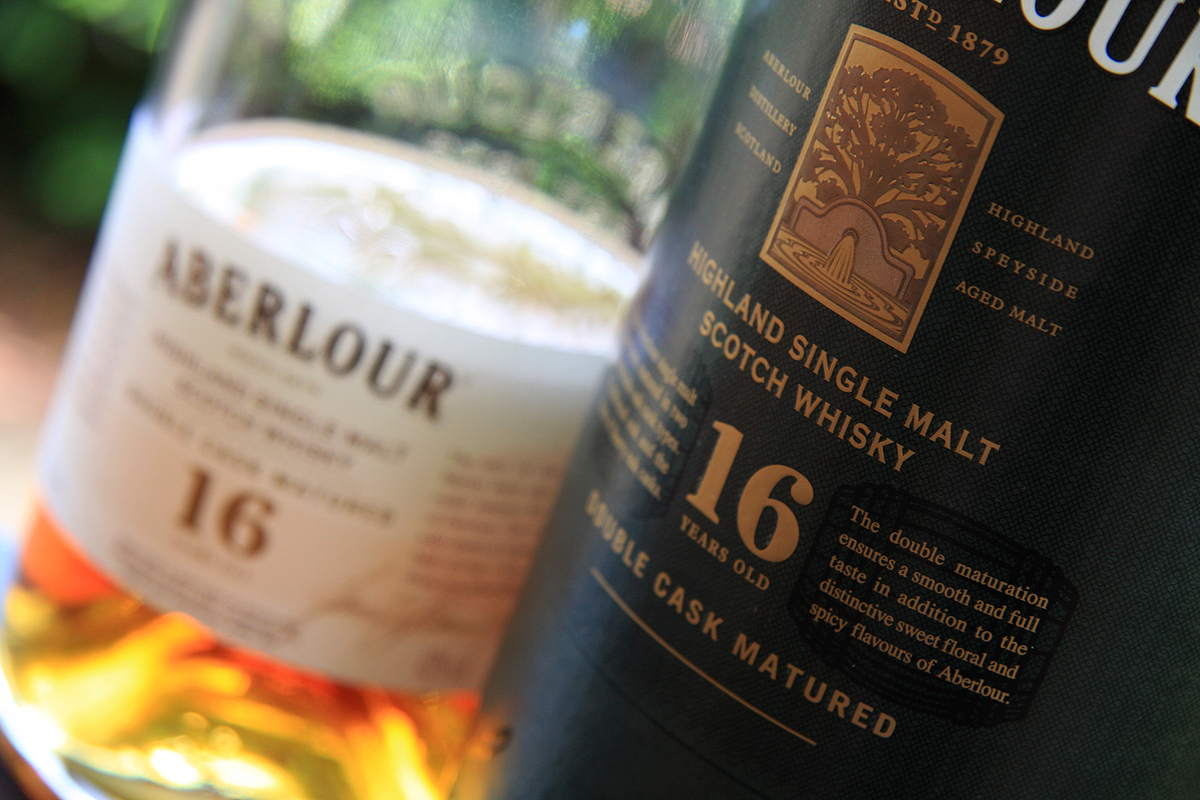
Interestingly though, on the package of the 16 year old double cask, Aberlour refer to themselves as both a Highland and Speyside distillery.

Aberlour 16 tube

The bright copper-coloured 16 year old double cask pictured here is a marriage of two different whiskies.

Aberlour take a whisky that’s been maturing for at least 16 years in first-fill Oloroso sherry casks and a whisky that’s been maturing for at least 16 years in first-fill American Oak. The two are then married together for a period of around three months in a marrying tun before being bottled as the 16 year old double cask.

Aberlour 16 seal

Just as you’re about to open the bottle for the first time, you’re met with this little paper seal scribed with a simple description of what you’re about to taste. I think it’s a nice little touch. (In case you’re wondering, the liquid inside does indeed live up to the description – read on)

Did you know…

The town of Aberlour is also the home of Walker’s Shortbread. I don’t know about your part of the world, but at home in Sydney, there always seemed to be a tin or box of Walker’s Shortbread in our house around Christmas time. Might have to pair one with a dram of Aberlour 16 to see how it goes!

Nose

Initially quite fresh and floral – notes of soft vanilla, light spice, green apples, citrus and gentle sweetness. The nose sweetens after some glass/air time with some malty honey notes showing and something a bit zesty and bitter – orange marmalade comes to mind. A pretty well balanced nose in my opinion.

Palate

A nice medium oily mouth feel on entry – it has a nice weight to it for a 43% whisky. Gentle spice and sweetness come out first, followed by some of those citrus/bitter marmalade flavours. The sweetness and vanilla aren’t as strong as I would have expected from the nose, but they’re still there.  Overall, quite light and soft on the palate.

Finish

The 16 year old finishes with medium warmth and light malty sweetness contrasted with a fair bit of oaky bitter spice.

Comments

With little debate, the cask strength A’bunadh is the most well-known and talked about whisky in Aberlour’s current line up. But I think this is a really underrated gem and one that’s definitely worth exploring.

If A’bunadh is the heavyweight bigger brother packed with boisterous pointed flavours, then the 16 year old double cask is its nimbler sibling with rounder, softer, more harmonious flavours. A well-made high quality whisky at a pretty good price point.

If you’re a fan of A’bunadh and have been wondering about the other offerings in the Aberlour stable – maybe it’s time you gave the 16 year old double cask a go.

As a random side note, this bottle has to have the best sealing cork I’ve come across!

Glenmorangie Quinta Ruban

12 years old, 46% ABV, American Oak and Ruby port pipes, Northern Highlands, Scotland

Around 2008, Glenmorangie released what we now know as the current range of  ‘extra-matured’ whiskies. The range of three includes Lassanta (finished in ex- oloroso sherry casks), Nectar d’Or (finished in sweet French sauternes wines casks) and this one, Quinta Ruban which has been finished in Portuguese ruby port pipes.

Quinta Ruban

To arrive at these ‘extra-matured’ whiskies, Glenmorangie start with their standard 10 year old, which has been resting away for ten years in American white oak (first fill and refill casks).

They re-rack this whisky into the wine casks mentioned above for a further two years of maturation, bottling each expression at 12 years of age. The other big difference between the extra-matured range and the standard 10 year old is that they’re each bottled at 46% ABV (instead of 40%). They’re also non-chill filtered – preserving loads more of those delicious oily flavours.

Quinta Ruban label

Did you know…

Glenmorangie have long been considered one of the pioneers of cask finished or ‘extra-matured’ whisky. Well before the current extra-matured range was released, Glenmorangie were re-racking their whisky into various wine casks, as far back as the late 1980’s. Some of these casks were pretty exotic too! Truffle Oak anyone?

Often referred to as one of their best and one that collectors regularly pay big dollars for is their 1975 Tain L’Hermitage. Distilled in 1975, it was moved into Côtes du Rhône wine casks in 1999, then bottled in 2003 at 28 years old (there was also an original version bottled in 1995, but it’s as rare as hen’s teeth).

Nose

The first thing I got was more spirit than usual, not surprising given it’s bottled at 46%. Sweet vanilla bourbon notes from the American white oak are there, but they’re dominated by a rich sweetness. Not super fruity, but more sugared plums, cherry and wine notes. I got a hint of spice and also some curious fresh/cooling notes – butter menthol of some sort?

Palate

On entry, this has a reasonably oily mouth feel and is quite sweet and creamy. I also got a fair amount of spice on the side of my tongue, but it dissipates rather quickly, leaving behind a second wave of creamy sweet plummy notes, some dark cherries and a slightly tingling raspberry jam flavour. The port has had a big influence on this one.

Finish

The spice on the palate fades as fast as it arrives, leaving behind a really curious tingling sensation, almost fizzy or carbonated in a sense. Can’t say I’ve experienced that sensation in a whisky before! Some light oaky bitterness, nice medium length warmth and some traces of that cooling butter menthol from the nose start to emerge.

Comments

Even though the port finish is pretty heavy on the nose and palate, this is still unmistakably Glenmorangie. I love the fact it’s non-chill filtered and that they’ve bottled it at 46% ABV (makes me wish the standard 10 year old was the same).

I personally found the fizzy tingling sensation a little odd and the port dominated a bit too much for my liking, taking away from the more delicate Glenmorangie notes that I really enjoy. In saying that, I can definitely see this being enjoyed by many as a great digestif style whisky.

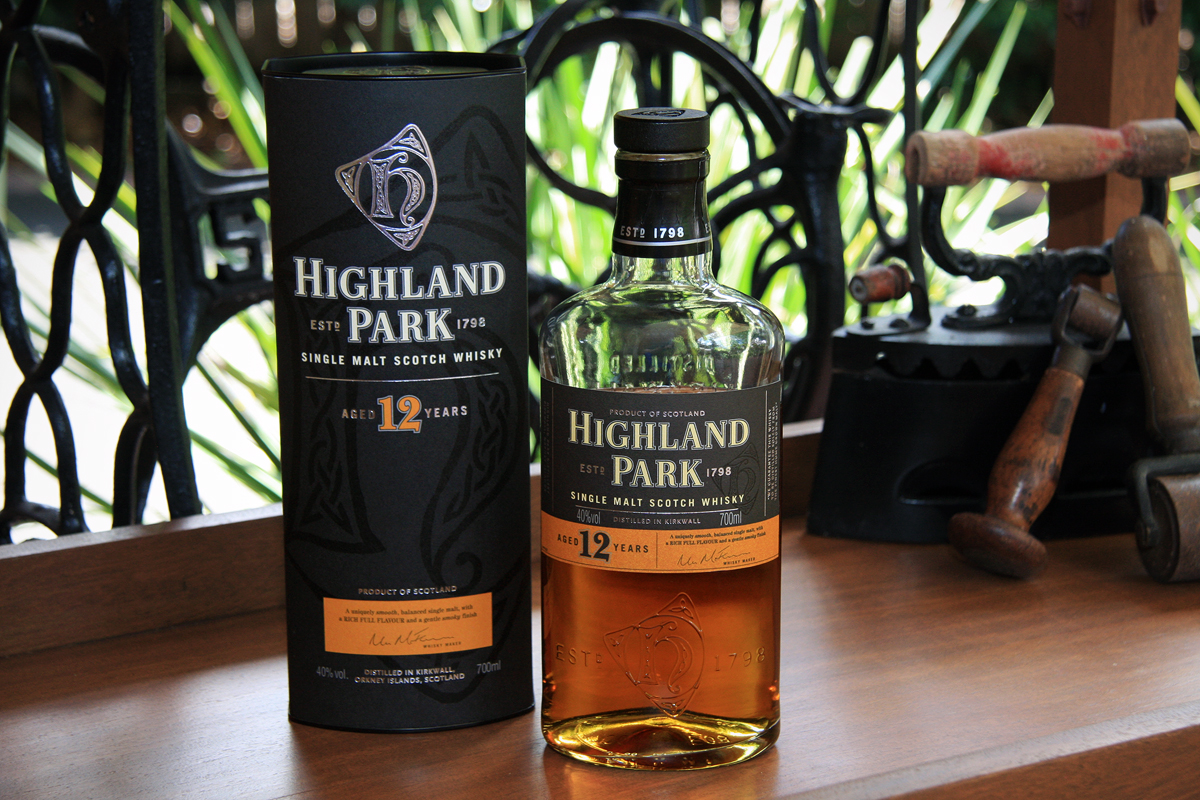
Highland Park 12 year old

12 years old, 40% ABV, European Oak ex-sherry casks, Orkney Islands, Scotland

In the far north of Scotland – off the tip of the mainland – you’ll find the Orkney Islands, home of the Highland Park distillery. Among their core range you’ll find the expression reviewed here, the Highland Park 12 year old.

Highland Park 12

The 12 year old is matured in European Oak ex-sherry casks and is bottled at its natural colour. The flask shape bottle you see in these pictures (and used for the rest of the Highland Park range) was first introduced around 2006.

Highland Park 12 tube

The canister has moved into the new age as well, with interesting use of typography on the back. It even has QR code printed down the bottom, which takes you to the Highland Park’s member’s club, The Inner Circle.

Did you know…

According to Highland Park, they first began distilling whisky in 1798 – that’s just 10 years after Australian was colonised by European settlers! However, like many distilleries at the time, it wasn’t all above board and they weren’t actually granted a licence to distill until some 28 years later in 1826.

Nose

From a freshly poured dram I got an immediate hit of sugary confectionary-like sweetness, closely followed by fragrant smoke. This has quite a rich, creamy sugary nose. Left to sit in the glass for a while, the sweetness seems to fade, highlighting more of the flinty, fragrant pipe-smoke notes.

Palate

I found this to have a pretty oily, creamy mouth coating texture – quite surprising from something bottled at 40% ABV! The sweetness from the nose carries through, followed by some sweet smoky tobacco notes. A chewy palate shows some oaky spice on the sides of your tongue towards the end.

Finish

Sweet and creamy with a fairly short finish (warmth wise). The smoke lingers on the back of your palate and becomes a bit earthier and peatier as the minutes roll on.

Comments

If you search for list of the top ten single malts anyone new to whisky should try, there’s a good chance you’ll see Highland Park 12 mentioned – and for good reason. The quality sherry casks really seem to impart a honeyed sweetness that works well with the gentle peat smoke, creating a nicely balanced dram (albeit a tad on the sweet side for my liking).

If you’re not overly keen on the boisterous peat of a big Islay whisky (like an Ardbeg or Laphroaig) but you’re still intrigued by smokey whisky – I highly recommend giving the Highland Park 12 a try.

The Glenlivet 12 year old

12 years old, 40% ABV, American and European Oak, Speyside, Scotland

When I was putting together my Christmas whisky tasting kits, I wanted to start everyone off with a really approachable, classic single malt – to provide them with something of a base line I suppose.

Realising I didn’t seem to have anything that met the criteria that well, I tracked down this little 200ml (20cl) bottle of The Glenlivet 12 year old. There happened to be a couple drams worth left after I’d put the kits together, so I thought I’d review it!

Glenlivet 12

Despite being a mini version, the bottle and label design holds true to the 700ml version of the 12 year old – just in miniature form.

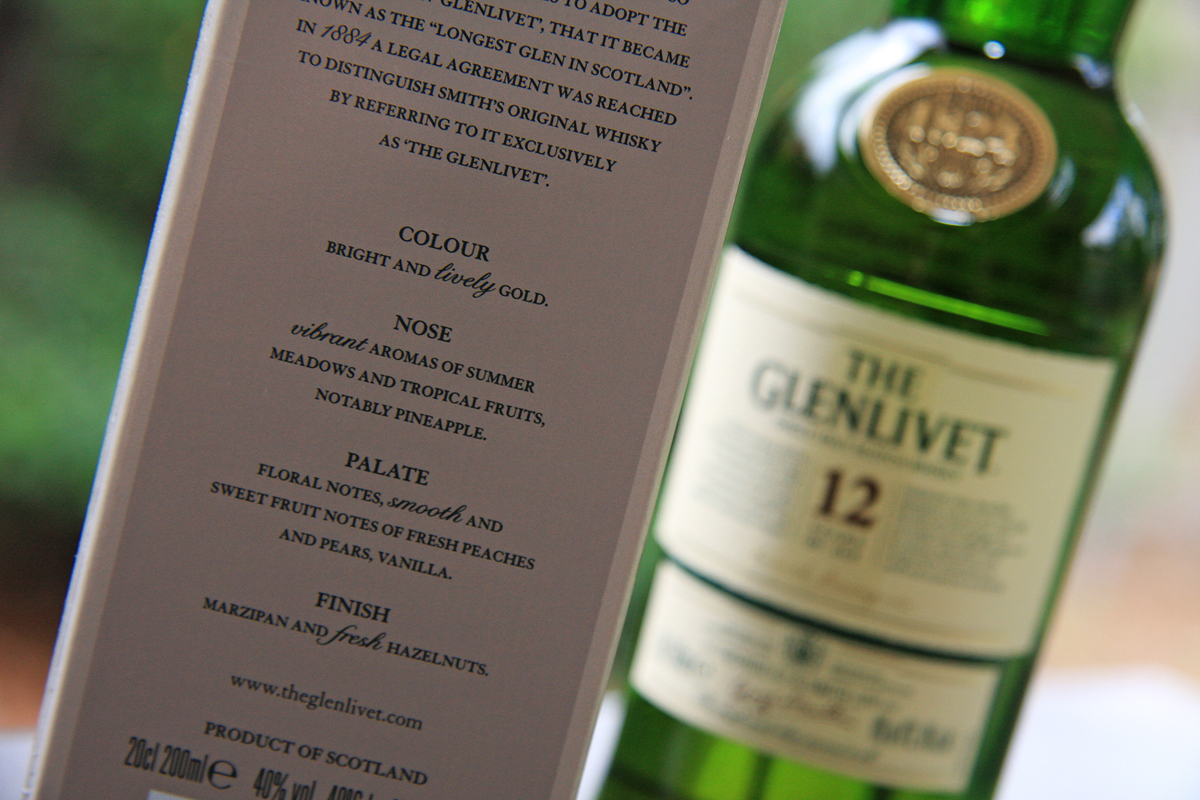
Glenlivet 12 notes

Just like the tasting notes found on the back of the 18 year old I reviewed a little earlier, there are some notes on the back of this mini box for the 12 year old. Again, I’m not sure I completely agree with all of them, but they are a nice touch and fun to compare to.

Did you  know…

In my review of the 18 year old, I mentioned that I was looking into the origins of The Glenlivet’s thistle motif. I reached out to some people that work at the distillery’s visitors centre and asked them about the origin of the thistle logo and it turns out that they’re not entirely sure why it’s there either! All I can tell you is that it appeared in the 1970’s and has been there ever since.

It does seem to be a common theme among many business names and logos in Moray (where the distillery is located), so perhaps there’s some connection there?

Nose

I got a big hit of green apples – but in an apple cider kind of way. Quite drying, with some citrus and a light sweetness.  The more I nosed this, the more I kept thinking that it reminded me of a sauvignon blanc – it’s a very delicate nose. When left to sit in the glass, the nose does sweeten up a bit and those crisp dry cider notes fall away a bit.

Palate

Quite thin feeling in the mouth, with sweet and citrusy notes immediately apparent. These were followed by some hints of vanilla and a bit of spicy bitterness – almost like citrus fruit pith.

Finish

Quite short, but also quite a pleasant finish. As the finish fades, I got some stronger vanilla notes (which were nice) and some oaky bitter spice at the front of the tongue, right towards the end.

Comments

This expression is matured in a mixture of cask types, including American and European Oak. It’s fairly one dimensional and not overly complex in flavour, but like all Glenlivet’s I’ve tasted, it’s a good quality, reliable whisky. A really pleasant, light, pre-dinner dram.