Suntory whisky launch

Six new expressions for Australia

Until now, Suntory products have been fairly thin on the ground in Australia. Sure you’ve been able to track down the odd bottle of Yamazaki 12 year old, or maybe even a Hibiki (if you know where to look), but as far as official imports go, they’ve been fairly non-existent.

With the recent rise in popularity of whisky – and Japanese whisky specifically – Suntory Australia have started to officially import six expressions, which can now be found in most major liquor stores right throughout the country. For details on the range and pricing, see this recent post.

With that decision came a product launch and on a recent Monday night they hosted a rather decadent soiree in Sydney, which unfolded a bit like this.

Suntory whisky launch, Sydney, Australia

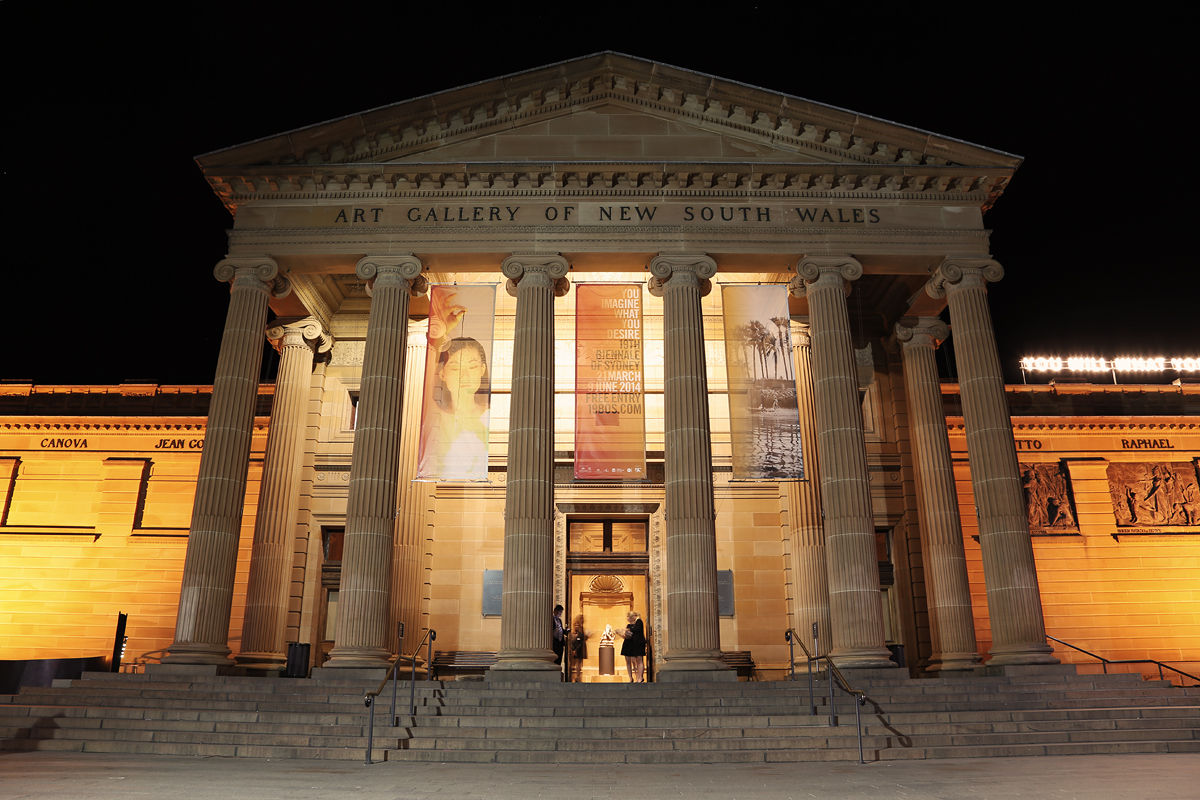
As a general rule, I don’t like Mondays. However, when they involve whisky, and in particular, a rather lavish evening of whisky, excellent food and great company, they all of a sudden become a whole lot better. Such was a recent Monday when Suntory Australia officially launched six of their bottlings in to the Australian market, in Sydney, at the Art Gallery of New South Wales.

Gallery

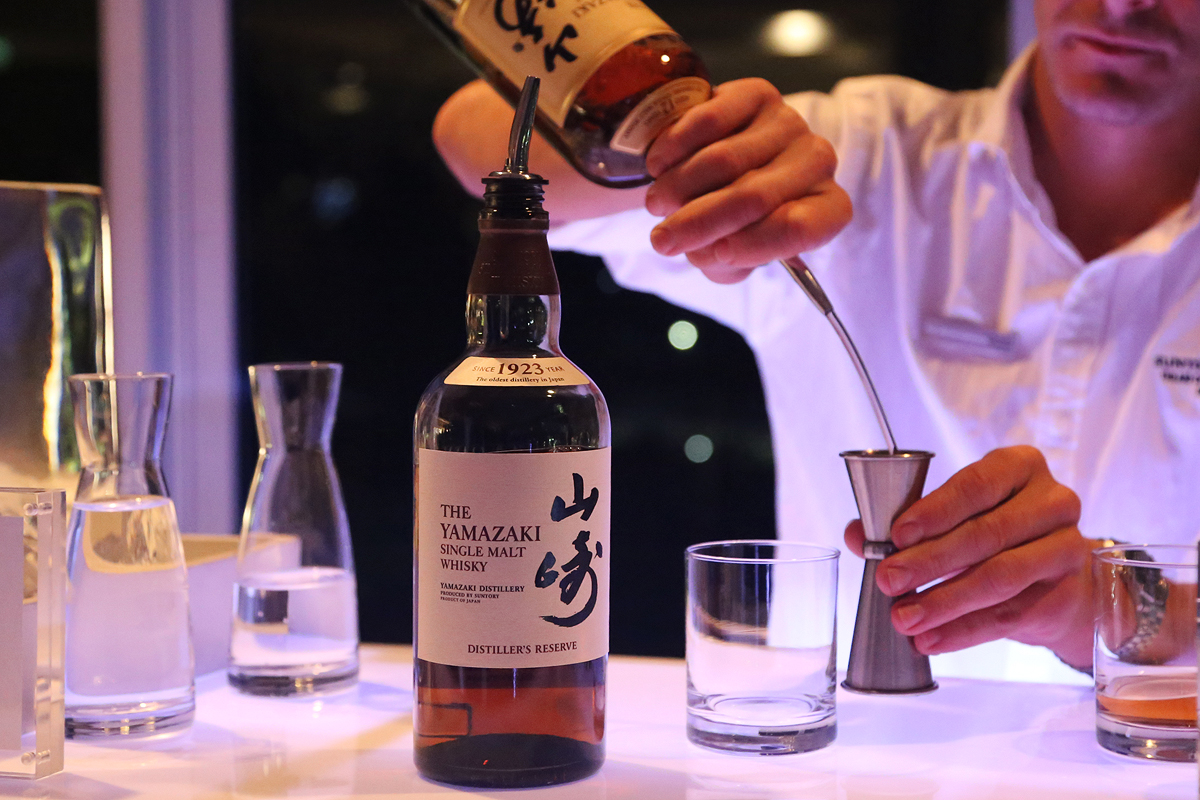
Upon entry, guests were treated to a highball (whisky + soda water) of Hibiki 12 year old and Perrier sparkling water, served simple and tall in a Champagne flute.

Hibiki 12 Highball

I’ve had whisky + soda before, but never in this ratio. I can’t say I’ve ever really contemplated diluting a quality whisky to this extent, but it was actually really refreshing. I don’t think it’ll replace a good G&T in summer, but I’ll certainly start to alternate my choice of libation on those warmer days!

Crowds

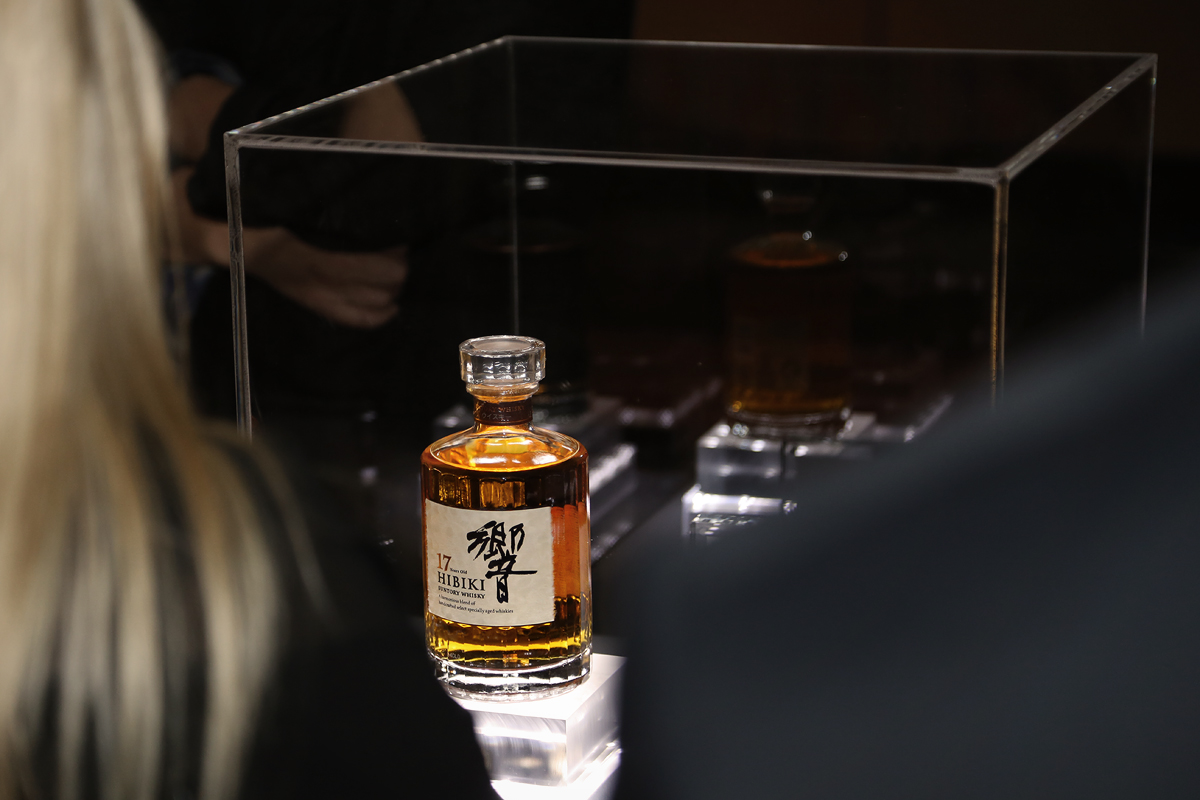
Guests mingled in the main foyer area of the gallery around six illuminated plinths, each housing one of the six Suntory expressions now available locally.

Yamazaki 12

If Suntory were hoping to achieve the whole museum display piece look, then as far as I’m concerned, they nailed it. People stopped and stared, read the placards and took photos. Some seemed to admire them as genuine display pieces (and why wouldn’t you? The faceted Hibiki bottle is a work of art).

Hibiki 17

Although it was mere metres away, I must admit that I was enjoying myself so much that I completely failed to notice the tasting room setup toward the back, right up until we were politely ushered in.

Tasting

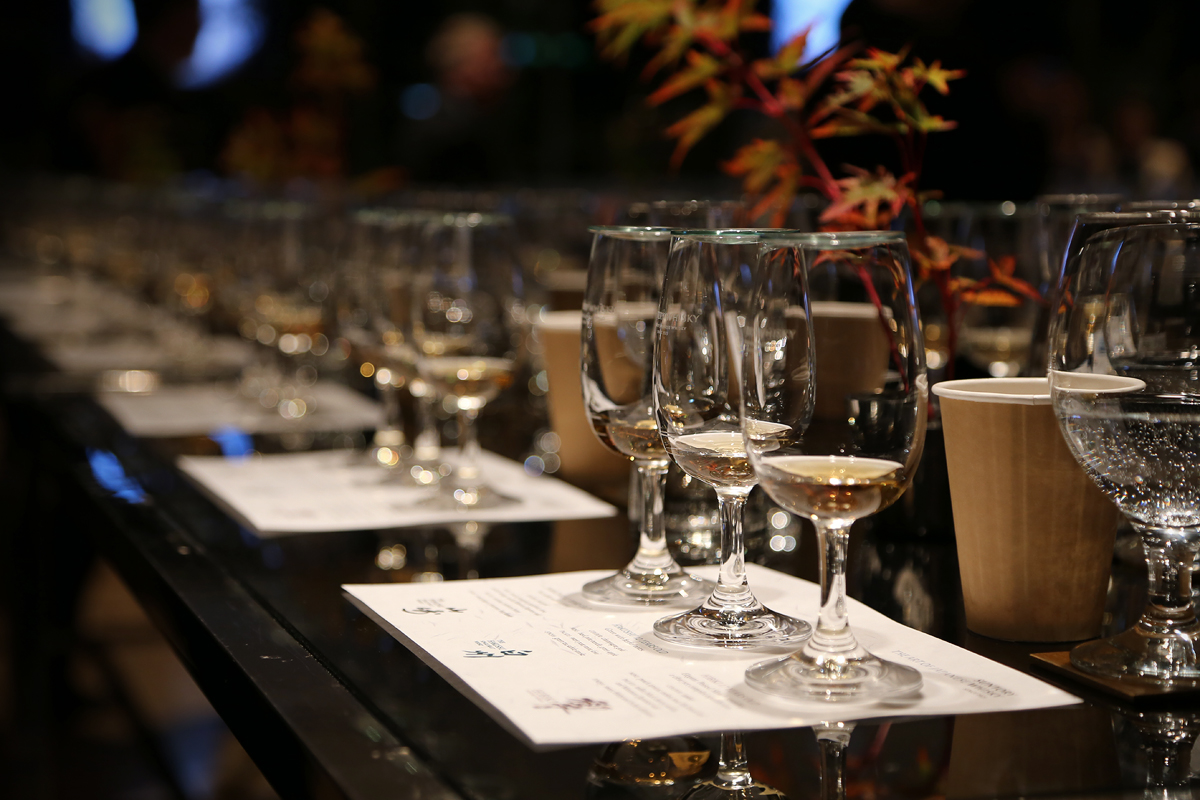
As someone who really appreciates detail, the setup of this space was incredibly visually pleasing. Everything was perfectly aligned, miniature maples adorned the waist-height tables, the glasses were all etched – logos facing forward – and were all adorned with perfectly sized watch-glasses.

Glasses

It seemed rather fitting that in a setup of such precision and craftsmanship we were trying Japanese whiskies, created with much the same attention to detail.

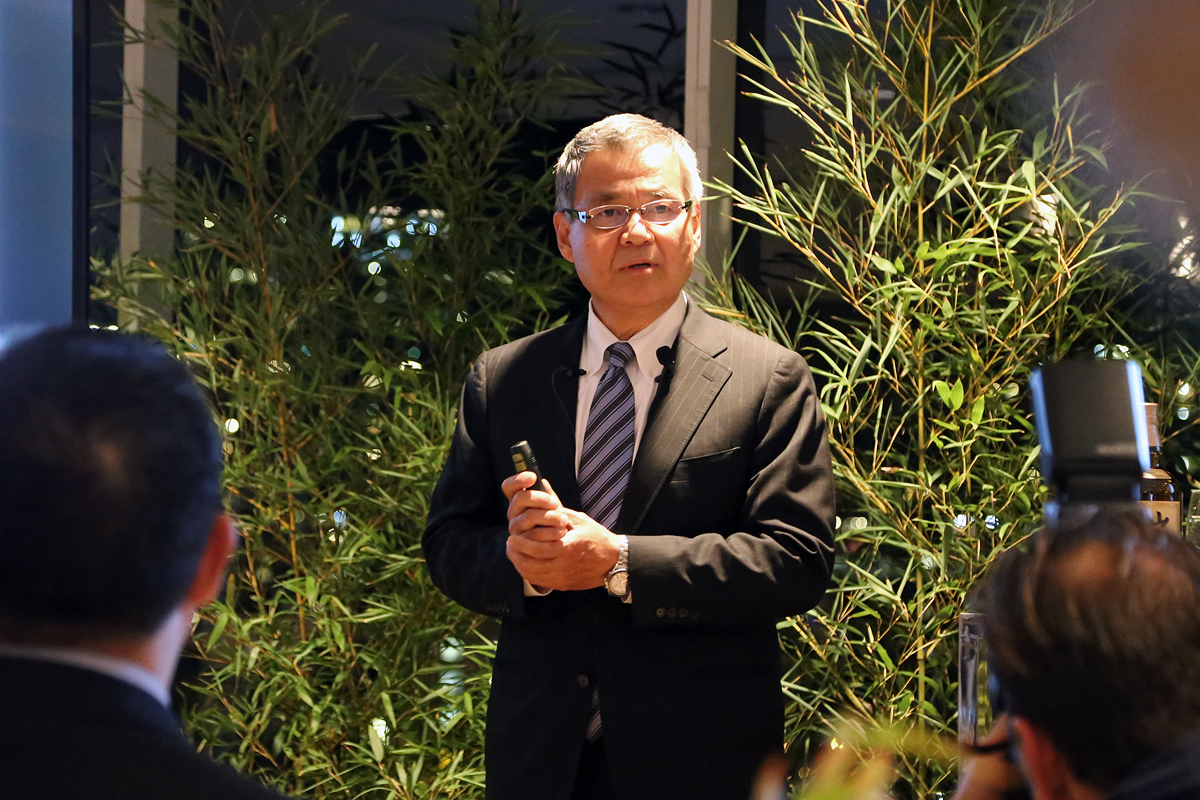
Following a brief introduction, Suntory’s Global Brand Ambassador, Hiroyoshi (Mike) Miyamoto, took us through a tasting of the three core expressions in front of us – Yamazaki, Hakushu and Hibiki – all of the 12 year old variety.

Mike

Unfortunately, some of the crowd got a bit restless at times, but I suppose that’s to be expected for a group of 150-200. In any case, I absorbed plenty of new info and will write up my thoughts on these three core 12 year old separately.

Trio

The tasting marked the end of the evening’s formalities. Guests were invited to the adjacent space (which usually holds the Gallery’s main restaurant) to be greeted by whisky and matched canapés, expertly prepared by the Restaurant’s chefs. Think grilled short rib with truffle béarnaise, parmesan and herb gnocchi and seared scallop with passion fruit and vierge dressing – these were seriously tasty.

Canapes

A nightcap wasn’t hard to come by, with three stations spaced around the room, each serving a duo of Yamazaki, Hakushu or Hibiki. Guests were invited to try them neat or on the rock (yes, singular).

Drinks pouring

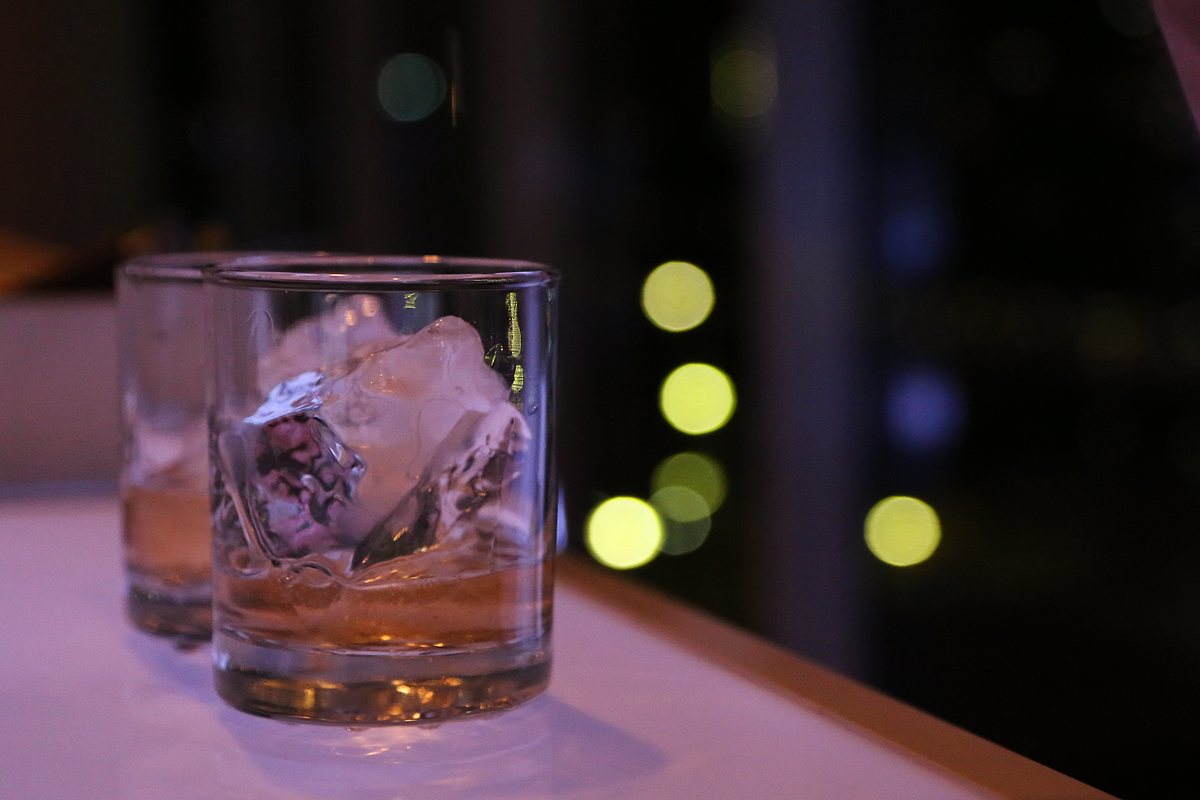
I say ‘rock’, as each station was equipped with a flawlessly clear block of ice. My initial reaction was that they were for display only (and probably made of plastic). But oh no, they were the real deal and they were being hand-carved and served. I know, I know, it’s a bit crazy to get excited over ice, but these were rather impressive.

Drinks rocks

A DJ kept the beats coming at an ambient level (kudos for not trying to deafen us all on a Monday) and drinks and canapés were still freely flowing as I said my farewells to friends, old and new. A very fitting local introduction for a quality whisky brand steeped in history – just like the rest of the objects within the walls of gallery.

Set

My thoughts on Suntory’s core range will follow in a new post shortly.

31 May is Ardbeg Day!

Around this time each year, a certain group of Ardbeg fans start to get restlessly excited as details of Ardbeg Day start to make their way into the inboxes of Committee Members, the Ardbeggians, all over the world.
Ardbeg Day - Trophy1

Our friends in Scotland have been celebrating Ardbeg and all things Islay for over a decade as part of their annual Islay Whisky Festival, Feis Ile (I’m determined to get there one day!)

Recognising that we all can’t make it to Islay, the folks at Ardbeg HQ wanted their loyal followers all over the world to be able to join in on the fun. So three short years ago, Ardbeg Day was proclaimed and has henceforth been celebrated the world over.

Ardbeg Day: The shenanigans

From 2012’s Islay-lympics, to last year’s archaeological themed Ardbog Day, the day’s celebrations have always amounted to copious amounts of peaty fun.

Sport. Football. circa 1961. Tottenham Hotspur's Bobby Smith, a burly centre forward who played in the "Double" winning side of 1960-1961, and was capped 15 times for England.

This year promises to be no different, with Ardbeg Day having a full World Cup theme, complete with interactive football events and plenty of Ardbeg on offer. Australia’s very own Ardbeg Day celebrations will take place in Sydney on Saturday 31 May at a yet-to-be disclosed location.

Save the date – 31 May is Ardbeg Day! 

How you can get involved 

Being part of the fun is easy. Simply head on over to the Ardbeg website and sign up to become a member of the Ardbeg Committee. This will help ensure you receive the latest updates on Ardbeg Day and all the details on how you can get involved. Did I mention it’s free?

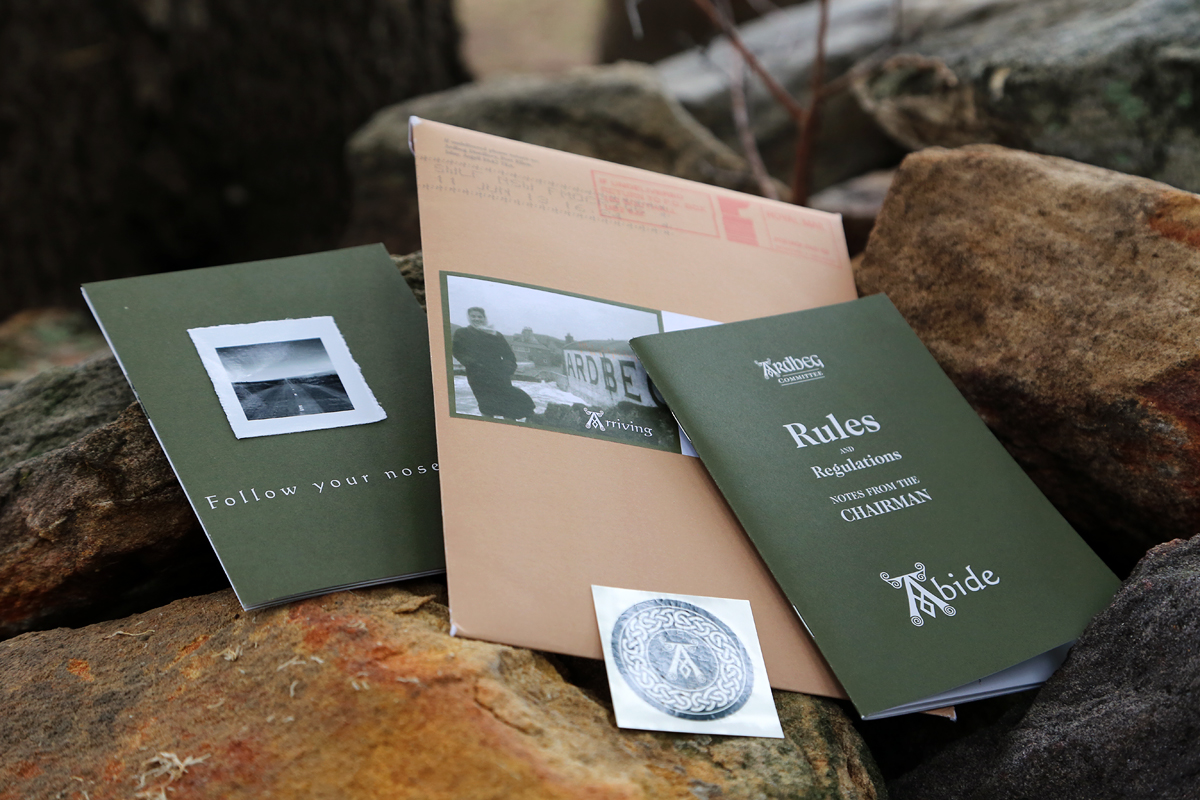
Ardbeg Committee Pack

If that’s not incentive enough, you’ll also receive this great little welcome pack, complete with your own official welcome letter and membership number, a concertinaed booklet of Ardbeg’s history and a fun booklet of the committee’s rules and regs.

Ardbeg Welcome Letter

If you’re new to the world of peated whisky, don’t be afraid to get involved (like I once was). If you can appreciate a warming dram of Ardbeg and the company of fellow Ardbeggians, you’re bound to have a good time!

The whisky: Auriverdes

The day’s shenanigans are just half the fun though and there’s another (very good) reason us Ardbeggians get as excited as a kid at Christmas. You see, we will be among the first in the world to taste the latest Ardbeg release, Auriverdes, which will be officially launched on Ardbeg Day!

Said to be a whisky of two halves, Auriverdes has been matured in American Oak casks which have had their heads (the circle bits at the end) specially toasted and charred. This process is said to have imparted ‘a unique flavour profile of mocha coffee and creamy vanilla’. I don’t know about you, but that sounds pretty enticing to me! Ardbeg Auriverdes
With a name derived from the golden (auri) Ardbeg whisky and the iconic green (vedre) bottle, this year’s release sounds like it’ll be a good one. Keep an eye out for my take on Auriverdes in the near future.

If you can’t make it this year

Fear not! The official Ardbeg Day release, Auriverdes, will start to appear in specialty retailers around the country from 31 May and there’ll be a recap of the day’s events, on this very site, not long after.

Woodford Reserve tasting

Woodford Reserve tasting of epic proportions, Shirt Bar, Sydney

Ah Woodford Reserve. You bring back some vivid memories for me.

We enjoyed each other’s company a little too much on our last encounter though. It was great while it lasted – I had an absolute blast – though I spent much of the following day cursing your name and I wasn’t in a hurry to see you again.

That was unfair of me though. It wasn’t your fault, it was mine, so I’m really glad we had the chance to make up. And what better way to make up than with a bourbon tasting bonanza at Sydney’s Shirt Bar hosted by the incredibly knowledgeable, Mr Stuart Reeves.
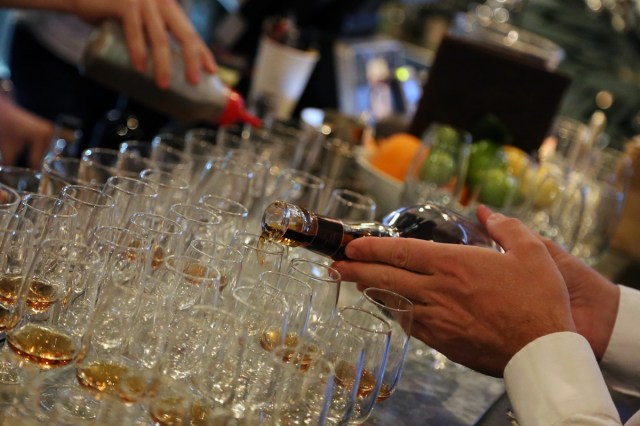
Woodford - Pouring

A bit of a forewarning here – If you’re not one for the details and a bit of a story, feel free to skip the wordy bits and start reading again when you get to the pretty pictures – this post’s a bit long. 

Woodford Reserve: The distillery

I’m a bit of a sucker for details. So it was a good thing that our host for the evening, Stuart, had a wealth of knowledge to impart. As told by Stuart, here’s a bit of info you’re probably not going to find on Woodford’s website:

  • For a brief period of time in the early 1870’s, Colonel EH Taylor (a name Rye whiskey fans might recognise) took over the distillery and patented a heat cycling process that’s still used in Woodford’s warehouses today (more on this in a sec)
  • Woodford’s current owners, Brown Forman, have actually had two bites of the cherry – purchasing the distillery for the first time in 1941 and again around 1993/ 1994. Reason for the first sale? The bourbon slump of the 1960’s.
  • During the above period, the distillery actually lay dormant from around from around 1970 until 1993 while under the ownership of someone who had intentions of turning it into a chemical plant of some description

As an aside, while absorbing these details like a fresh shamwow, we were all treated to a classic Woodford Reserve Old Fashioned – well executed by Shirt Bar’s crack team of bar tenders.
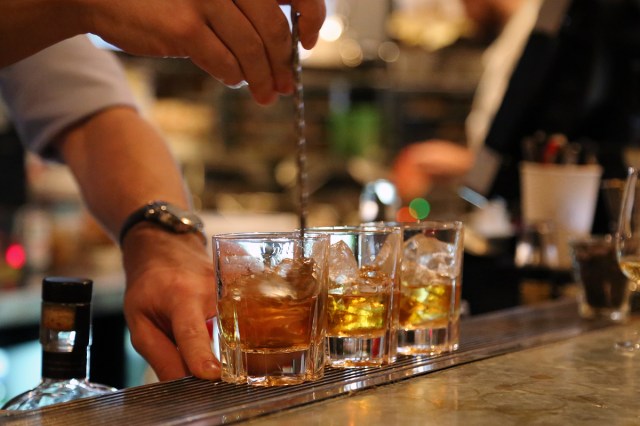
Woodford - OFs

Creating Woodford Reserve

At one point in time, I thought bourbon was just bourbon. But just like the Scotch whisky industry, the differences in production from distillery to distillery can be truly fascinating and they all factor into creating a unique product.

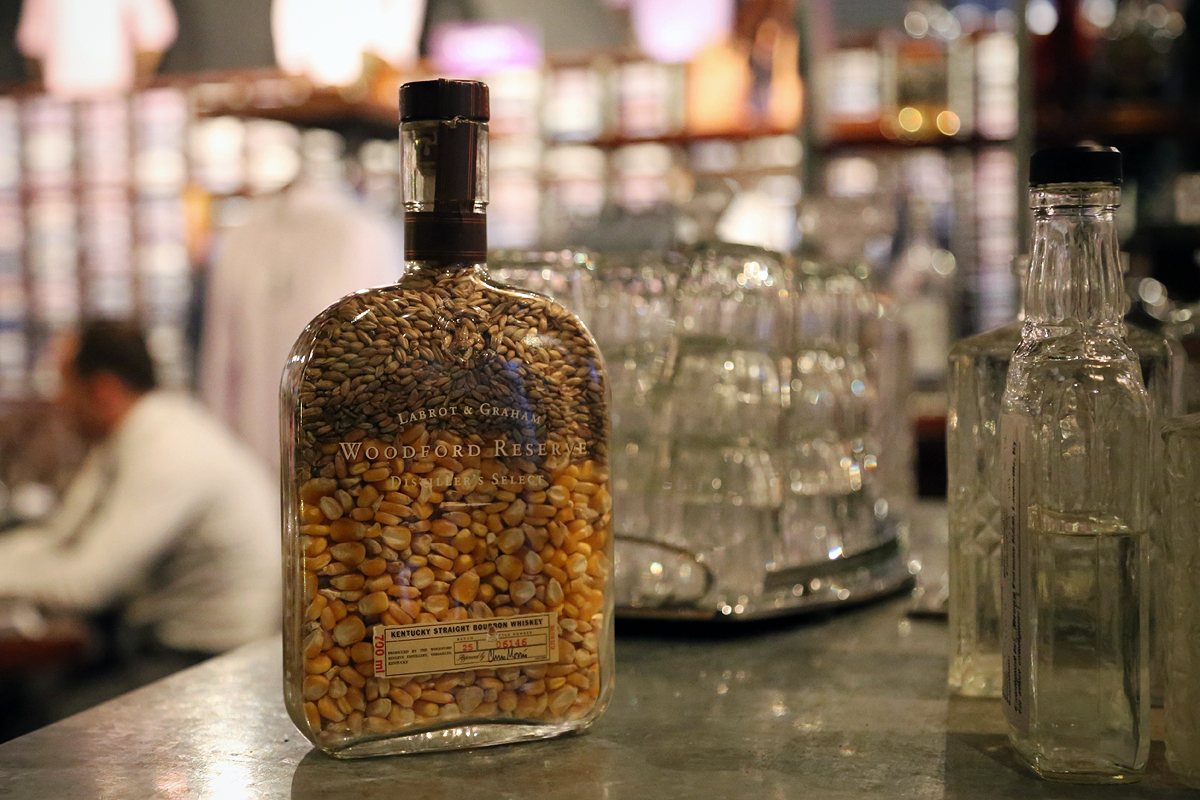
The first thing to note about Woodford Reserve is their standard grain bill, which is 72% corn, 18% rye and 10% barley. That’s a decent proportion of rye as far as bourbons go and Stuart brought along this neat visual representation.

Woodford - Grainbill

Here’s a few other interesting things that make Woodford, well, Woodford!

  • As opposed to using column stills (which are standard in the bourbon industry), Woodford use copper pot stills imported from Scotland (the same kind of still used in the production of Scotch whisky)
  • Woodford Reserve is the first and only triple distilled, copper-pot bourbon available in the US.
  • Woodford Reserve use only 6% sour in their mash, which means 94% of each distillation comes from fresh grain (industry standard for sour is around the 30% mark). Not sure what I mean by sour mash? Check this out.
  • Brown Forman own their own cooperage and make their own barrels – a whopping 2,900 of them a day! The number of those earmarked for Woodford Reserve? Around 100.
  • Those 100 barrels are special though – they’re the only barrels out there in the bourbon world where the heads of the barrel are toasted and charred as well as the barrel itself (I wonder if Ardbeg got this idea from them?)
  • Maturation warehouses are made of limestone rock and are heated in the winter with steam coils (enter EH Taylor). Why? To speed up maturation and keep it going at a constant rate, right throughout the year.
  • This takes its toll on cask volumes though. A staggering 50% of volume is lost to the Angels over seven to eight years.
  • One last one for the Scotch fans – some of Woodford’s barrels end up cradling the nectar of Balvenie and Glenfiddich.

What we tasted

If there’s a definition of a bourbon bonanza, then this is probably it. The line up for the evening included no less than six of Woodford Reserve’s finest, plus a few extras.

New make spirit

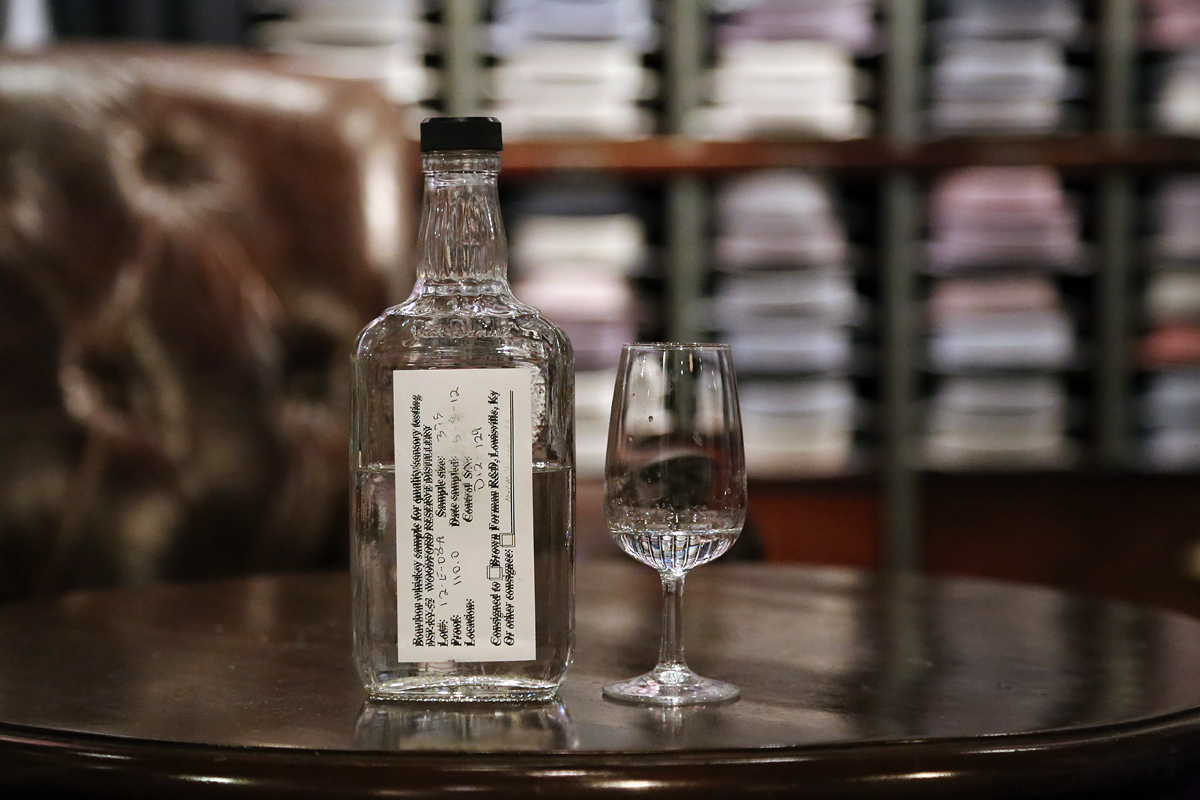
First up was Woodford Reserve new make spirit, also known as ‘White Dog’.

No, your eyes aren’t deceiving you, the label was misprinted and had you seeing double, before you even tasted it. Perhaps if you finish the bottle is become clearer?

Woodford - New make

On the nose, I got some sweet spirit notes, spice, some nutty herbal notes and a young grappa/ white rum kind of effect. There weren’t really any surprises on the palate, with the new make tasting clean, dry and spicy with some faint herbal flavours on the finish.

After being triple distilled, I expected their new make to have a really high alcohol content (ABV) and indeed it does when it comes off the third distillation at around 79% ABV (158 proof).

However, it was interesting to hear that they actually dilute the new make down to 55% ABV (or 110 proof) before casking it, as they believe it matures better and gets more flavour out of the cask, needing less dilution at the end!

Distiller’s Select

Next up was their flagship expression, Distiller’s Select. A seven to eight year old bourbon made with their standard grain bill, triple pot distilled and bottled at 43.2% ABV (I believe it’s bottled at 45.2% in the US?).
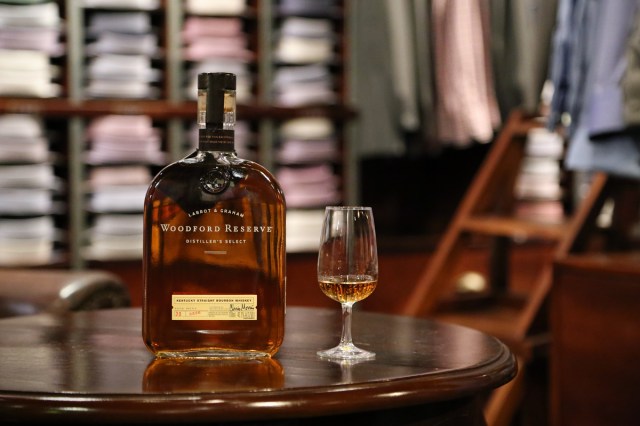
Woodford - Distillers Select

I got some lovely caramel notes on the nose, vanilla, orange, some nutty spice, woody furniture polish and grainy cereal swirled throughout. I found the Distiller’s Select to be a tad thin on the palate, big wave of spice and not quite as sweet as the nose suggested. Pleasant burnt caramel and woody notes, minus any bitterness faded to a medium length finish, mainly concentrated in the mouth.

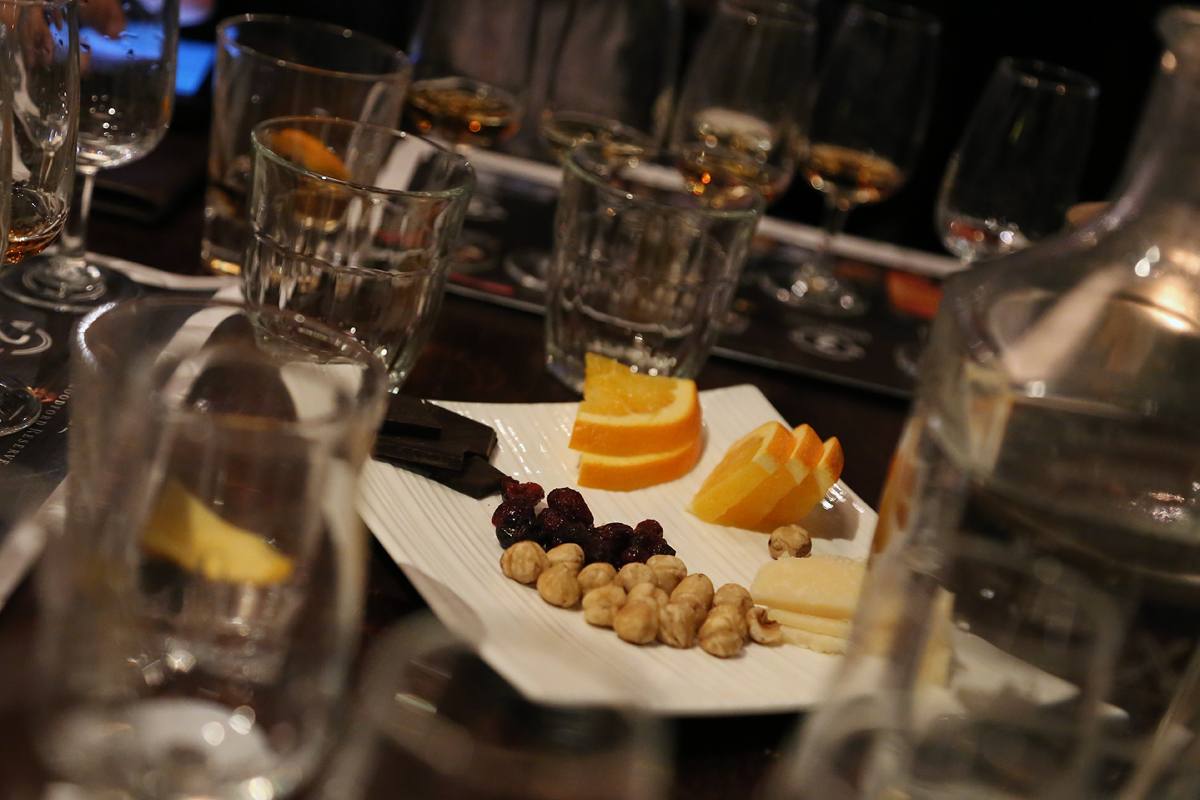
It was around this point that Stuart introduced some of the sensory tasting items he brought along, aimed at highlighting certain flavour characteristics. I picked up on the orange notes a fair bit in the Distiller’s Select, while the tart dried cranberries really emphasized the sweet caramel notes.

Woodford - Sensory

Before I move on from this one, ever wondered where the grain comes from? Probably not.. but I did and I can report the following: The corn comes from Kentucky, rye from Manitoba and barley from Wisconsin.

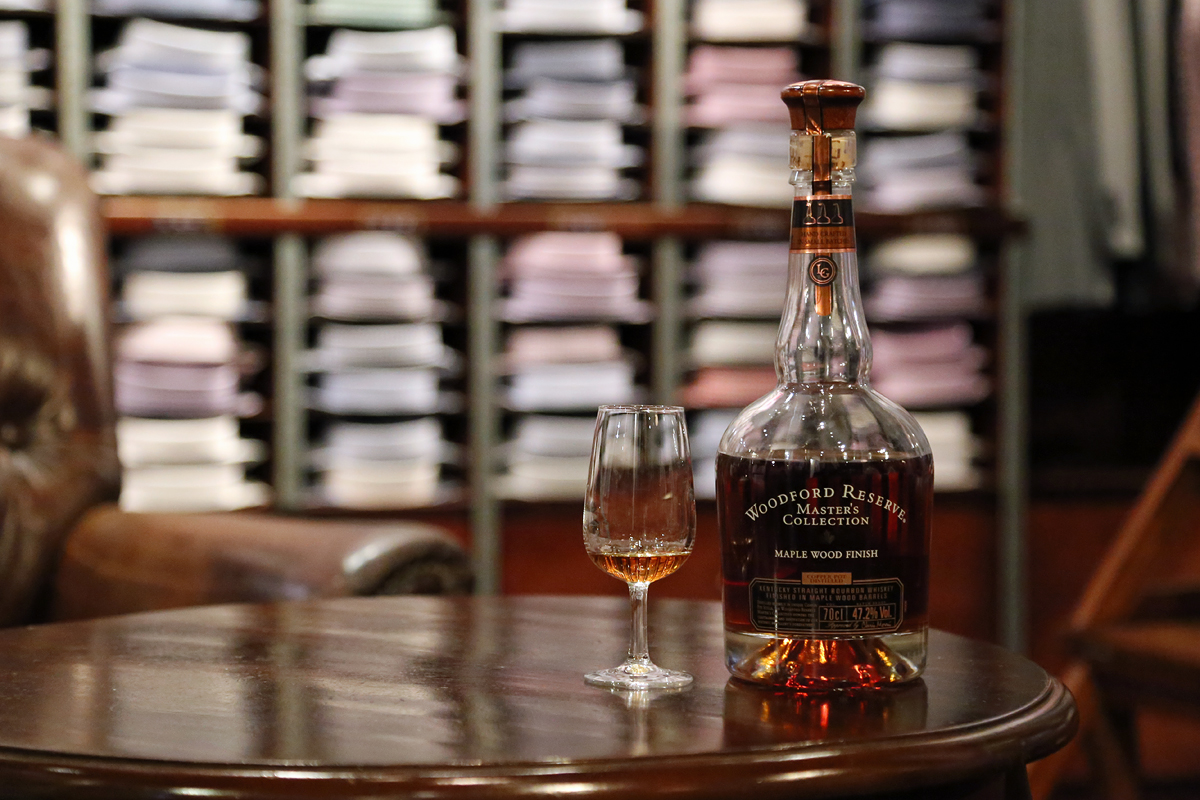
Maple Wood

Now we’re into the big league – the first of the Master’s Collection bottlings on taste. Created as one-offs, the Master’s Collection range is never intended to be repeated.

Released in 2010, the Maple Wood expression starts life as the standard Distiller’s Select, before being finished for around 18 months in a toasted sugar maple barrel.
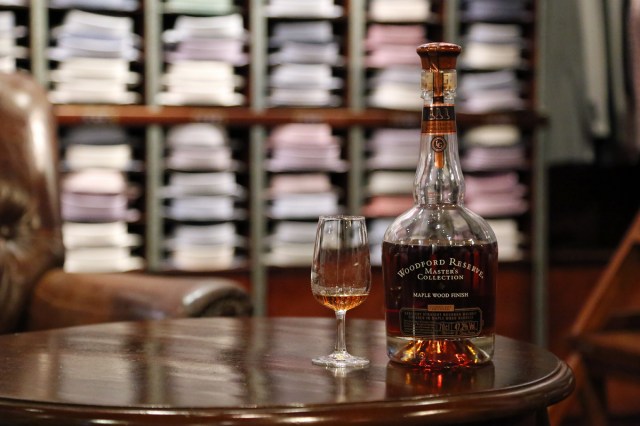
Woodford - Maple

On the nose I got some additional sweetness over the Distiller’s Select, but not in a caramel sense. More of a dark fruity syrupy sweetness, with a bit less spice. This translated to fuller palate, hints of sugared plums, fresh toffee, vanilla, cereal grains and restrained spice. At 47.2% ABV, the finish was noticeably longer.

Aged Cask Rye

Released in 2011, the Aged Cask Rye was sold in a twin pack with the New Cask Rye (coming up), so you could taste them side-by-side and taste the influence of the cask on the base spirit. A pretty neat concept in my opinion!

Woodford - Aged Rye

Made from a combination of both malted and un-malted rye, this represented another first for the distillery, being the first triple distilled 100% rye whiskey made in the world.

I got some interesting grassy notes on the nose, vanilla sweetness, crisp green apple, pineapple and hints of spice. Stuart likened this one to a young Calvados (apple brandy) and I think he was pretty spot-on with that analogy. On the palate, clean, mild citrus, dry, spice, some pepper and overall quite mild. I’ve never had a rye like this before!

New Cask Rye

Now for the comparison – exactly the same spirit as the previous version, but this time, matured in a fresh charred oak barrel and bottled at 46.2% ABV.
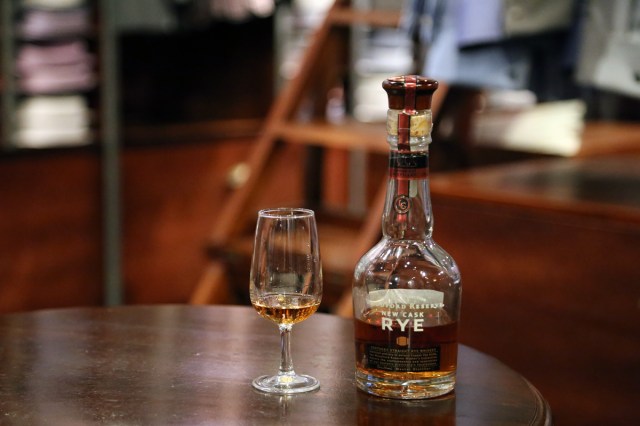
Woodford - New Cask Rye

Much sweeter on the nose, return of the Woodford caramel notes, vanilla, sweet balsamic, lots of vibrant spice, soy and hints of crisp apple. I thought this had a thicker mouth-feel, loads more caramel on the palate, spice, woody oaky flavours and a touch of cinnamon.

Interesting tidbit on these twins – although they both weigh in at 46.2% ABV, they actually entered the cask at a surprising low 43% ABV!

Four Wood

This was an interesting one. Released in 2012, as the name suggests, four different types of wood come into play.

As with the Maple Wood, this expression starts life as the standard Distiller’s Select. After seven to eight years though, a proportion is placed in a toasted sugar maple barrel for a year, another portion in ex-Oloroso sherry casks for six months and the remainder in Portuguese ruby port pipes for six months.

In the end, it’s all mingled together, bottled at 47.2% ABV and presented as the Woodford Reserve Four Wood.

Woodford - Four Wood

Sounds like it could have been the makings of total disaster, however it’s surprisingly balanced. Clear hints of port and sherry on the nose, some lovely raisin notes, vanilla, spice, caramel and still clearly Woodford. On the palate, I got some big spice upfront, followed by soaked raisin sweetness, vanilla and some malty cereal. Big sherried whisky fans would appreciate this one I reckon.

Classic Malt

To end the night, the one I had been eagerly awaiting! Released in 2013, the Classic Malt is essentially a single malt whisky, but made it the US by one of the most innovative bourbon distilleries. The mashbill is 100% malted barley, it’s triple distilled in copper pot stills and aged in used, ex-bourbon casks before being bottled at 45.2% ABV.
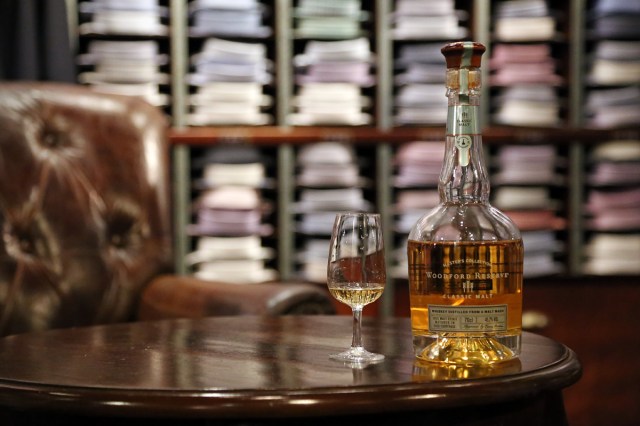
Woodford - Classic Malt

I got some serious grassy, grainy cereal notes on the nose. Lots of barley and freshly grated green apple. Reasonably thin on the palate, still quite grainy and grassy, but with an underlying sweetness and some vanilla. Not really to my taste, but quite delicate whisky, I mean, whiskey.

Andrew Derbidge, Cellarmaster of the SMWS was also in the room and likened this expression to an Auchentoshan single malt from the Lowlands of Scotland. Right on the money with that comparison in my opinion.

Some final thoughts

I’m not sure how impressive this lineup would look to someone in The States, but I have to say that we were mighty privileged to be tasting this number of Master’s Collection releases.
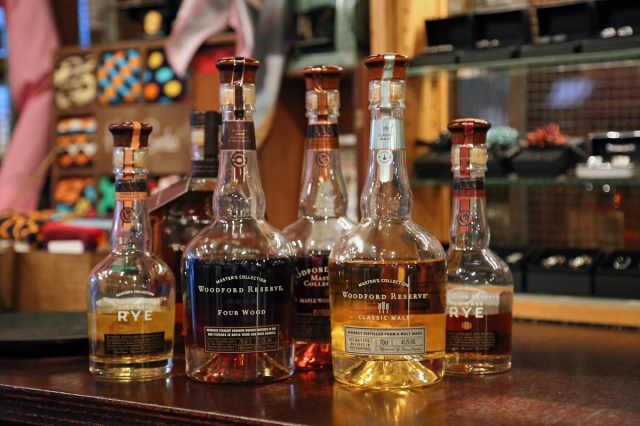
Woodford - Group

These releases are something of a rarity in Australia. You’d struggle to find these behind a bar if you wanted to taste them and if you managed to find a bottle for sale, you’d need to hand over $200+.

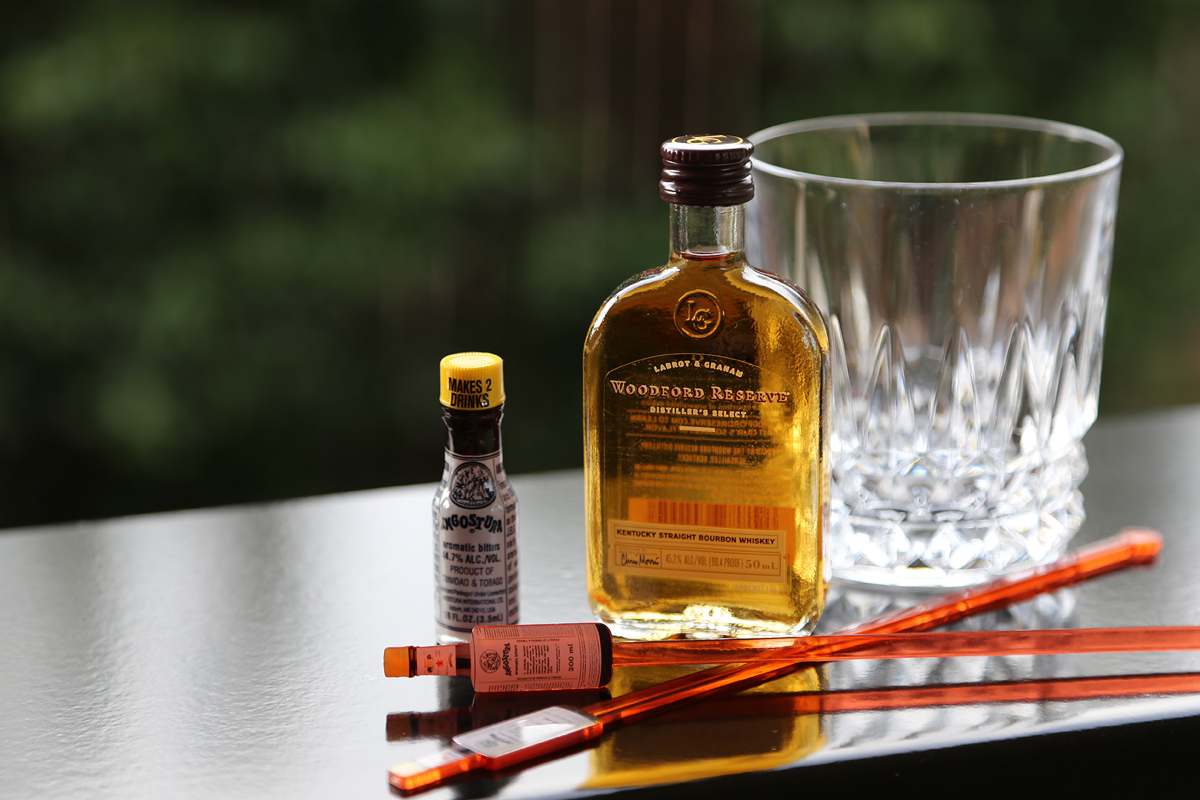
If that wasn’t quite enough, we each left with a goody bag comprising a Distiller’s Select miniature and the smallest bottle of bitters I’ve ever seen – perfect for mixing an Old Fashioned on the weekend.

Woodford - Goodies

Thanks to Stuart for presenting a highly informative tasting, sharing the story of Woodford Reserve and these fantastic bourbons (and whiskeys) with us. A big thanks to Shirt Bar as well for hosting another great evening – check out their website for info on their upcoming tastings.

News for Australian Suntory whisky fans

New Yamazaki, Hakushu and Hibiki expressions headed our way

While I haven’t had as much exposure to Japanese whisky as I’d like, the expressions I’ve tried have all left me with the desire to explore more. So when I recently heard that Suntory Australia would be increasing the range of whiskies they import, I was pretty excited.

Taken from their official press release:

“We see Japanese whisky as being a particular growth area, as it is ideally suited for the Australian market… Suntory Whisky has a refined flavour that holds appeal with both whisky connoisseurs and those just starting to enjoy whisky” 

What we can look forward to

Previously, the Suntory range in Australia was pretty much limited to Yamazaki 12 year old. If you looked hard enough, you could probably track down an entry level Hakushu or Hibiki, but you’d pay a pretty penny for them.

Australian fans can now look forward to seeing the following expressions a whole lot more:

  • Yamazaki Distiller’s Reserve
  • Yamazaki 12 year old
  • Hakushu Distiller’s Reserve
  • Hakushu 12 year old
  • Hibiki 12 year old
  • Hibiki 17 year old

SuntoryWhile the 12 year old expressions and Hibiki 17 have been around for a while in many overseas markets, apparently this is the first time the Distiller’s Reserve offerings have been made available outside the Japanese market.

They were recently launched in the UK as well (and received some fairly high praise), so I’m really looking forward to seeing what they’re like when they land here.

Where, when and how much?

Smaller quantities of the above will start finding their way behind the counter of your favourite bar around April. We should also start to see these expressions in select independent retailers from May onwards.

As for the price? Expect to pay around the AU$80 mark for the Distiller’s Reserve expressions, AU$110 for the 12 year olds and around the AU$160 mark for Hibiki 17 year old.

Kilchoman tasting with Anthony Wills

Five expressions from Islay’s newest distillery

It doesn’t matter quite how busy my week gets, I always look forward to the whisky tastings held at the Oak Barrel in Sydney. The other week was no exception, so as soon as 6.30pm hit, into the tasting cave we ventured for a rather special Kilchoman masterclass.

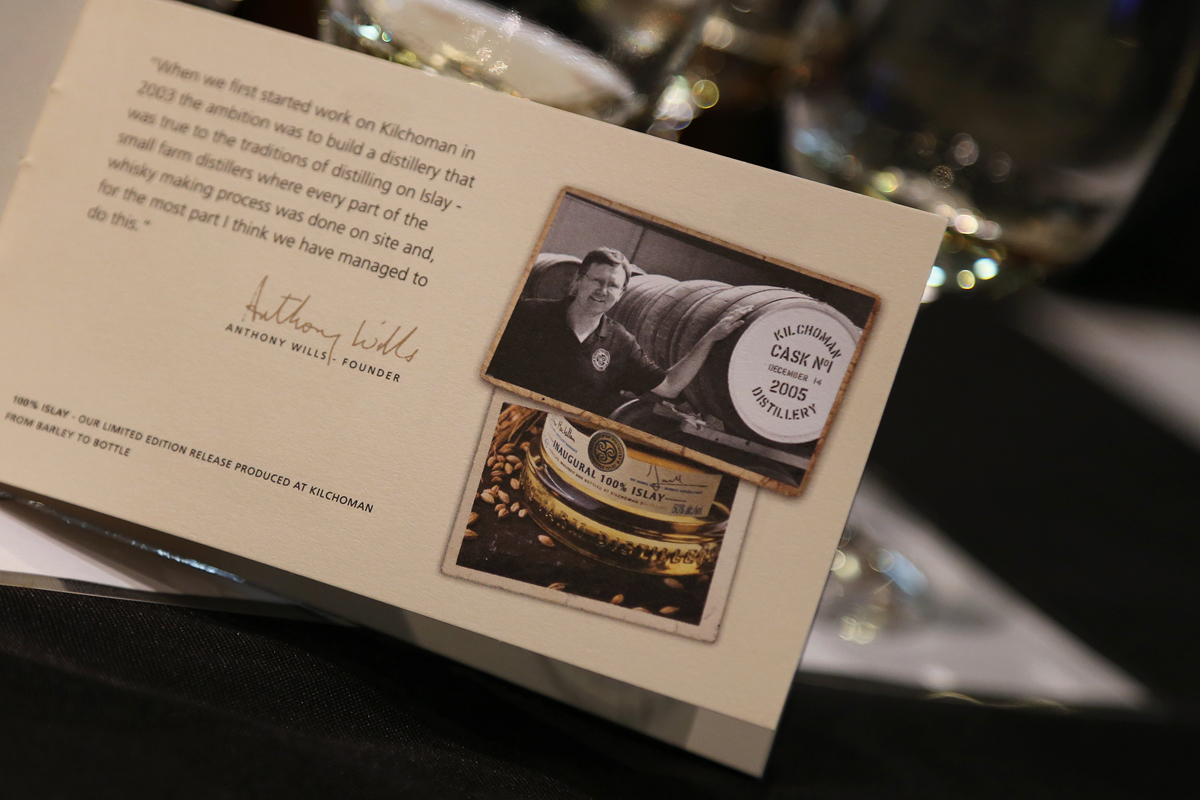
Kilchoman brochure

The Oak Barrel’s whisky expert, Dave, normally runs the tastings. But occasionally he takes a seat with the rest of us and invites someone along to present instead. It’s fair to say that he keeps pretty good company, because the other week we were privileged to have someone pretty special presenting for us – the founder and owner of Kilchoman Distillery, Mr Anthony Wills.

Kilchoman: The story 

You may know of Kilchoman as the first new distillery to be built on Islay in 125 years, but here are a few things you may not be aware of.

Kilchoman (pronounced kil-ho-man) is the brainchild of former independent whisky bottler, Mr Anthony Wills. After finding that it was becoming increasingly difficult for him to get his hands on quality single cask whiskies to bottle, Anthony came to the conclusion that there was only going to be one way for him to secure his own supply of whisky well into the future. How? To build his very own distillery of course!

I’m sure there are a lot of people out there who’ve had similar dreams, but the number who’ve actually turned that dream into reality? My guess is that you can probably count them on one hand.

Kilchoman - Brochure Anthony

With the financial and moral support of his family, in 2005 Anthony & Co. sunk a million pounds into refurbishing and rebuilding the distillery’s buildings and purchasing the required equipment.

With no money left for production (and no actual distilling experience), Anthony managed to convince John Maclellan to leave his secure, long-term job as Master Distiller at Bunnahabhain and come and work for him. He was joined by Dr Jim Swan, whom Anthony brought on-board to help define and craft a specific spirit for Kilchoman, one Anthony describes as ‘clean, floral, sweet and peaty’. And so by the end of 2005, the stills were run for the first time and Kilchoman’s very first American Oak cask was filled on 14 December 2005.

Kilchoman managed to make a trading profit after just five years in business and last year they produced over 130,000 litres of spirit – coming a very long way from their first year of production where they produced 50,000 litres of spirit and filled just 12 casks a week!
Edit: I’ve been reliably informed that John Maclellan didn’t actually join Kilchoman until 2010, well after the stills started running. Thanks to Andrew for clearing that up for me!

Kilchoman: The whiskies

After Anthony delivered this interesting and informative intro, it was time to get down to business and taste some whisky.

Kilchoman tasting glasses

Before we get into each one though, here are some Kilchoman fast facts:

  • The barley for all of their expression (except 100% Islay) comes from Port Ellen Maltings (who also supply to the likes of Ardbeg and Lagavulin).
  • The barley from Port Ellen Maltings is malted to standard Ardbeg specs, which is around 50 PPM
  • Kilchoman fill their barrels at 63.5% ABV
  • All of Kilchoman’s first fill bourbon barrels are sourced from Buffalo Trace in Kentucky
  • Their sherry casks are all from Miguel Martin in Jerez, Spain (the same supplier Glenfarclas use for all of their casks)
  • All Kilchoman bottlings (which are bottled on-site mind you) are Non-Chill Filtered and natural colour.

Summer 2010 Release 

You may have guessed it from the name, but this expression was released in the Summer of 2010 (Winter, if you were in Australia at the time.. it was probably the same temperature as a Scottish summer!) This release was matured in first fill bourbon barrels and after three years was bottled at a respectable 46% ABV.

Kilchoman - Summer 2010 

Quite fresh and light on the nose with some floral notes, light sweetness, hints of citrus and maybe some pineapple. Quite crisp and not overly peaty. This translated to a medium oily palate, with some sweet creamy floral vanilla and a big wave of fresh peat that hung around for a good while. A light salty tang on the finish. Delicate, but not my favourite. 

Interestingly, this expression was bottled in their original generic style bottle, before they had their own bespoke bottle mould produced. Ever wondered what a bottle mould costs? Kilchoman paid a cool 20,000 pounds! 

100% Islay 2nd edition 

The second expression personified what Kilchoman was all about when Anthony originally envisaged it – making a whisky that was 100% Islay. And so from the barley grown at Rockside Farm next door to the distillery, to the in-house malting using local peat, to the distilling, maturation and eventual bottling – it’s all done on Islay.

Kilchoman - 100 Islay

Does that actually give it a different profile though? You bet it did. A vatting of three and four year old whiskies, bottled at 50% ABV, 100% Islay had a noticeably different nose.

I got some malty grassy notes, vanilla, crème caramel and bananas nicely balanced out by the peat. This carried through to a lovely creamy and oily palate, vanilla and floral with peat sitting at the back of the palate. It finished with waves of warmth and hints of spice.

In case you’re wondering, the Rockside Farm barley is peated on-site using local peat for around 20 hours. This results in a level of around 10-20 PPM (parts per million). The barley is malted in two tonne batches and the whole malting process takes around 12-14 days. 

Machir Bay 2012 edition 

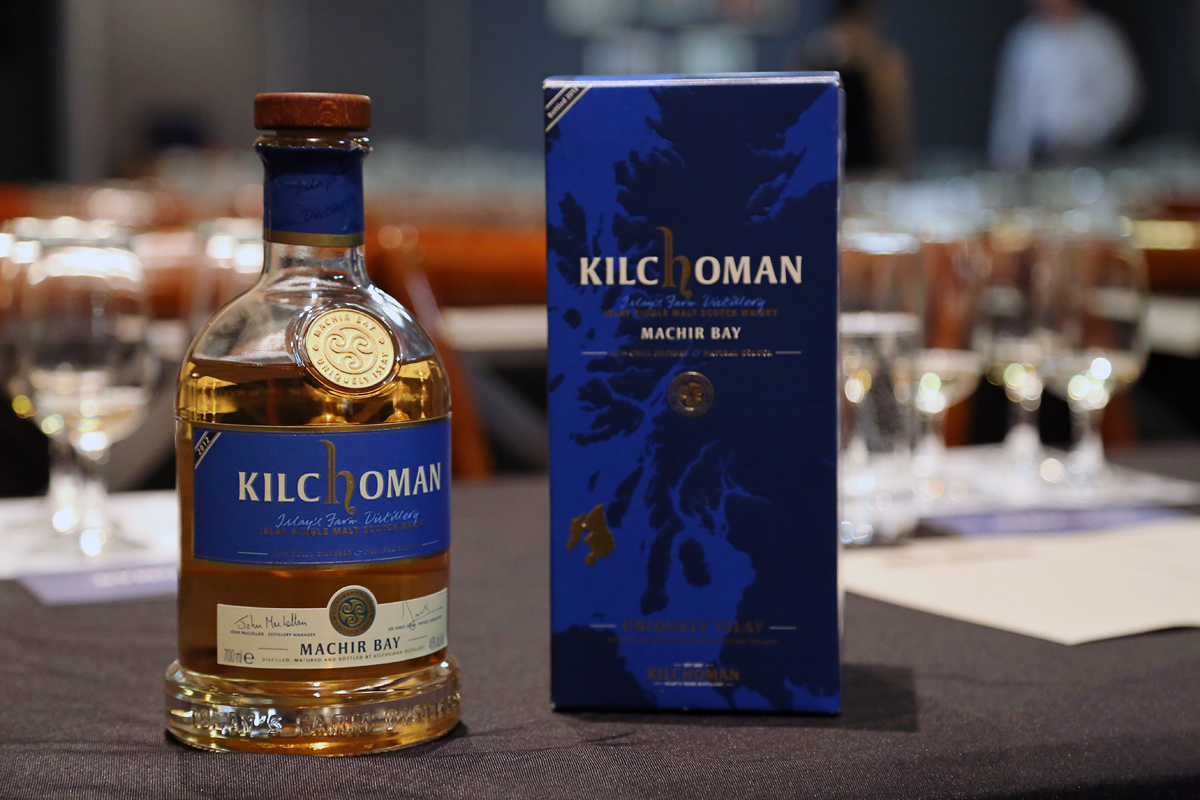
The first of Kilchoman’s core expressions, Machir Bay was released in 2012 as a vatting of three and four year old whiskies, with ‘a splash of five year old’ as Anthony put it. All came from first fill American Oak ex-bourbon barrels, however the vatting was finished in 20 year old ex-Oloroso casks for a couple of months prior to bottling.

Kilchoman - Machir Bay 

This has a noticeably heavier nose to the two before it – I got some hints of kiwi, a pleasant sourness, some fruitiness, light peat and hints of spice (presumably from the sherry finishing). Slightly thinner on the palate, but still creamy and sweet followed by a pronounced wave of vibrant peat.

Still a remarkably fresh and bright whisky, with none of the tarry medicinal notes often associated with bolder peated whiskies. 

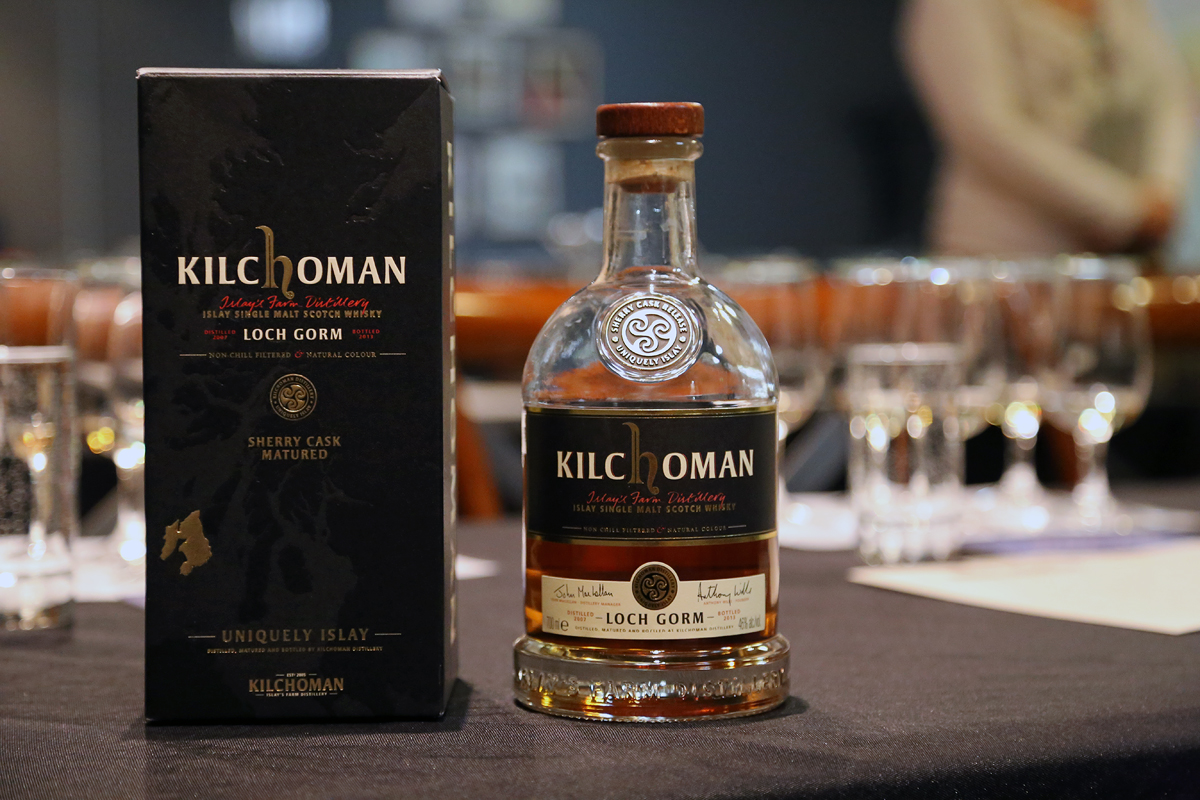
Loch Gorm 1st release 

First released in 2013, Loch Gorm is a five year old Kilchoman solely matured in ex-European Oak sherry casks. In case that wasn’t enough, it’s then finished for a few months in fresh, first fill Oloroso casks, imparting the lovely dark liquid amber colour seen here.

Kilchoman - Loch Gorm

Compared to the three before it, Loch Gorm has a much weightier, heavy, meatier nose. You can see some more of my notes here but I want to mention something that I couldn’t articulate last time I tried Loch Gorm.

On our previous encounter, Loch Gorm confused me slightly. On initial nosing, it wasn’t the peat monster I was expecting, nor was it a fruity sherry bomb. The more I concentrated, the more these flavour profiles played hide and seek with one another.

Whilst I couldn’t put my finger on it at the time, I now feel as though this was simply a hallmark of a rather well-balanced nose. Indeed, Anthony was quite proud of Loch Gorm and mentioned that he felt much the same.

Cask strength small batch release

As far as I’m aware, this is the first time a single cask Kilchoman has been on taste in Australia. Another five year old, but this time matured in first fill bourbon barrels, then finished for around six weeks in Oloroso sherry casks. As for strength? A big and gutsy 58.2%…

Kilchoman - Small Batch

…but you wouldn’t have picked it from the nose! Certainly noticeable as a higher ABV whisky, but I wouldn’t have picked it being that high at all. Amazingly fresh, creamy nose with big waves of milk chocolate, mars bars and coffee beans, magically mixed with some grassy notes, pine trees, fresh peat and vanilla.

Much of this translated straight to the palate – lovely round, creamy flavours. More vanilla, milk chocolate, hints of salted caramel and a nice helping of peat looming in the background. Long, warming, creamy finish.

You should have seen the flurry of people filling in order forms for this one. It was seriously good!

Some final thoughts 

In many ways, the story of Kilchoman reminds me of some of Australia’s very own young distilleries. And like some of Australia’s young distilleries, Kilchoman’s output really is testament to the fact that young whisky can be bloody good whisky.

Anthony took the time to explain that he and Jim Swan set out to produce a spirit that would mature reasonably quickly and taste great when bottled young. With that in mind, I think he and his team have really hit the mark with their latest round of releases.

As for the evening – It’s always great to hear from brand ambassadors, especially those who are knowledgable and enthusiastic. But there’s something different about listening to someone who’s been there from day one, someone who had an idea and saw it become reality and someone who knows the ins and outs of every aspect of their distillery and is happy to share every little detail.

Anthony Wills

On that note, I’d like to say a sincere thanks to Mr Anthony Wills for flying half way across the world to share the story of Kilchoman with us. A special thank you is also in order for Dave and The Oak Barrel for hosting another fantastic tasting and to Island2Island for bringing Kilchoman and Anthony to our shores.