An evening with Jim McEwan

Hosted by the Scotch Malt Whisky Society, Australia

I’ll start and end this post with the same basic comment. If you ever get the chance to go along to a tasting hosted by Bruichladdich’s Jim McEwan, don’t think about it, just do it.

I had such a chance the other night when the Sydney branch of the Scotch Malt Whisky Society (SMWS) held an evening with Jim McEwan at the Royal Automobile Club (RAC) in Sydney. If you’re not too familiar with the SMWS, who they are and what they do, check this out.

SMWS water jug

I wasn’t too sure whether I was going to blog about the evening. Part of me just wanted to just sit back and enjoy it like every other punter in the room. But in the days following, when I looked back at the pictures I couldn’t help but crack a smile. That made me realise, yeah, I’ve got to have a go at sharing this with those who couldn’t make it and to also put something up for those who just want to relive it. Here’s my account of how the evening unfolded.

Bruichladdich + SMWS

Walking into the Macquarie room at the RAC, waiters roamed with substantial canapés and gin and tonics. G&Ts at a whisky tasting aren’t really the norm I suppose, but these were made with Bruichladdich’s very own The Botanist Gin. I can tell you now, they were as good as any G&T can be and absolutely no one was complaining!
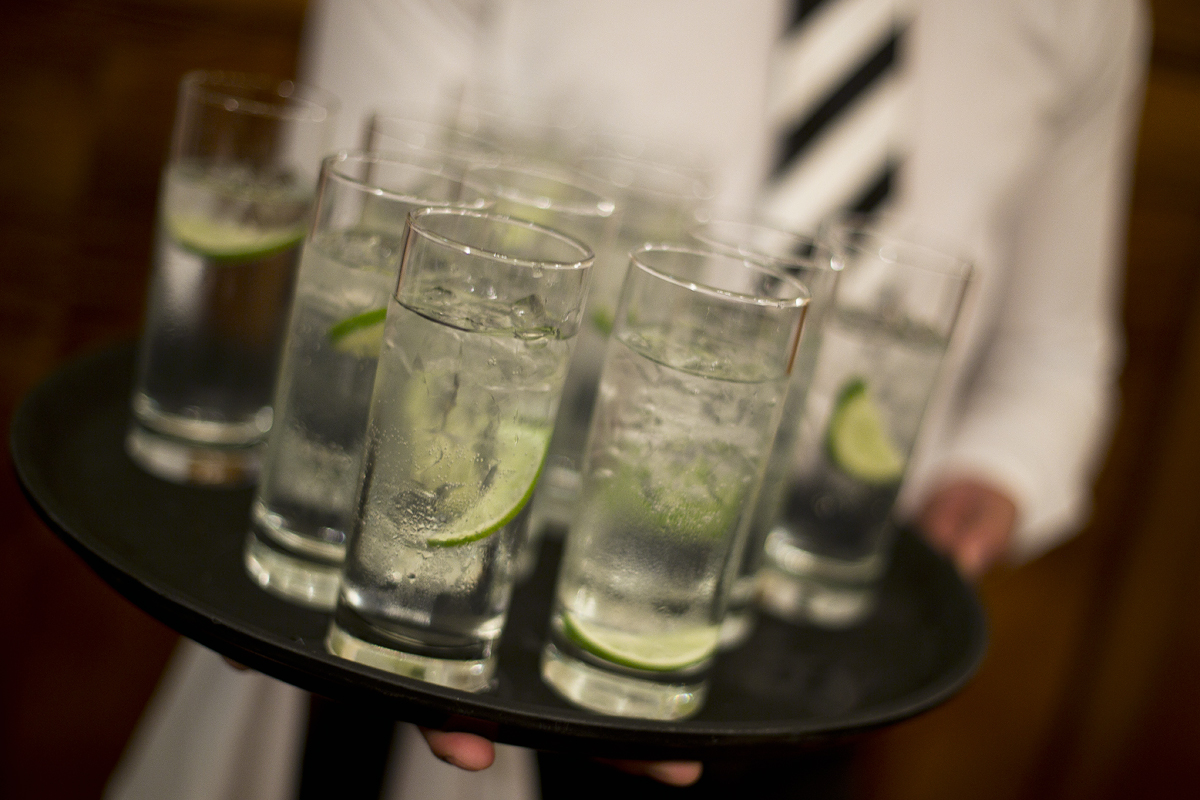
Ginandtonic

I soon found my seat and eyed off the evening’s tasting lineup, consisting of six core range expressions from the Bruichladdich distillery and something a little bit special from the SMWS’s archives.

Tasting lineup

Everyone loves a dram or seven, but truth be told, the whisky would be playing second fiddle for me this particular evening. The real reason I was there was to hear from a man – a legend – who I’d heard so much about. This guy.

Banner

Cellarmaster of the SMWS, Andrew Derbidge, soon took to the microphone.

“There are three people in the whisky industry you should move heaven and earth to see – one is Dr Bill Lumsden from Glenmorangie. The other is Richard Patterson from Whyte and Mackay – and even those two would go out of their way to see this guy here with us tonight. Ladies and Gentlemen, Mr Jim McEwan”
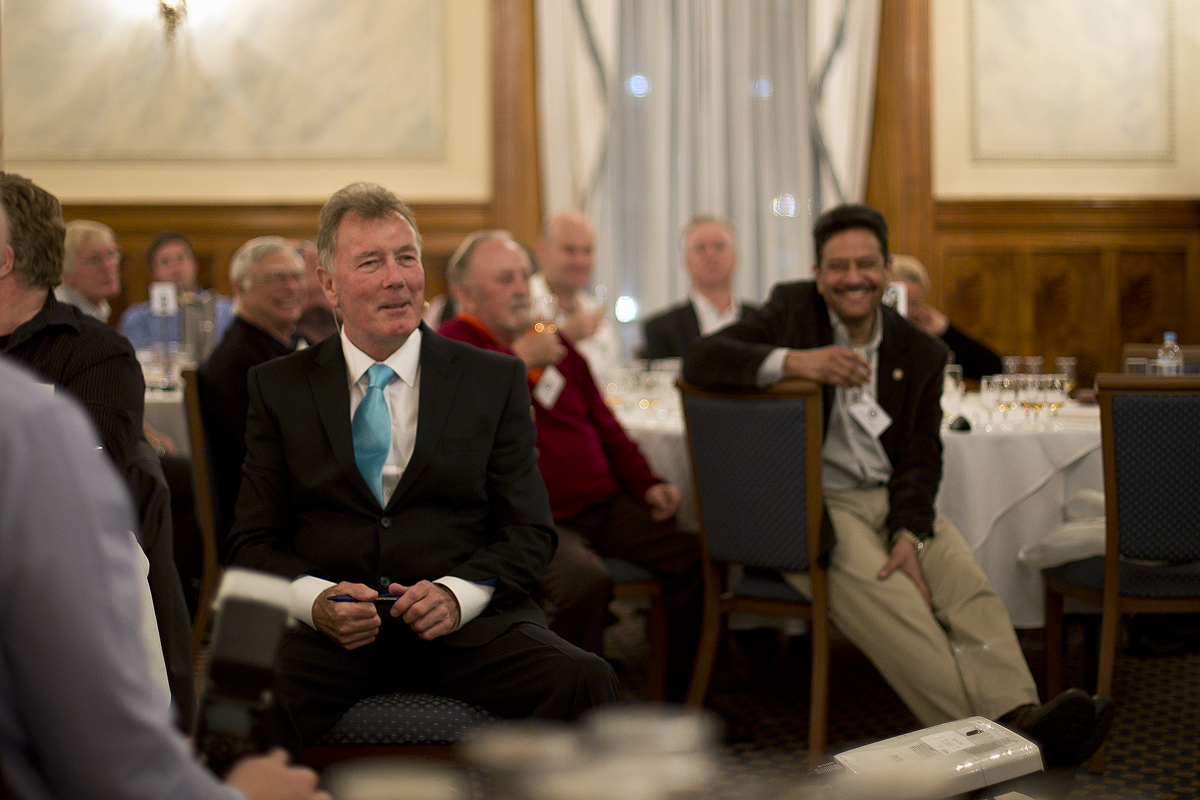
Jim McEwan Bruichladdich

It was at this point Jim stepped up and got right into it. We heard about the whisky, but perhaps more importantly – and this would become a theme of the night – we heard about the people. From the Dux of the local school on Islay who works as a Mashman to the inspiring Christine, who’s perhaps a little less fortunate than some of us. We learnt a lot about the institution that is Bruichladdich and how they’re very much a part of the community of Islay.

Bruichladdich: The whisky

I’m not going to weigh in with all-out, whimsical tasting notes, because I didn’t spend the night writing them down. Plus, Jim didn’t sound like the biggest fan of the things anyway! One thing you should know though, is that all Bruichladdich is non chill-filtered and bottled at its natural colour. It’s real whisky, made for drinking.

Bruichladdich

Laddie Classic Edition_01

First up was the Laddie Classic. Although a No Age Statement whisky, Jim tells us that it comes in at around seven years of age.
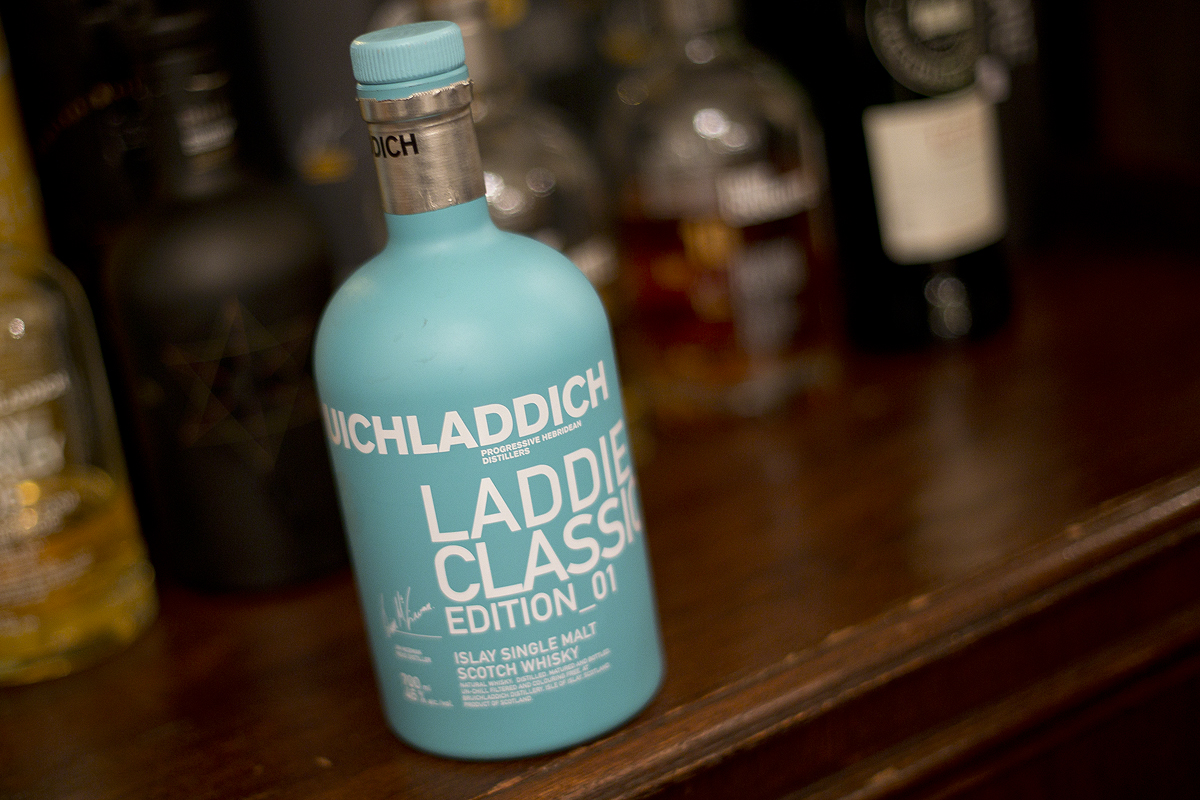
Laddie Classic

Really fresh, light and clean on the nose. Lots of vanilla, a slight sourness and some faint tropical notes that I often associate with younger, ex-bourbon matured whisky. This all translated pretty accurately to the palate – light and fresh with sweet vanillin finishing clean and creamy. I honestly think you could use this to introduce anyone to the world of proper whisky.

Islay Barley 2006

A pretty self explanatory one here, but Islay Barley is made with – you guessed it – barley grown on Islay! Barley to bottle, this one is all done on Islay.

Bruichladdich Islay Barley

Slightly more heat on the nose this time (50% ABV vs. 46% ABV on the Laddie Classic), but it also has this lovely, distinct cereal note that reminds me so much of porridge with honey. A stronger tropical fruit note – apples, pears, pineapple and banana – but pretty well balanced. Fuller mouthfeel, vanilla, citrus and malt on the palate finishing quite long and warming. Lovely stuff.

Black Arts 03.1

This next one was something I’ve been hanging out to try for a while. What can I tell you about it? Not much really. Jim won’t give away any details of the Black Art 03.1 other than its age (22 years) and its ABV (48.7%).

Black Arts

Nosing it and tasting it my initial reaction was ‘ah, ex-sherry’. But then I remembered that Bruichladdich probably have the biggest range of wacky wine-finished whisky on the planet, so who really knows what this is comprised of!

I found it sweet and jammy on the nose with berries and a touch of spice. It’s rich, fruity and dense. Thick and viscous on the palate, layered with all sorts of red fruit flavours, a slight nuttiness and sweet vanilla toward the end.

I may not know what it is, but it’s a pretty tasty dram, that’s for sure. I’m leaning toward a decent whack of wine cask in there, moreso than Oloroso or PX cask.

Port Charlotte 10 year old

‘Jim, this is the fifth whisky, what about number four?’

What?

‘the fourth whisky – you missed the fourth whisky!’

Yeah, yeah we’ll get to that one.

Okay then?.. so we moved on to whisky number five, the classic Port Charlotte 10 year old, peated to around 40 ppm.

Port Charlotte 10 year old

If there’s one note I personally get from all Port Charlotte whisky, it’s a distinct rubber washing-up glove note. That, or the smell of taking off powdered latex gloves, then sniffing your hands. Sounds weird? Try it! Some also describe this note a putty.

Don’t judge me, but I personally love the smell! Add in some vegetal peat, smoking coals, pepper and a certain freshness and that’s the Port Charlotte 10 year old to me. This all translates to the palate (minus the rubber glove note), along with charred meats, a big salty saline tang and a touch of something sweeter. Lovely stuff.

SMWS 127.39 ‘Intensely tasty’

This next one was a bit special. It’s an 11 year old Port Charlotte, distilled in 2002 and bottled by the SMWS at a whopping 66.7% ABV!

SMWS 127.39

There’s no hiding from that ABV, though it’s nowhere near as ferocious as you’d expect on the nose. A light prickle with some vanillin; it’s sweet, juicy and malty. I almost feel like this could be from the same base as the Port Charlotte Scottish Barley variant, but I guess we’ll never know. I thought it took a few drops of water quite well, bringing out my rubber glove notes.

Oh so warming on the palate, a fair whack of citrus tang and sweetness up front, with some spice developing up the back. It’s called ‘Intensely tasty’ and it certainly is – especially the ‘intense’ part. I currently have its younger sibling at home (SMWS 127.37) and I love the stuff.

Octomore 06.1

If there’s one line of whisky that the modern-day Bruichladdich distillery is best known for, it’s probably their fabled Octomore line, which pushes the boundaries of peating to a whole new level.

Octomore 06.1 weighs in at 167 parts per million (ppm) of peat. How much higher can they go? Jim tells us that they’ve just had their latest batch of malt tested and it has registered at a slightly crazy 240-245ppm!

I’m happy to admit that I haven’t enjoyed every Octomore that I’ve tasted, but I do rather like this one. I found it sweet and malty on the nose with well integrated vegetal notes. Nicely balanced in my opinion with some citrus, lemon sherbet and peppery spice. The kicker for me is the mouthfeel though. It’s so oily and sweet with this lovely smoke and char on the finish. More restrained than previous iterations, but I’d happily have a bottle of this one at home.

Mystery malt time

If that wasn’t enough, Jim had one further dram to share with us all. Waiters soon circled with trays of official society tasting copitas. In them a golden mystery malt of some description.

Mystery Malt

A quick nosing delivered a big waft of sweet peat, toasted wood chips, toffee and creamy honeyed vanilla. Marvelously oily, sweet and full on the palate with some tannins and loads of wood character which just seemed to work so well.

Holding glass

We’d go on to learn that we were actually tasting a work in progress Octomore, sitting at around 5.5 years in age, 67% ABV and peated to 175 ppm. What made this extra special though was the fact it was solely matured in Virgin French Oak (Limousin Oak) casks. Not only that, we were the first group in the world to be tasting it.

I can assure you that it wasn’t the whiskies before it talking, but this was genuinely lovely stuff. Jim assures us it will be bottled – and bottled soon – so watch this space. My only hope is that it’s a mainstream release that makes it way to Australia. Truly fantastic stuff and my personal whisky highlight of the evening.

A highland toast

It was at this point of the night where Jim invited everyone to get up and join him in a Highland Toast. One foot on the table, one on your chair, glass charged in your right hand.

Jim McEwan

And so with great gusto the room chanted. “up with it, down with it, away from me, towards me, drink it off and no other shall ever drink from this glass again”
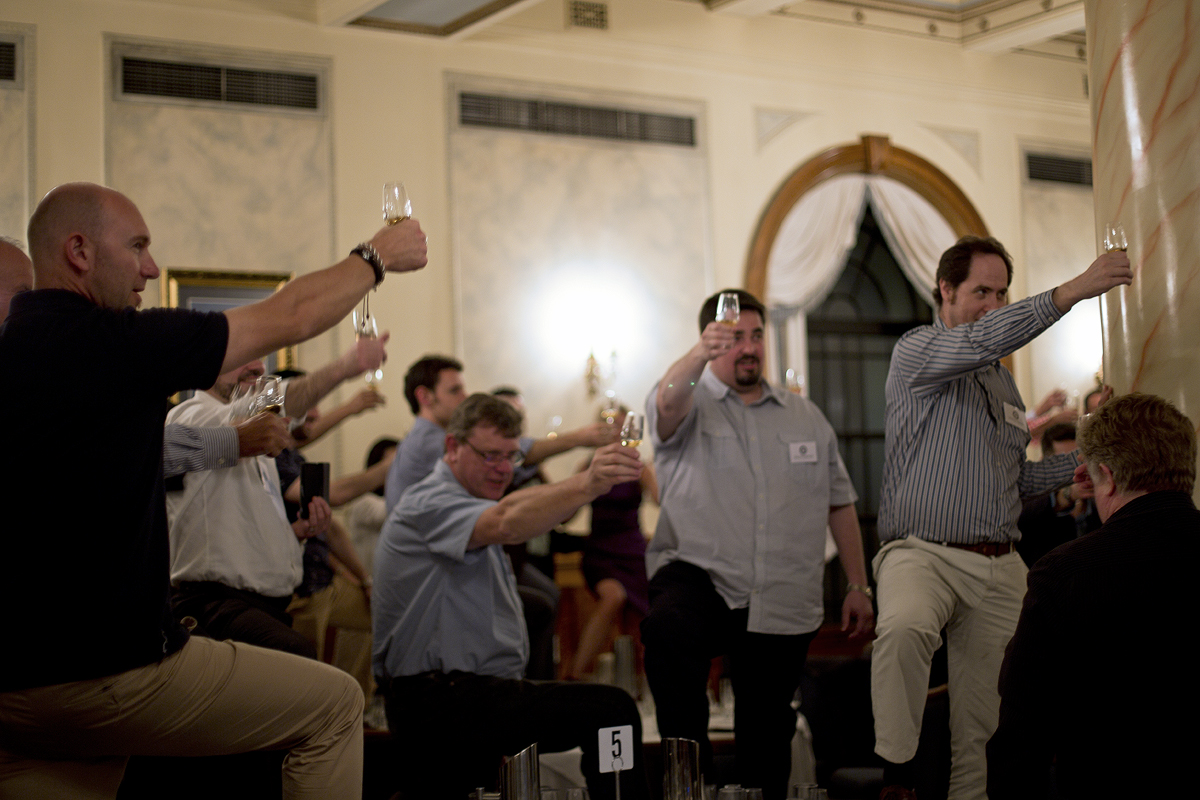
Group toast

I’m pretty sure we were saying it in Gaelic. But if you can actually speak Gaelic, then you’d probably say we were all chanting gibberish. Whatever we did, I think we did an alright job of it.

Jim McEwan

As an aside, the whisky used in the toast was the Port Charlotte Scottish Barley, whisky number four that we missed earlier. And it was bloody fantastic. All the cracking elements of the Port Charlotte 10 year old, plus that malty porridge note from the barley just works a treat. Tasty underrated stuff in my opinion.

Signing bottles

Jim stayed around for a good while afterwards, signing bottles, chatting to fans, posing for photos and just being an all-round nice guy.

And so the evening came to a close

I hope this post doesn’t make it sound like we sat through a simple tasting and presentation. Because it was so much more than that.

It was the stories and the banter that made the night as enjoyable as it was. From Jacky losing his teeth in a cask, to Jim’s finger sniffing lost in translation moment in Japan, to Günter, the Nuremberg Highlander. It’s the kind of stuff you can’t really convey in pictures or words. You just had to be there. I could go on and on about the institution that is Bruichladdich and the legend that is Jim McEwan, but it would do neither of them justice.

Although Jim was billed as the evening’s guest, when he speaks and presents, it almost felt as though you were the guest at his tasting.

A sincere thanks to Jim McEwan and SMWS Australia and Southtrade International for making the evening a truly memorable one. To Jim, I genuinely do hope our paths cross again at some point. Perhaps in your hometown of Islay next time, instead of mine here in Sydney.

As I said at the beginning, If you ever get the chance to go along to a tasting hosted by Bruichladdich’s Jim McEwan, don’t think about it, just do it.

Glengoyne 25 year old launched in Australia

A day in the Hunter with Glengoyne

A little while back I received a cordial invite to spend the day in the Hunter Valley, eating delicious food and tasting the full line-up of Glengoyne whiskies. Let’s just say that it didn’t take too long for me to RSVP.

Arriving in the Hunter Valley

After the two and a bit hour trek north, we arrived at the Glenguin Estate in one of New South Wales’ premier wine-producing regions, the Hunter Valley. The location may seem rather extravagant and somewhat out of the way for a tasting (hey, I wasn’t complaining!), but it was actually chosen for good reason.

You see, Glenguin Estate and Glengoyne distillery have a rather intimate family connection dating back well over one hundred years. The full story is explored here, but it essentially begins with Arthur William Tedder, born in Glenguin, Scotland to a Customs and Excise officer of the Glengoyne distillery.

Fast forward a few generations and we’re introduced to Arthur’s grandson, Lord Robin Tedder. After leaving Scotland in his teens Lord Robin, the third Baron of Glenguin, eventually settled in NSW’s Hunter Valley. Here he established the Glenguin Estate in 1988, thus giving us the wonderful reason to be here on a warm winter’s day.

Glenguin Estate
Image courtesy of DEC PR 

Being winter, the vines were rather bare and the property was perhaps not as lively as it would be at other times of the year. But one thing was still apparent, and that was how peaceful and serene this place was – can you believe that was a winter’s day!?

Jonathan Scott

Even Jonathan Scott – Glengoyne’s Asia Pacific Brand Ambassador – seemed pretty impressed.

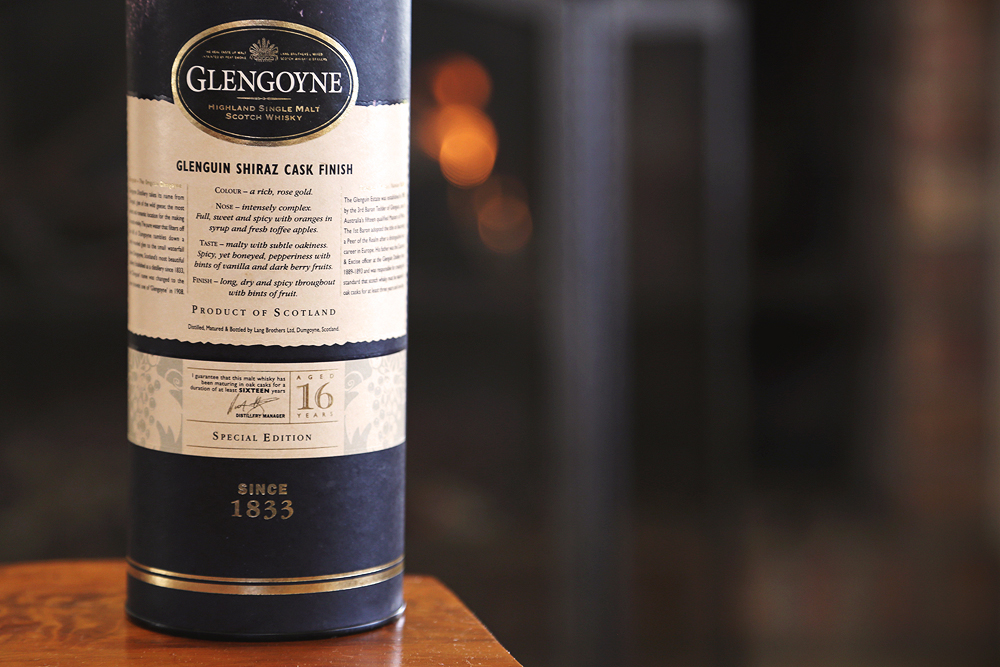
In case you still doubted the Glenguin/Glengoyne connection, I spotted this interesting tube on the counter and dearly hoped we’d be tasting it.

Glengoyne 16 Glenguin

The story goes – around 2007, Glenguin sent 20 ex-shiraz casks over to Glengoyne in Dumgoyne, Scotland where they were filled with 16 year old Glengoyne whisky and left to work their magic. After being carefully monitored for a number of months, the ten best casks were selected and in June 2008, 3,800 individually numbered bottles were released.

Naturally I asked whether there happened to be a spare bottle lying around, but as I suspected, they’re all long gone. I wonder how the other ten casks are coming along?..

Jonathan Scott bringing Glengoyne to life

Re-entering the main room, it was time to take a seat with Jonathan and get down to business. Oh, and in case you’re wondering, yes, Jonathan is Scott by both name and heritage.

Scottish Kilt

Jonathan walked us through the history and heritage of Glengoyne, from Arthur Tedder’s days to the present. Personally, I love the history and stories almost as much as whisky itself, so here are some of the interesting tidbits that really appealed to my whisky nerdism:

  • Glengoyne have a staff of nine and produce in the region of 900,000 litres of spirit per year.
  • They also claim to have the slowest distillation in Scotland. Exactly how slow are we talking? Jonathan tells us that the spirit is collected at a flow rate of just 4.5 litres per minute.
  • Whilst strictly a Highland distillery, you could literally cross the road out the front, walk a short distance and you’d find yourself in the Scottish Lowlands, with distillery neighbours such as Auchentoshan.
  • Up until 1908, Glengoyne was actually called the Glenguin distillery
  • The full Glengoyne range is natural colour and all Glengoyne whiskies are matured in traditional dunnage warehouses, racked three barrels high.
  • Wondering how old their oldest stock is? Around the 40 year old mark.

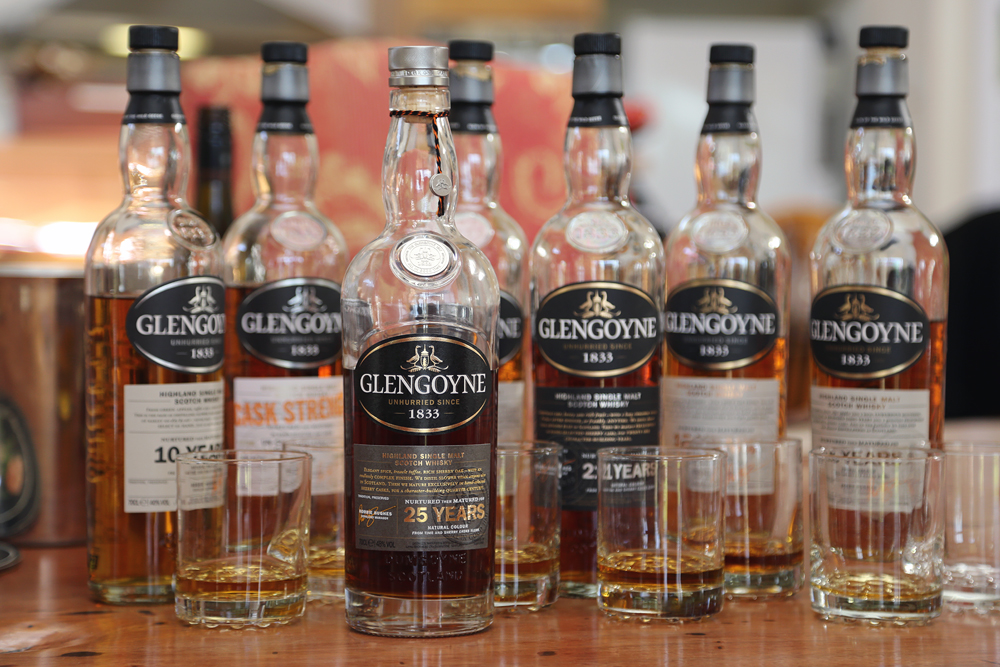
Apart from getting my nerd on, we were lucky enough to taste through the whole core range. I’ll keep my notes limited to the following expressions as this is where I personally encountered the most notable variation in character.

Glengoyne 10 year old 

A make up of both American and European Oak, including around 30% from first fill American Oak casks. Bottled at 40% ABV.

Glengoyne 10 year old

On the nose I got clear toffee apple notes, some light honey and subtle nuttiness. Quite delicate and sweet while being very approachable. These notes translated fairly closely to thin, delicate palate with noticeable pear and apple sweetness, some grassy notes and a fairly short, pleasing finish. I thought this was actually very solid for an entry-level expression.

Glengoyne Cask Strength Batch 1

Again, a composition of both American and European Oak vatted as a small batch release and bottled at a respectable 58.7% ABV.

Glengoyne Cask Strength

On the nose, plenty of creamy honeyed vanilla notes, thick and rich with less of the apple and more zest, custard and a hint of spice. Creamy and mouth coating on the palate with richer sweet vanilla and more spice. A noticeably longer finish than the 10 year old (to be expected), but perhaps not quite as long as you’d expect from a dram at this ABV.

Glengoyne 18 year old

A higher percentage of ex-sherry casks in this expression, bottled at 43% ABV.

Much richer on the nose with more of those typical sherry notes, a lot more spice, some citrus peel, red apples and dried fruits. On the palate, some initial citrus notes (orange), more malty and oaky with a slight zestiness and more spice. This especially showed on the finish, which was slightly nutty with a hint of oaky bitterness and the very end.

Glengoyne 21 year old

Glengoyne 21 year old

A visibly different beast here, so no surprise that this is made up of 100% ex-Oloroso sherry cask spirit. Bottled at 43% ABV

Textbook sherried whisky here, with a rich ‘rounded’ nose of berries, dried fruit, toffee and gentle spice. The nose translated nicely to a palate of stewed red fruits and honeyed spice fading to a spicy and chewy finish.

I found all the flavours to be rounder than the younger expressions, pulling this whisky together as a much more balanced dram. In saying that, I feel as though this could benefit from a slightly higher ABV (not much – maybe 3% to 5%)

Hard work makes me hungry..

..which is a good thing, as a rather delicious lunch of was being quietly prepared in the background as Jonathan took us through our tasting.

Glengoyne main

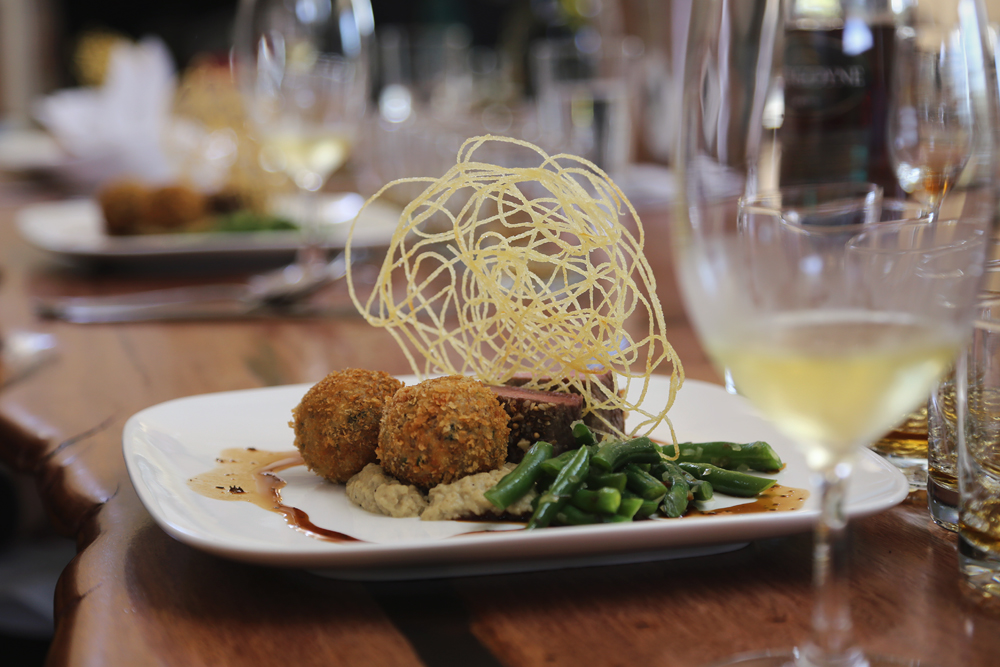
Lunch consisted of a delicious main of dukkah crusted lamb loin, lamb shank croquette, smoked eggplant and thyme jus.

Glengoyne dessert

This was followed but a seriously decadent dark chocolate delice with confit of sour cherry and coconut ice cream.

Both courses were matched with some cracking Glenguin wines, including an amazingly tasty Ironbark Tannat. Not a varietal I’ve ever tried before, this red was super dusty, dry and tannic all while remaining somewhat fresh – which we’re told are hallmarks of this grape from south-western France.

The main event – tasting the Glengoyne 25 year old 

The moment we’d all been waiting for! Truth be told though, I was slightly concerned about the prospect of getting the most out of this dram from a short tumbler, but a small amount of ferreting around in one of the cupboards yielded some small copita glasses – perfect for getting a good nose and palate out of the 25 year old.

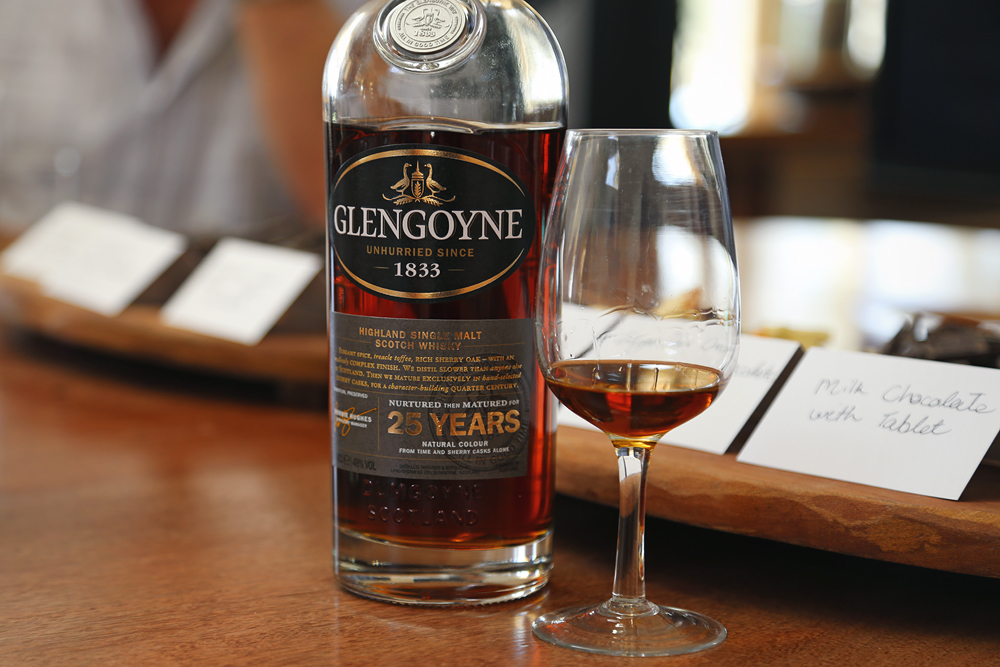
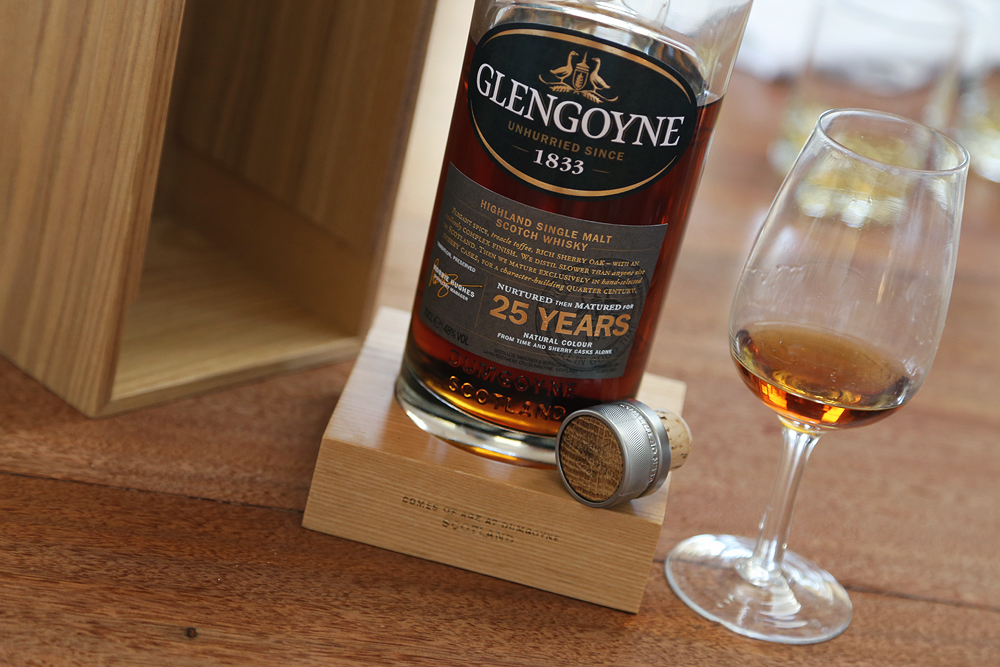
Glengoyne 25 year old

On the nose, ever richer (than the already rich) 21 year old, with some polished oak notes, wet brown sugar, toffee, more citrus and spice. This translated nicely to a much thicker, richer mouthfeel loaded with tart dried fruits, spice and a lingering oily sweetness. The finish was fairly long and rather oaky, but not in a bitter old wood sense.

No desire to add water to this one and that slightly higher strength of 48% seemed spot on to me. It really allowed you taste more of that complexity from the nose. A really satisfying and special dram.

Glengoyne 25 year old

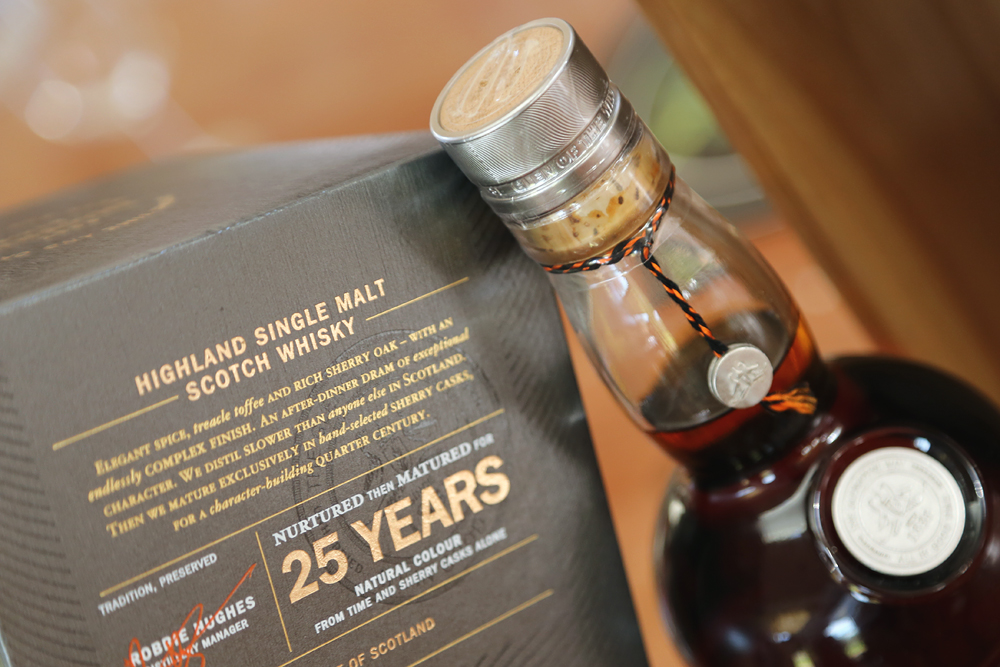
The presentation of the Glengoyne 25 year old is rather special as well. The clear glass bottle differs from the core range with a thick weighted base, silver neck medallion and a weighty oak and metal stopper. This handsome bottle is then packaged up and presented smartly in an oak and card case.

Glengoyne 25 year old

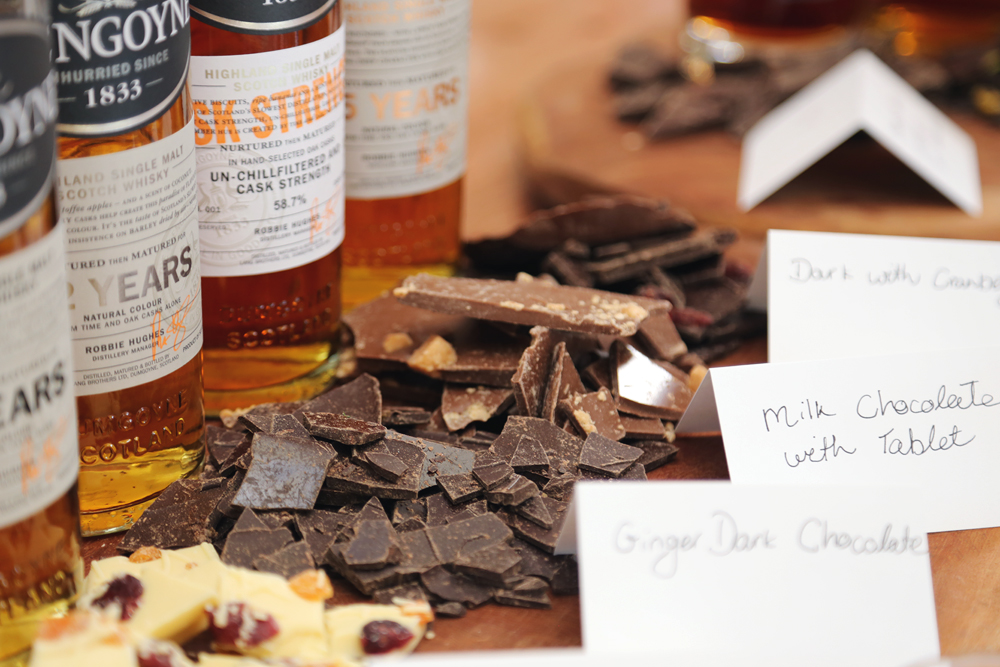
You may have noticed a fair amount of chocolate popping up here and there in the images above. That’s because there was a whole lot of it and it wasn’t there by mistake either!

Glengoyne chocolate

We rounded out the day with a Glengoyne and Scottish chocolate pairing, including some delicious combinations like:

  • Glengoyne 10 year old + 54% dark chocolate with cranberries
  • Glengoyne 18 year old + Banana and pecan milk chocolate
  • Glengoyne 25 year old + Orange and cardamom dark chocolate

A highly enjoyable day and special thanks to our gracious hosts, Glengoyne, Jonathan Scott, Andrew Tedder and Klaus from Glenguin Estate and the kind folks at DEC PR. 

Fancy your own Glengoyne tasting?

The full Glengoyne range is currently available nationwide through Dan Murphy’s and select specialty retailers. The Glengoyne 25 year old will retail for AU$599 when it’s released in September as an online exclusive through Dan Murphy’s.

Glengoyne group

As an aside, if you happen in Melbourne this coming weekend (18th and 19th of July), you can catch Jonathan Scott and Glengoyne at Whisky Live in St Kilda.

Suntory whisky launch

Six new expressions for Australia

Until now, Suntory products have been fairly thin on the ground in Australia. Sure you’ve been able to track down the odd bottle of Yamazaki 12 year old, or maybe even a Hibiki (if you know where to look), but as far as official imports go, they’ve been fairly non-existent.

With the recent rise in popularity of whisky – and Japanese whisky specifically – Suntory Australia have started to officially import six expressions, which can now be found in most major liquor stores right throughout the country. For details on the range and pricing, see this recent post.

With that decision came a product launch and on a recent Monday night they hosted a rather decadent soiree in Sydney, which unfolded a bit like this.

Suntory whisky launch, Sydney, Australia

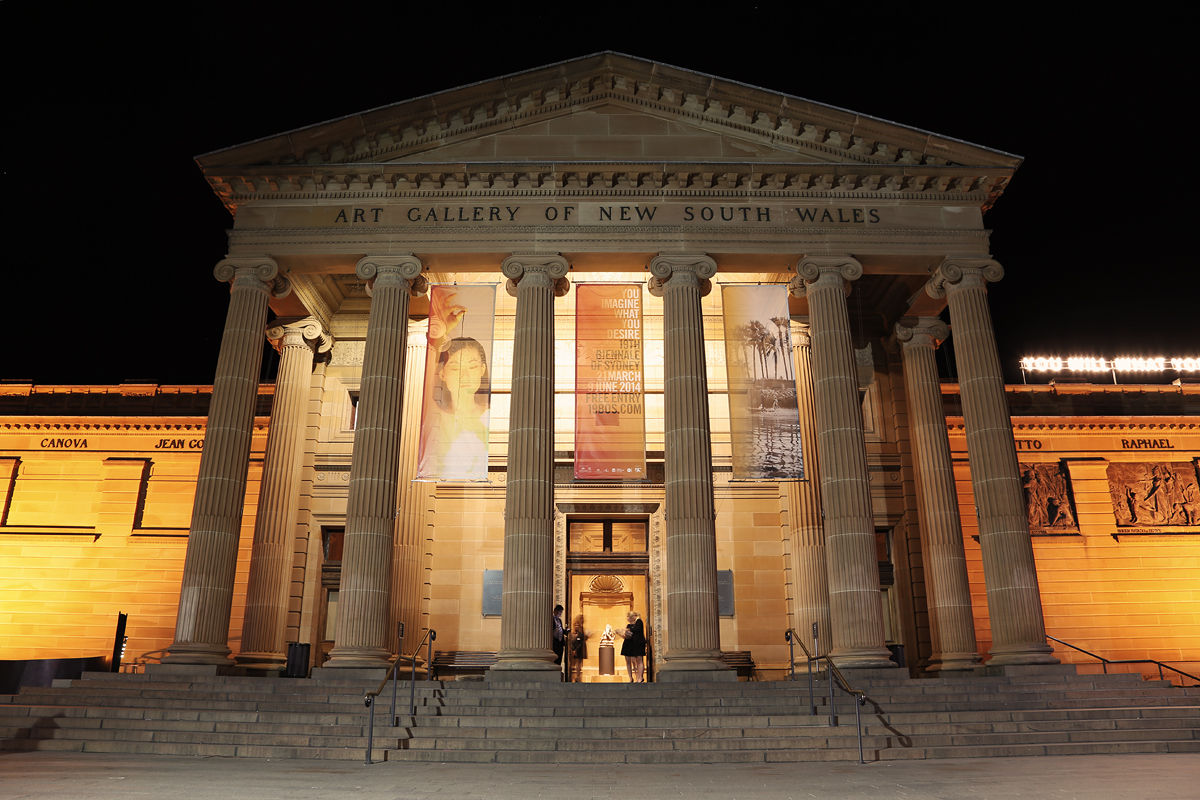
As a general rule, I don’t like Mondays. However, when they involve whisky, and in particular, a rather lavish evening of whisky, excellent food and great company, they all of a sudden become a whole lot better. Such was a recent Monday when Suntory Australia officially launched six of their bottlings in to the Australian market, in Sydney, at the Art Gallery of New South Wales.

Gallery

Upon entry, guests were treated to a highball (whisky + soda water) of Hibiki 12 year old and Perrier sparkling water, served simple and tall in a Champagne flute.

Hibiki 12 Highball

I’ve had whisky + soda before, but never in this ratio. I can’t say I’ve ever really contemplated diluting a quality whisky to this extent, but it was actually really refreshing. I don’t think it’ll replace a good G&T in summer, but I’ll certainly start to alternate my choice of libation on those warmer days!

Crowds

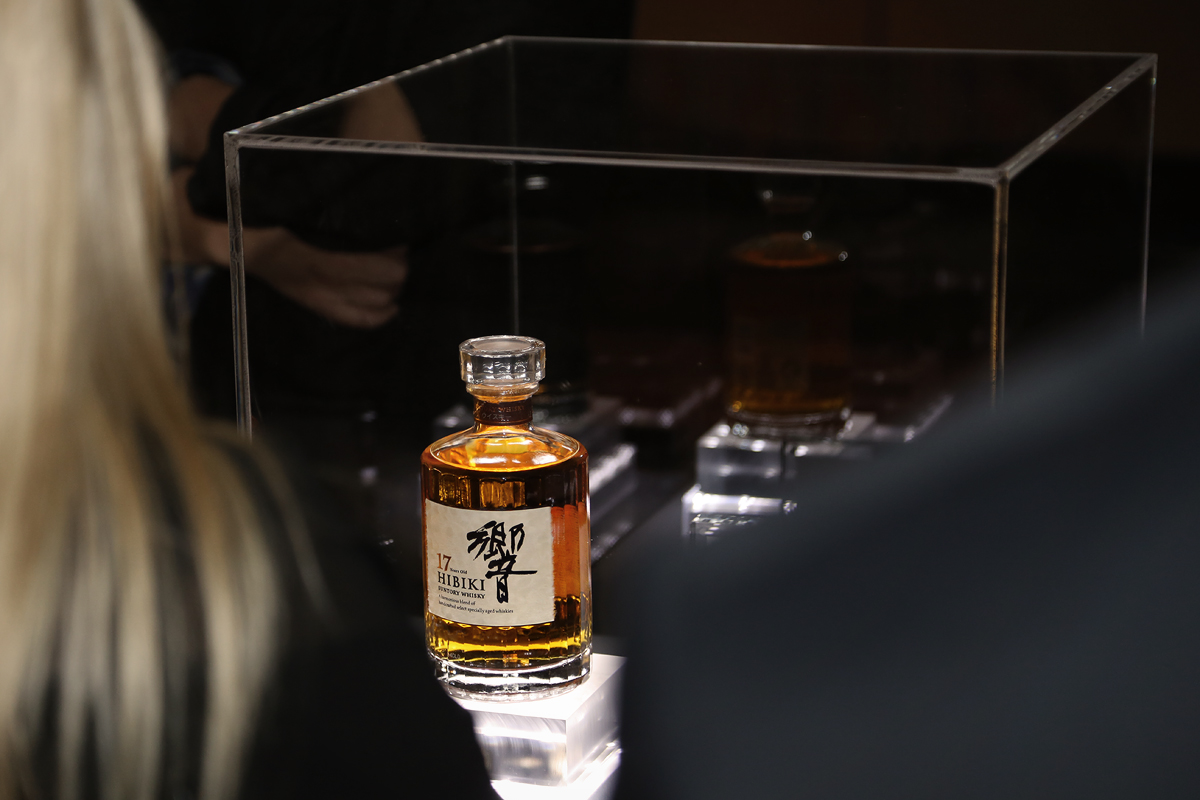
Guests mingled in the main foyer area of the gallery around six illuminated plinths, each housing one of the six Suntory expressions now available locally.

Yamazaki 12

If Suntory were hoping to achieve the whole museum display piece look, then as far as I’m concerned, they nailed it. People stopped and stared, read the placards and took photos. Some seemed to admire them as genuine display pieces (and why wouldn’t you? The faceted Hibiki bottle is a work of art).

Hibiki 17

Although it was mere metres away, I must admit that I was enjoying myself so much that I completely failed to notice the tasting room setup toward the back, right up until we were politely ushered in.

Tasting

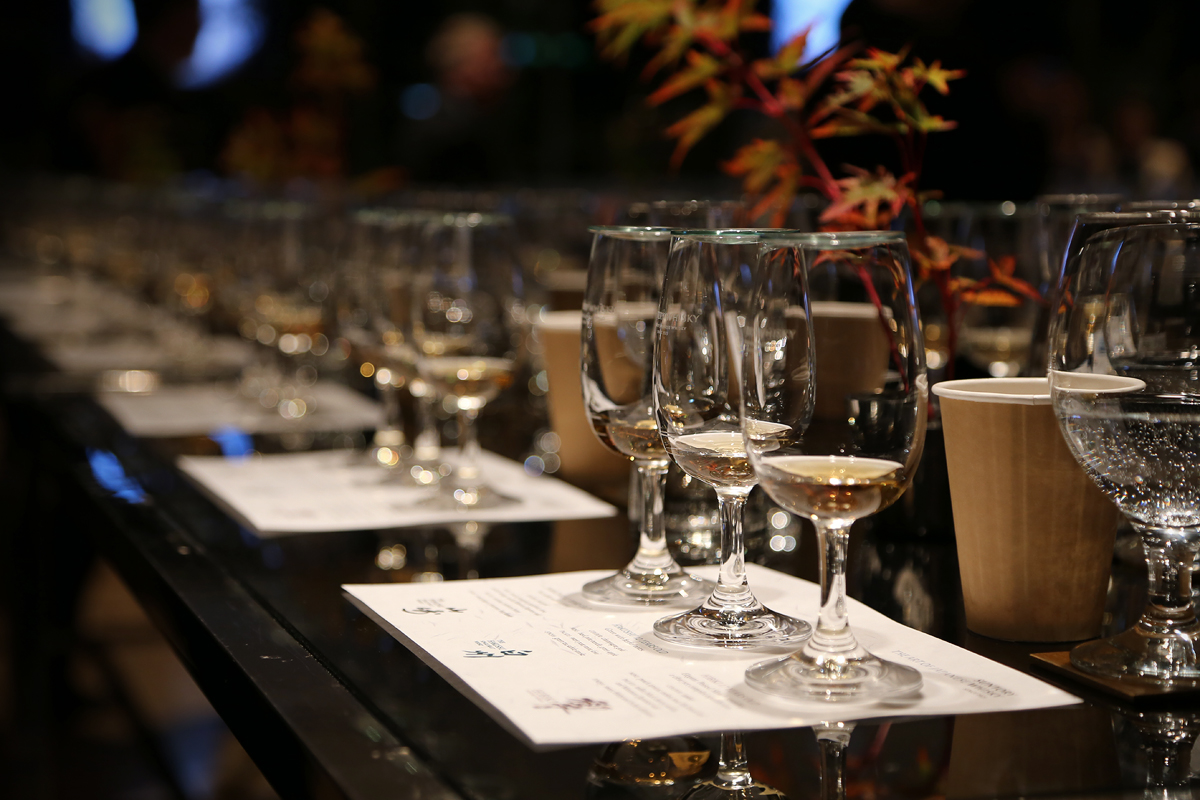
As someone who really appreciates detail, the setup of this space was incredibly visually pleasing. Everything was perfectly aligned, miniature maples adorned the waist-height tables, the glasses were all etched – logos facing forward – and were all adorned with perfectly sized watch-glasses.

Glasses

It seemed rather fitting that in a setup of such precision and craftsmanship we were trying Japanese whiskies, created with much the same attention to detail.

Following a brief introduction, Suntory’s Global Brand Ambassador, Hiroyoshi (Mike) Miyamoto, took us through a tasting of the three core expressions in front of us – Yamazaki, Hakushu and Hibiki – all of the 12 year old variety.

Mike

Unfortunately, some of the crowd got a bit restless at times, but I suppose that’s to be expected for a group of 150-200. In any case, I absorbed plenty of new info and will write up my thoughts on these three core 12 year old separately.

Trio

The tasting marked the end of the evening’s formalities. Guests were invited to the adjacent space (which usually holds the Gallery’s main restaurant) to be greeted by whisky and matched canapés, expertly prepared by the Restaurant’s chefs. Think grilled short rib with truffle béarnaise, parmesan and herb gnocchi and seared scallop with passion fruit and vierge dressing – these were seriously tasty.

Canapes

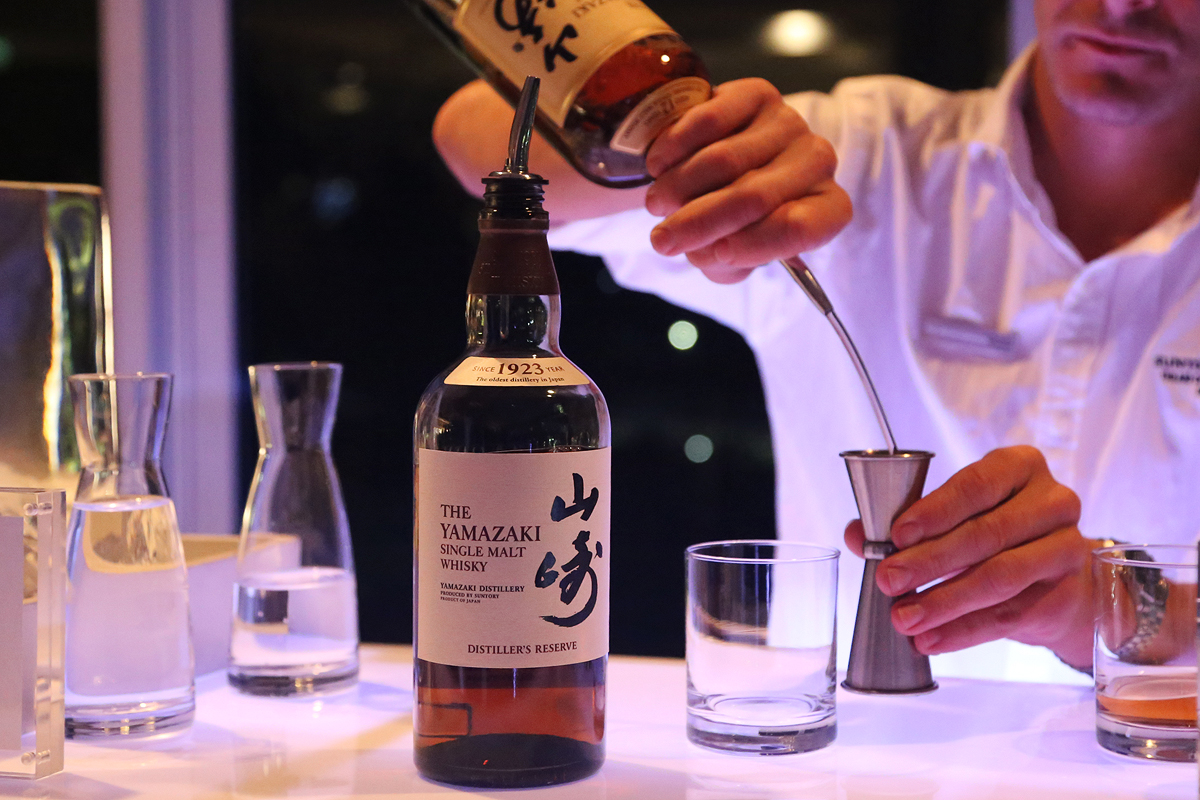
A nightcap wasn’t hard to come by, with three stations spaced around the room, each serving a duo of Yamazaki, Hakushu or Hibiki. Guests were invited to try them neat or on the rock (yes, singular).

Drinks pouring

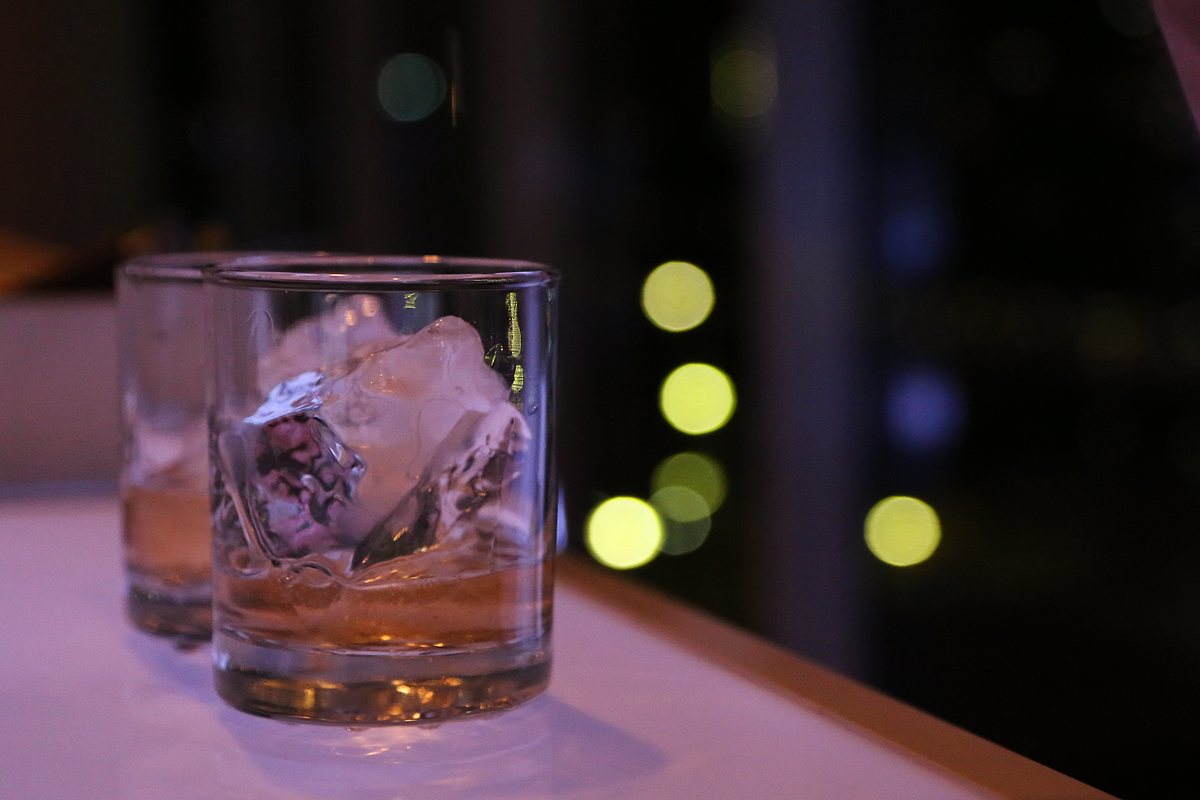
I say ‘rock’, as each station was equipped with a flawlessly clear block of ice. My initial reaction was that they were for display only (and probably made of plastic). But oh no, they were the real deal and they were being hand-carved and served. I know, I know, it’s a bit crazy to get excited over ice, but these were rather impressive.

Drinks rocks

A DJ kept the beats coming at an ambient level (kudos for not trying to deafen us all on a Monday) and drinks and canapés were still freely flowing as I said my farewells to friends, old and new. A very fitting local introduction for a quality whisky brand steeped in history – just like the rest of the objects within the walls of gallery.

Set

My thoughts on Suntory’s core range will follow in a new post shortly.

The Campbell Corner Whisk(e)y Co-operative

A new way to enjoy whisky – The Wild Rover, Sydney

The other week I attended a great masterclass with Burn Stewart’s Ian MacMillan at one of Sydney’s newer bars, The Wild Rover in Surry Hills.

You’ll find The Wild Rover an easy five to ten minute stroll from Sydney’s Central Station behind this rather unassuming shop front on the corner of Campbell and Foster Street in Surry Hills. Despite the faded signage, there’s no shirts being measured and made behind that green door…

Outside

… just a whole lot of quality drinks and good times!

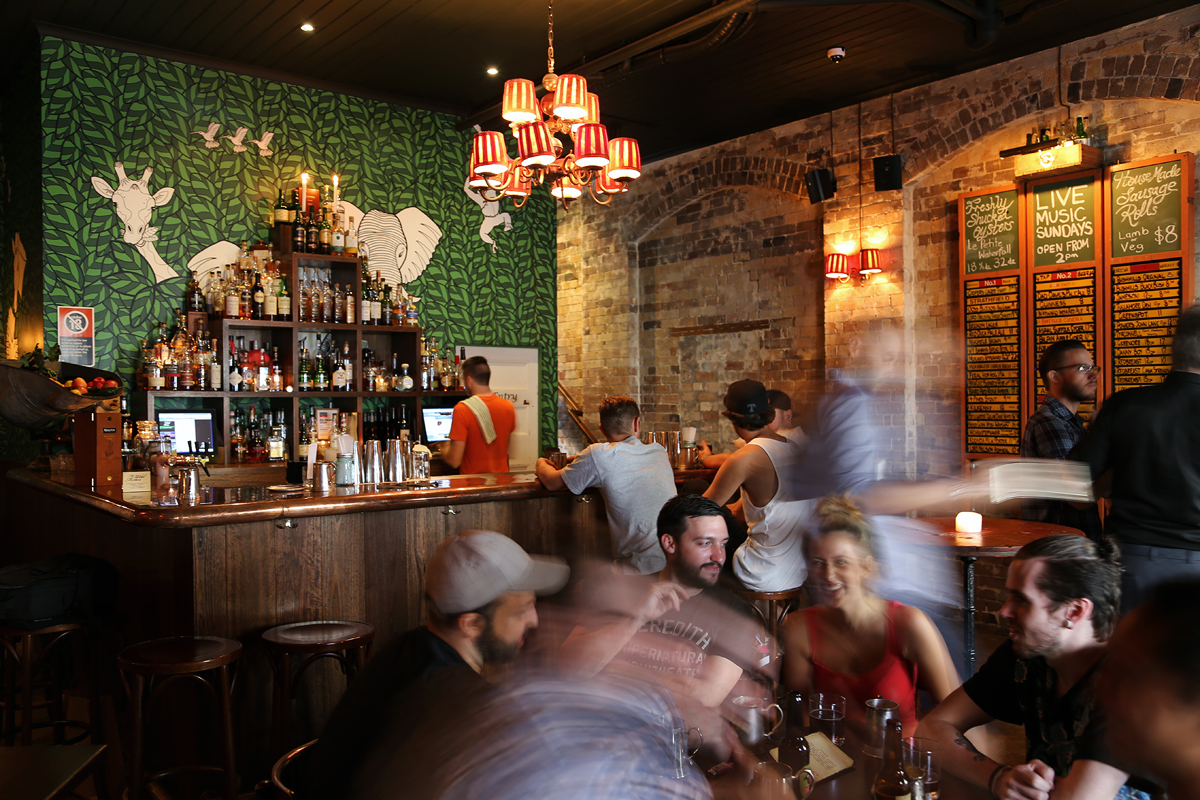
Downstairs

The copper-coloured bar, old railway destination boards and red and white candy-striped lamp shades work so well with the bare brick-work and those jungle murals – the place just pops with life. It’s such a warm and inviting space.

Downstairs

About the whisky though

Kim McDiarmid, Manager of The Wild Rover, explained that he’s rather wild about whisky & whiskey, so it makes perfect sense that the bar he manages would have a decent selection of the stuff.

He and the team have gone one step further though and created the Campbell Corner Whisk(e)y Co-operative (CCWC), which aims to bring like-minded enjoyers of whisky together over a dram of the glorious stuff.

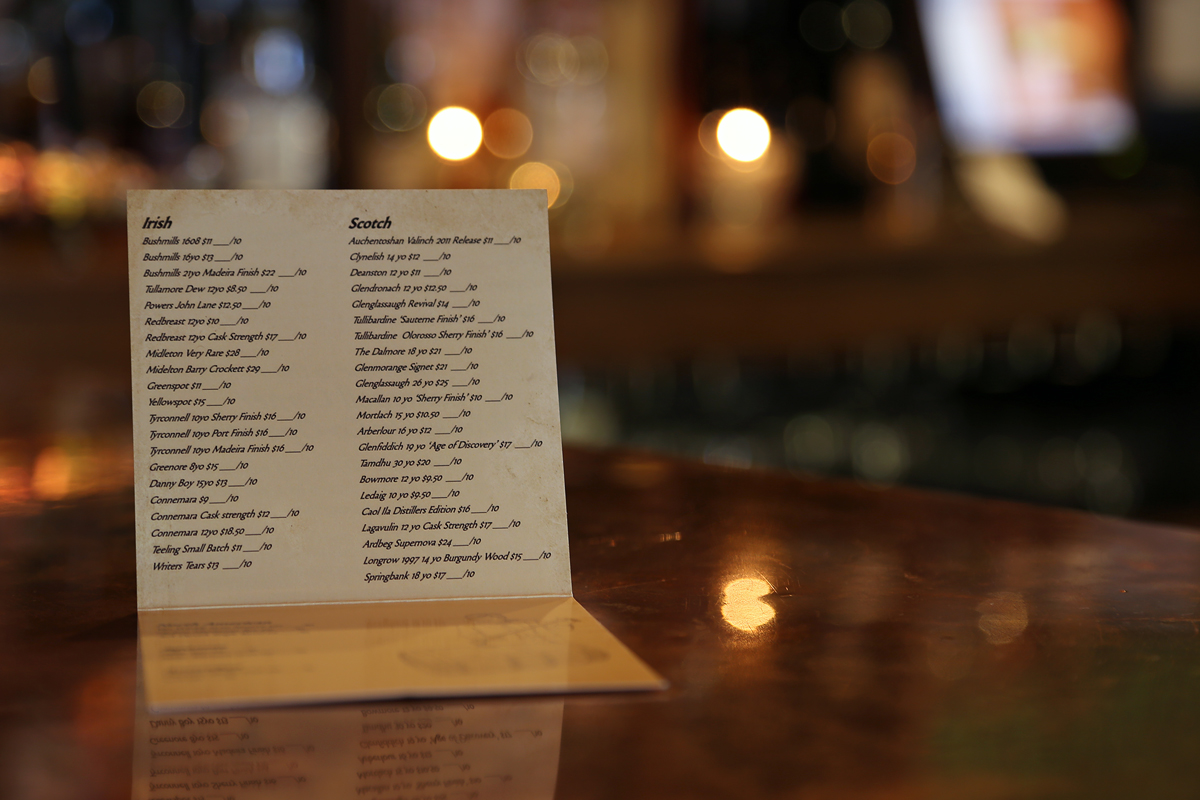
Joining the CCWC will set you back $20, but for that you’ll get a dram of something special (to the value of $25), plus your very own personal “Inventory Of Whiskeys” – a passbook of 50 whiskies and whiskeys available at The Wild Rover that you can work your way through at your own pace.

Dram passport

The CCWC isn’t just about your own personal whisky adventure though. The dedicated fans who manage to tick off each dram will be granted privileged access to The Wild Rover’s reserve selection (a locked cabinet that’s about to go up on the wall) which already includes some pretty rare drops. Think Bushmills 12 year old Distillery Reserve (a distillery exclusive), Connemara Bog Oak and Teeling 21 year old Silver Reserve. For the Scotch Whisky fans, there’s also a Tamdhu 30 year old and plans for a tasty Port Ellen are in the works, along with some others.

If that doesn’t do it for you, Kim tells me that whisk(e)y buffs who get through their inventory will have access to these drams at cost price, a special thank you for their on-going support.

Being a CCWC member also grants you access to a bunch of ‘member only’ events to be held once a month. The first one held a couple of weeks ago was a Glendronach tasting, featuring Global Brand Ambassador from BenRiach and Glendronach distilleries, Mr Douglas Cooke. Unfortunately I couldn’t make it, but Martin from Timeforwhisky.com was there and has put together this excellent write up, so head on over and check it out.

Upstairs

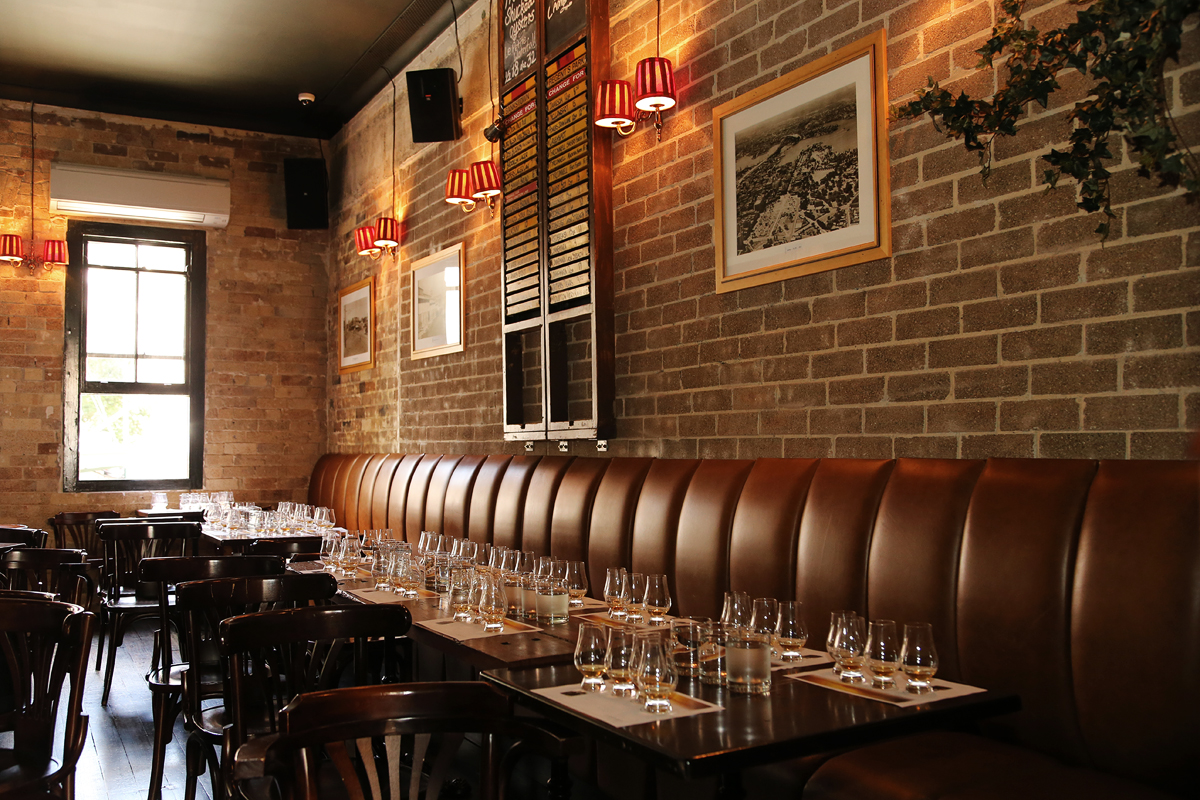
This picture shows the upstairs set-up for the recent Ian MacMillan masterclass and I imagine it would look somewhat similar for their CCWC events. Such a great space to be enjoying your drams.

If you’re in Sydney and you missed out on the Glendronach tasting, fear not! The second CCWC event is being held on 10 March and features none other than the owner and Master Distiller of Kilchoman, Mr Anthony Wills. Not a member? Not to worry, you can join on the night, sip your special dram and enjoy the tasting.

Full details on The Wild Rover’s facebook page.