SMWS + Shirt Bar Sydney

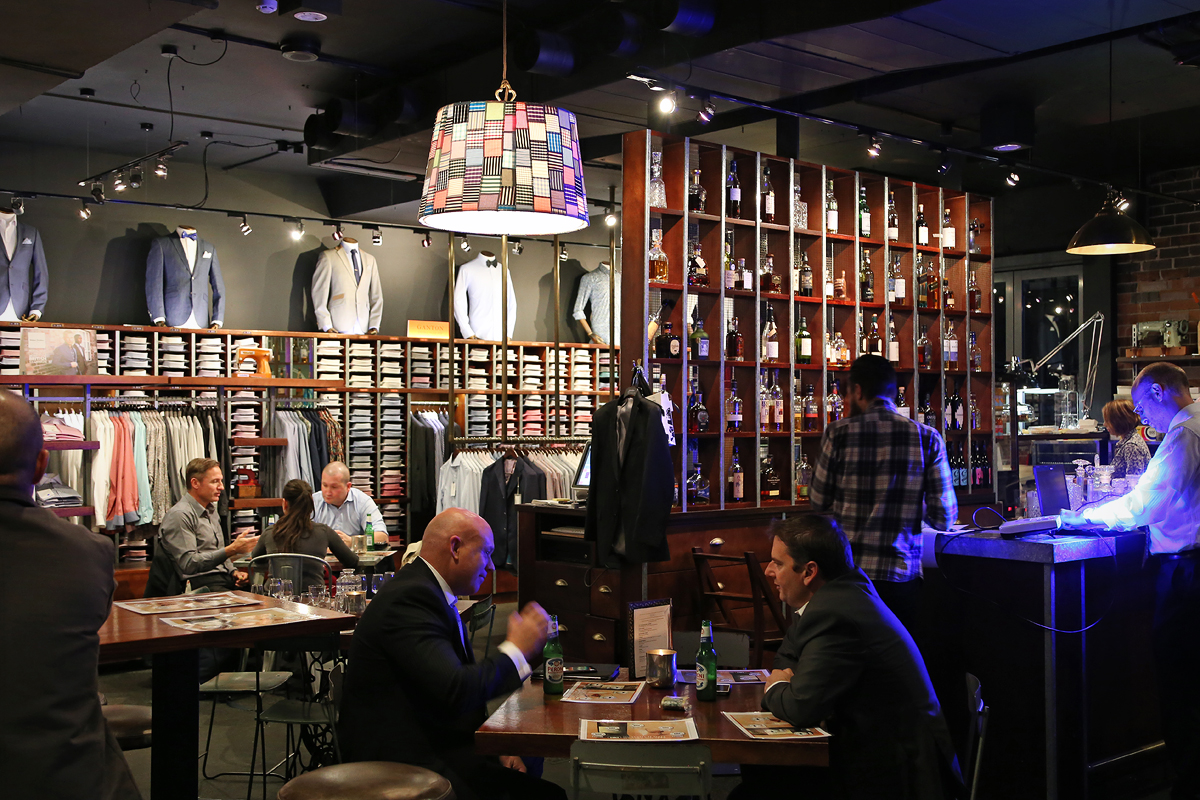
The other week the Shirt Bar in Sydney held a very special Scotch Club event in conjunction with the Australian chapter of the Scotch Malt Whisky Society (SMWS).

Shirt Bar sign

I’ve been to a few Scotch Club events before (here and here) and I’m also a member of the SMWS, so I knew this would be a winning combo. Even more so as the evening was being hosted by SMWS Australia’s Cellarmaster, the affable Mr Andrew Derbidge.
ShirtBar

For those who’ve never met Andrew, he has to be one of the most knowledgeable and approachable whisky figures I’ve come across. His presentations are always jam-packed with interesting info, yet never bore – irrespective of your level of whisky knowledge or interest.

What you need to know about The Society

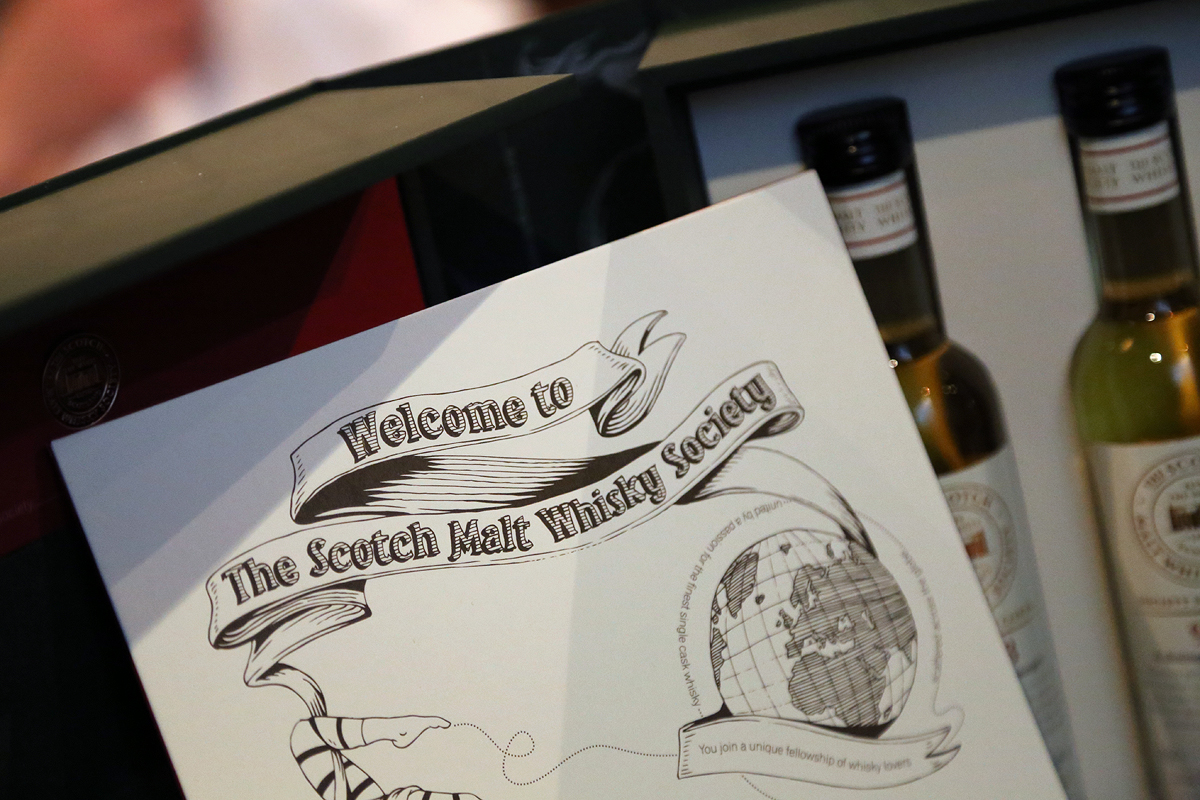
If you’re not familiar with the Scotch Malt Whisky Society, who they are and what they do, their website should be able to help solve that problem for you. In my opinion though, here’s what you really need to know:

  • All of their whiskies are bottled from single casks,
  • They’re all cask strength, natural colour and non-chill filtered.
  • Bottles will never be repeated, so when they’re gone – they’re gone!
SMWS pack

In the images to follow, you’ll note that the labeling contains an odd numerical code. Quick intro if you’re not familiar with the SMWS’s labeling system – the first number represents the distillery the whisky came from and the second represents the number of casks that have been bottled by the Society, from said distillery. The brilliant names? Well, that’s the domain of the chaps in the Society’s creative department I guess!
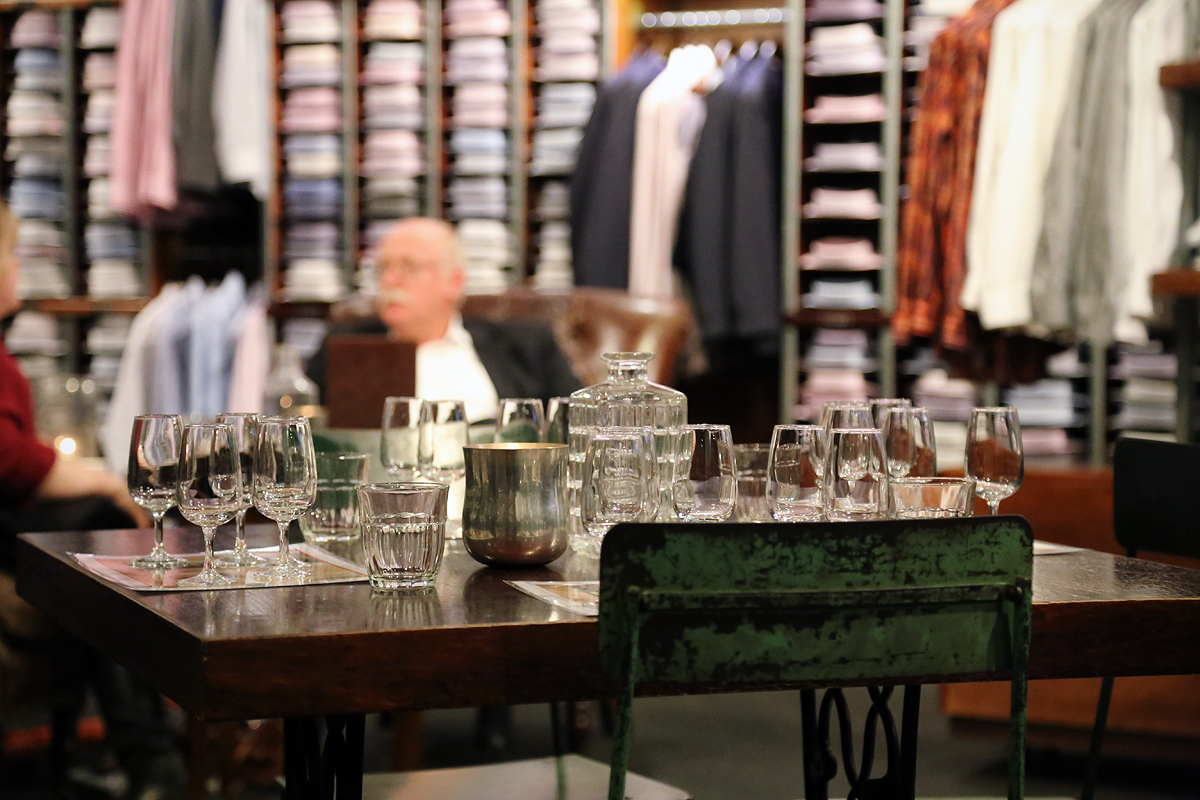
Table

On to the whisky then

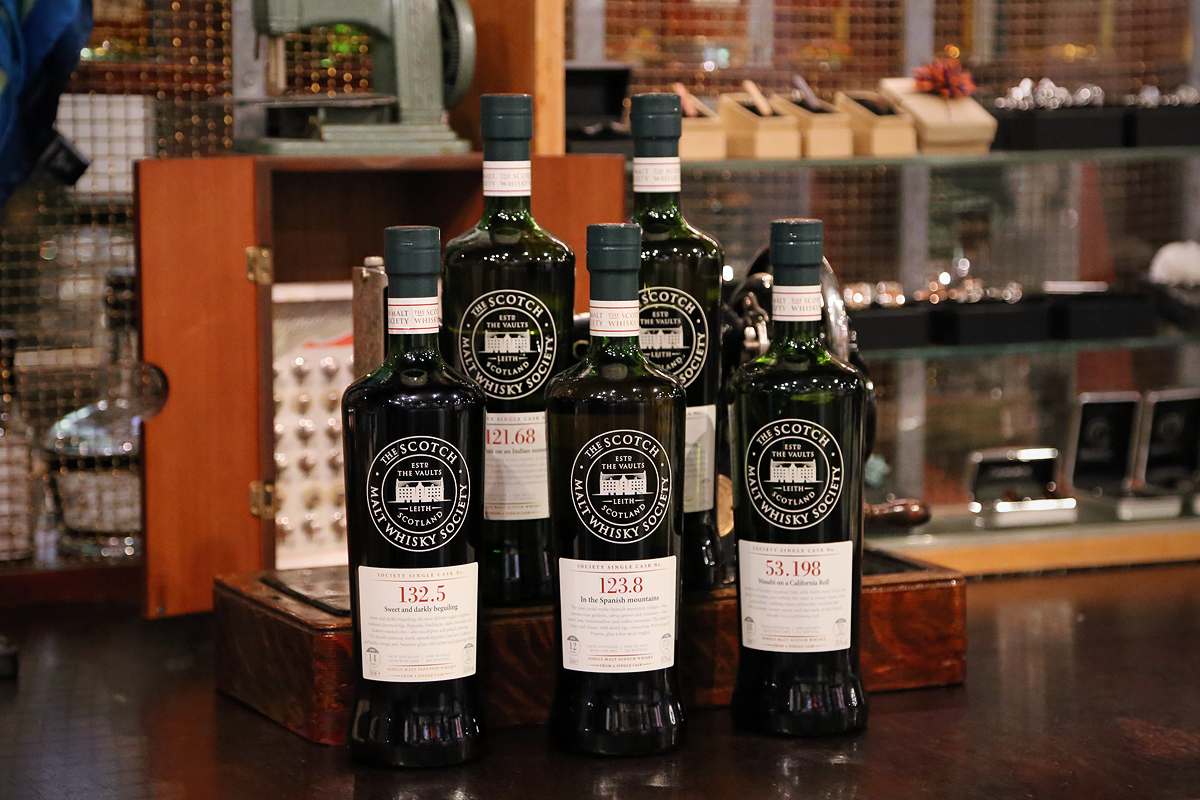
The line-up consisted of six pretty special bottles, including two not previously seen as part of Australia’s quarterly outturn (yes, think yourselves lucky my UK friends, we’re a long way away from Scotland, so our Outturn is only quarterly).

Tasting mat

41.59 Appetizing and tantalizing

First up was this ten year old whisky from a Speyside distillery by the name of Dailuaine. You may not have heard of them, but chances are you’re consumed their whisky before. Dailuaine is owned by Diageo and the majority of their output ends up in the various Johnnie Walker blends.

A super small amount of this stuff is bottled as a single malt – let alone singe cask, cask strength – so it was pretty special to have this.
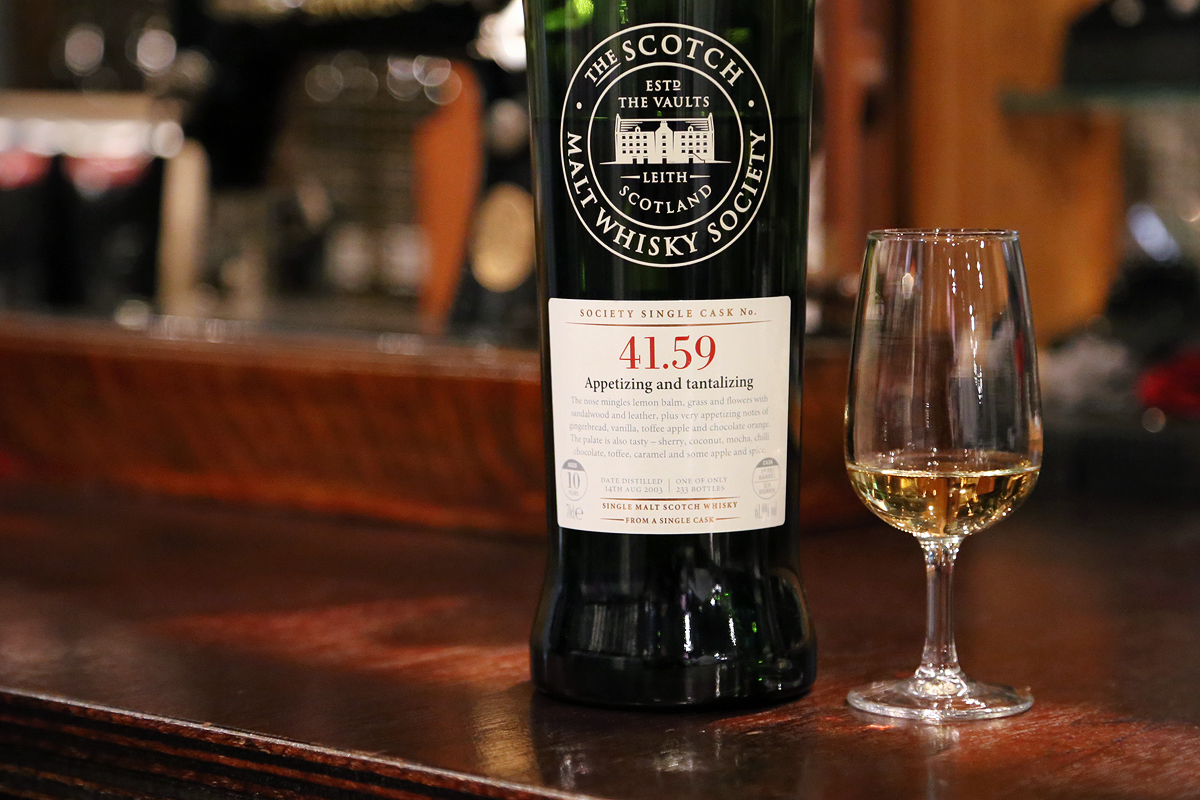
SMWS 41

Very fruity and quite light on the nose. Summer fruit salad, pineapples, pears, apples and some tart piney notes dominated, while some softer vanilla and sweet floral notes hid up the back. Quite a light nose with a decent amount of spirit prickle.

Light on the palate as well, yet rather oily at the same time. I found that it initially sat quite high before unleashing a decent amount of spice and some big tangy and tart pineapple notes that sent the saliva glands into overdrive. The finish was long with quite a bit of heat and some oaky spice, somewhat balanced by a noticeable vanilla note.

Back to where it all begins  

Before moving on to dram number two, Andrew paused for a moment to take us back a few steps, presenting whisky in its naked new make spirit form.

New make

He busted out this small sample of Glenmorangie new make spirit, which comes off the stills at an industry average of 63.5% ABV. I didn’t spend too long with this, but as you’d expect, it was very grassy, slightly dusty and botanical on the nose (they often remind me of Mezcal) and hot and saliva-inducing on the palate.

I had to have a chuckle when a guy near me nosed his glass and exclaimed to his mates ‘oh man, that’s smells like unleaded petrol’.

Not the most interesting new make I’ve tired, but I always find it really interesting to sample the building blocks of whisky, and trying new make from a hugely popular Scottish distillery is not something you get to do often!

121.68 Harvesting fruit on an Indian summer’s day

Next up was this 14 year old dram from a fairly young island distillery, Arran, which opened in 1995.

SMWS 121

A noticeably heavier nose on this one compared with the Dailuaine. Sweet esthery polish notes, sour green grapes, caramel – almost on the verge of burnt bitter caramel. Initially the nose seemed quite closed, but given some time it changed quite a bit, developing some meaty fermented grape notes and gummy lollies, in particular, strawberries and cream.

Creamy and oily on the palate, straight off the bat. Tropical fruits, sweet spice and overall, a very round profile. The back of the palate became almost drying, with a hint of kiwi and some slight salty notes. A long fruity finish (reminded me of tinned tropical fruits).

123.8 In the Spanish mountains

As far as I can tell, the Society has only ever bottled eight casks from this distillery, making it somewhat of a rarity and indeed a priviledge to be tasting. I’m talking about Glengoyne and this particular bottle was matured for 12 years in a refill port pipe.

SMWS 123

Quite a dense, heavy nose on this dram. Spice, Vegemite, a touch of salt, tart plum jam or plum butter (reminded me of my favourite Polish powidła) and some hazelnuts. Not overly sweet or sugary, but also not overly fruity. A very interesting nose, though I’m still not sure how much I really liked it?

Lovely oily mouth feel which was both rich and winey. Spice developed quite quickly, but a winey sweetness remained the whole way through. The finish is where I felt the port notes really showed, with some lingering plummy prune flavours, more spice and a decent oakiness.

An enjoyable and really interesting dram, but if I’m being completely honest, I think I prefer Glengoyne’s spirit when it’s been bourbon or sherry cask influenced.

132.5 Sweet and darkly beguiling

Not actually a Scotch, this next whisky hailed from one of Japan’s most revered and lauded closed distilleries, Karuizawa.

Big, rich and syrupy on the nose. Sweet raisins, stewed plums, figs and Christmas cake. So rich, yet surprisingly clean. I’m not sure how to describe exactly what I mean by ‘clean’, but despite the heavy sherry influence, the nose came across as really quite bright and active.
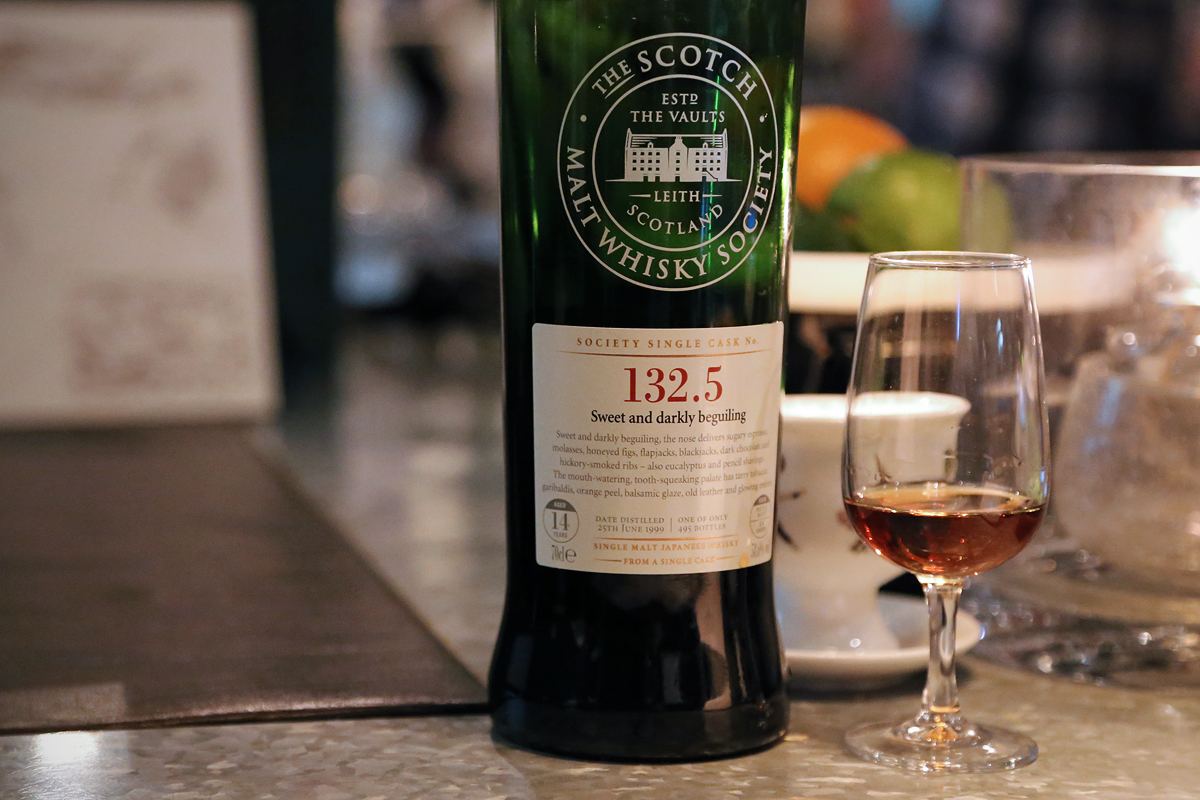
SMWS 132

The theme continues with a rich, creamy, syrupy palate. Tangy raisins and dark red fruit, there’s some spice, but I found it somewhat restrained for such a heavily sherried whisky. Slightly prickly, dense and a hint of old char smoke. A long and warming finish remains sweet and fruity with some oaky spice showing at the tail end. Such a clean sherry cask in my opinion.

I wondered whether this dram had star status in my eyes because I knew it was from a closed distillery and knew it was rare. But I’ve been fortunate enough to try it on two or three occasions now – on its own and up against a number of other whiskies I regard quite highly – and each time it has stood out as something pretty special.

If you’re a big Glendronach or Glenfarclas fan, this isn’t one to miss. A hugely enjoyable drinkers whisky (ie. collectors/investors, you’re seriously missing out!)

Time to bring on the peat!

It was around this time of the night that Andrew revealed his last sensory item for the evening, some freshly peated Ardbeg malt.
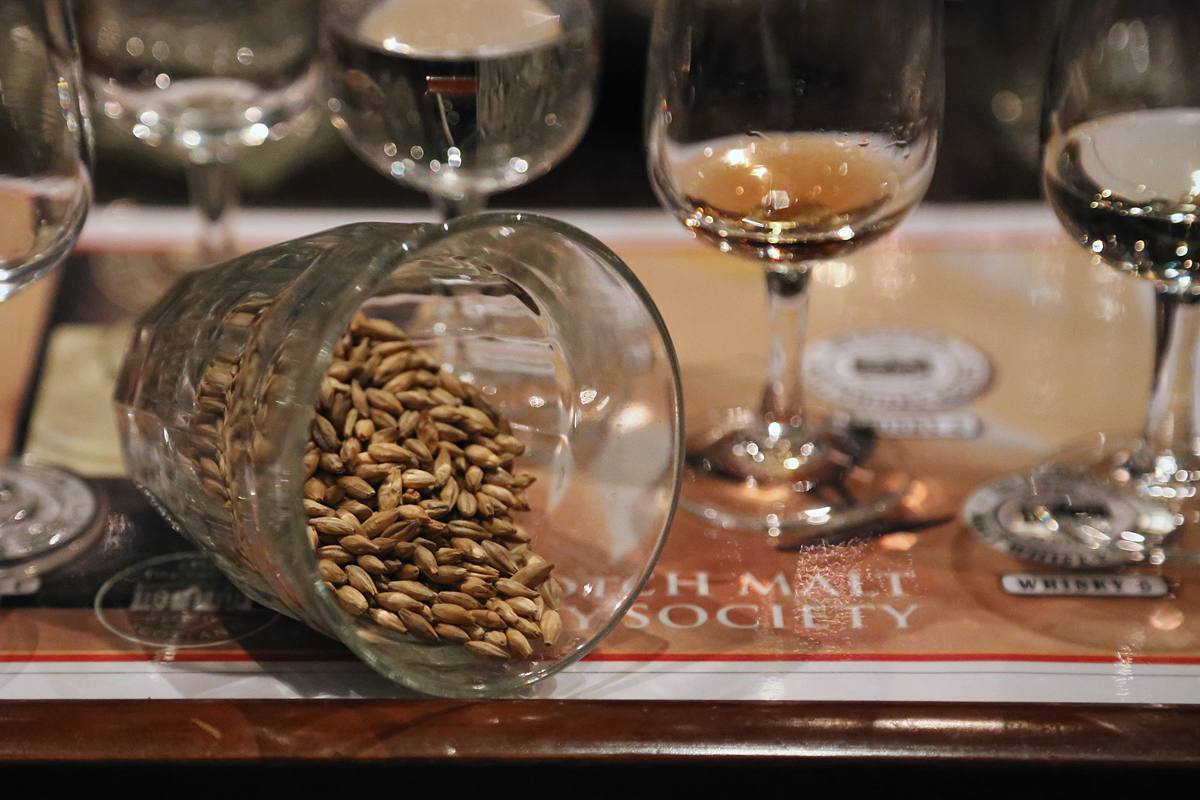
Ardbeg malt

I love the smell of Ardbeg, but this was something else. Burrying my nose right in there, the glass was full of cereal and grainy notes but they were overlayed with that amazing smoky sweetness. I know it would probably taste like rubbish, but in that moment I could have eaten that glass full of malt with a spoon. A rare treat to encounter Ardbeg malt in Australia, that’s for sure.

I have no idea how he got a big zip-lock bag of malted barley past Australian Customs on the way back in from his recent trip to Scotland, but I’m glad he did. Andrew – if you smuggled this in your jocks, I don’t want to know about it.

53.198 Wasabi on a California Roll

The last dram of the evening was also the oldest of the night, a lovely 18 year old coastal dram from Caol Ila.

SMWS ShirtBar

On the nose, I found this to be rather tangy and salty up front, with fragrant peat and a fairly light smokiness. A hint of iodine, but nowhere near as medicinal as the likes of Laphroaig. In a moment of poetic wankerism, I wrote down ‘a coastal BBQ with sea spray’.

More smoky on the palate than the nose, a lovely oiliness to the mouth with some spice, saline and drying hay. It had a certain fruity quality to it as well though, with grilled peaches (burnt perhaps?) and a tangy peat, sweet and savoury finish. Really quite lovely and balanced.

Phone picture

In true Shirt Bar fashion, the evening’s Scotch Club finished off with their trademark antipasto board & pies.
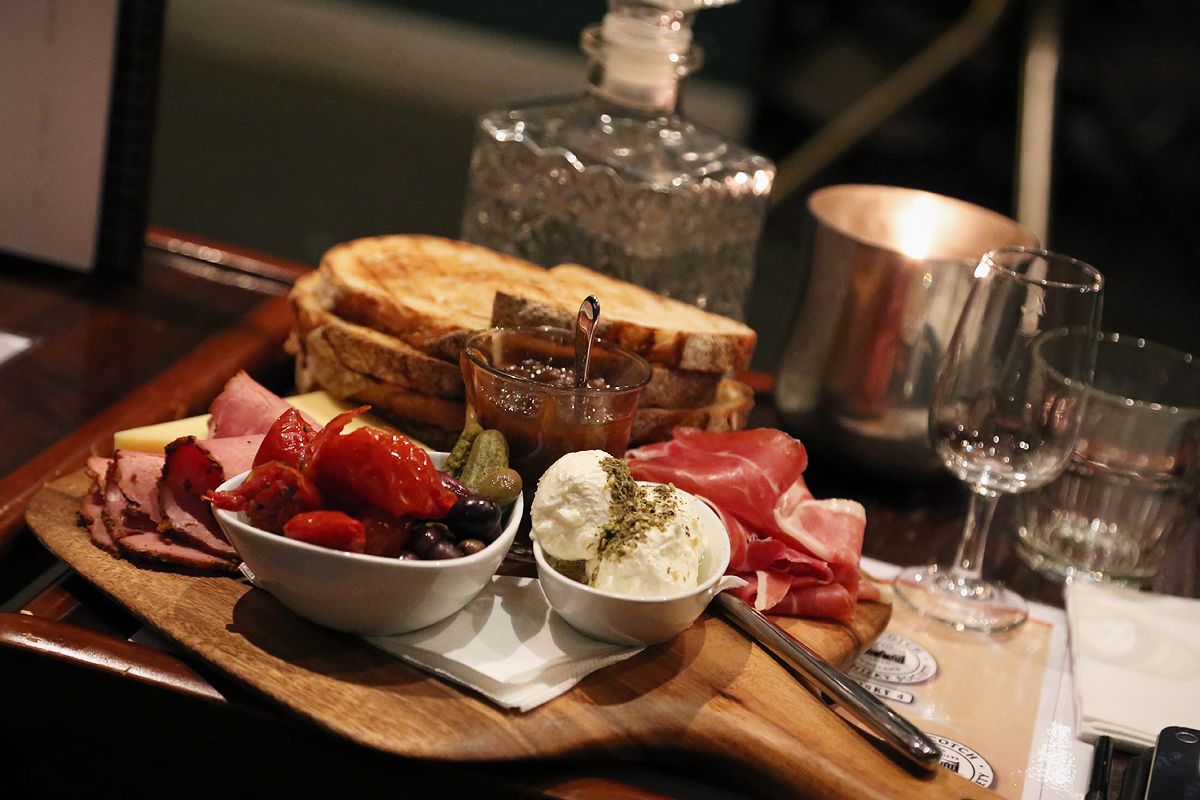
Antipasto

This round of Scotch Club was perfect for those who’d never been to an SMWS event and wanted to see what all the fuss is about. As an existing member, I took it as a perfect opportunity to get my SMWS whisky fix between Outturns and taste a few new expressions I hadn’t come across before. A seriously enjoyable tasting.

If you missed out

I was originally going to write something along the lines of ‘if you missed out, not to worry – there’s another one being held on August 13th’.
Group 2

But you can forget that. It went on sale the other day and completely sold out – in less than 24 hours! If you do have a ticket, I’m not sure that you’ll be tasting the above, but whatever Andrew brings, they’re bound to send those taste buds into overdrive!

If you didn’t manage to get yourself a ticket and want to find out more about the Society, head over to their website and keep en eye on their tastings and events page to see when an event is being held in your capital city.

Laphroaig PX Cask.. or is it?

A number of distilleries come up with some pretty interesting releases for the travel retail/duty free market. Sometimes it’s just a bigger bottle, a higher ABV or non-chill filtering, but there’s also a healthy selection of travel retail exclusive expressions that you won’t find anywhere else.

So when a relative was going on a recent overseas trip, I asked them to pick me up a couple of travel-retail exclusives. Whiskies that I knew I wouldn’t be able to try elsewhere. At the top of that list was this one – the pedro ximenez finished Laphroaig PX Cask.

Laphroaig PX Cask tube

I’ve always enjoyed a good Laphroaig and was excited to see what kind of influence a pedro ximenez cask finish would have on their trademark medicinal peat notes. That excitement was somewhat short-lived though when I excitedly popped the top off the tube and had a peek inside…

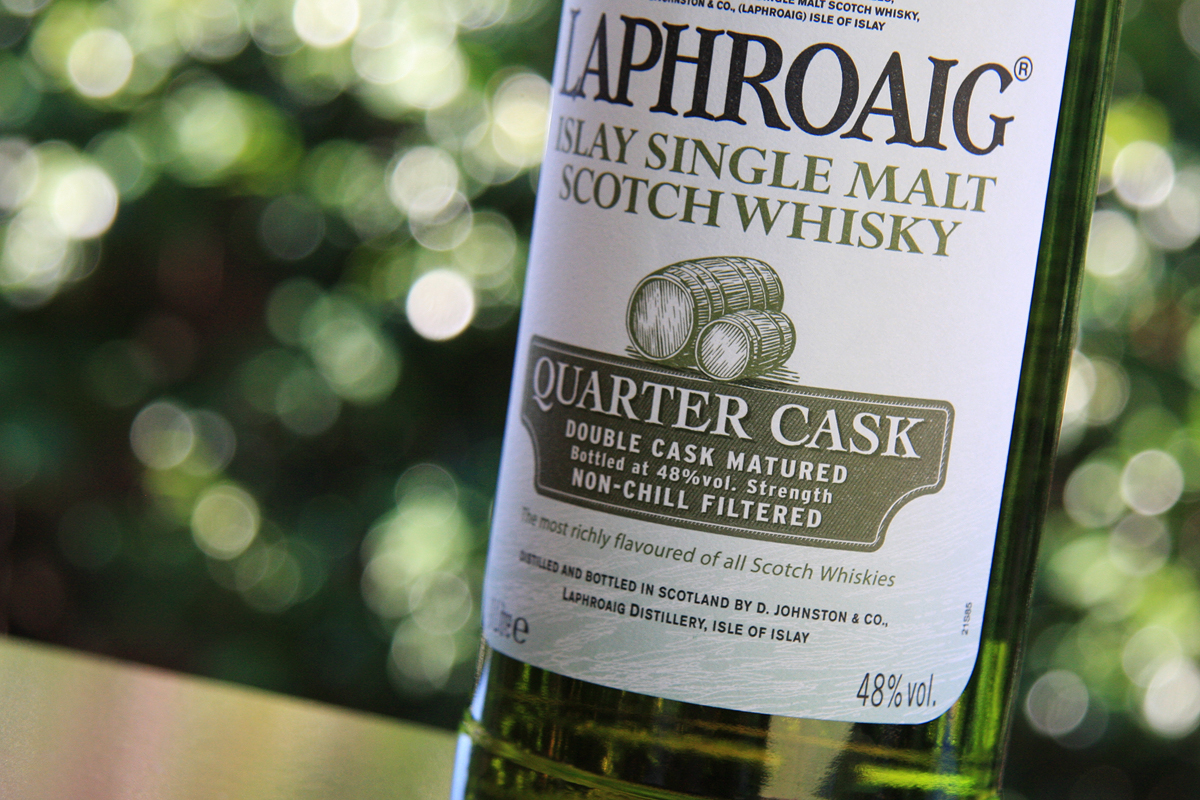
Laphroaig Quarter Cask bottle

That’s right, at some point someone had swapped the bottle of Laphroaig PX for a bottle of Quarter Cask!

That’s kind of like unwrapping your Christmas present to find the box for a GI Joe action figure, complete with sub-machine gun and a big hunting knife, then opening the box to find a Ken doll with board-shorts and some sunglasses. Well, that’s probably a bit too harsh, but you get the idea – where’s my sherried Laphroaig!? Fiddlesticks!

It was by no means a total loss though, for I now had a whole litre of glorious Quarter Cask to work my way through.

Laphroaig QC label

Laphroaig updated their packaging around May 2013, but this bottle is still in the older style, with a textured matte-paper label and the slightly older font.

Quarter cask is a No Age Statement (NAS) whisky (ie. there’s no age written on the label). But rumour has it that this expression spends the first five years of its life maturing in standard bourbon barrels before being moved into quarter casks for a period of around seven to eight months.

Laphroaig booklet

Thanks to this bottle, I’m now now a Friend of Laphroaig and also an international land owner, with my very own square foot of Islay! You just follow the instructions in this little booklet and Laphroaig send you your very own certificate of land ownership. Time to head over there and start excavating that square foot – Grand Designs style!

Quarter casks

So what’s a quarter cask? The name’s fairly self explanatory I guess – it’s ‘a quarter of a cask’. But then I thought, hang on, what sized ‘cask’ are we actually talking about here? A standard sized bourbon barrel? A Hogshead? A butt?

I hit the interwebs in search of an answer and came across responses ranging from 40 through to 125 litres. I was still no closer to the truth, so I decided to get in touch with the folks at Laphroaig directly. I’ve since been reliably informed by a Brand Ambassador that the quarter casks they use are indeed 125 litres in size. They start life as a 42 stave once-used American Oak butt, before 15 staves are removed, reducing their overall size down to 125 litres.

Nose

Oily and coastal on the first pass. Brine, smoky seaweed, maybe some diesel and a vegetal cigar note. We’re well away from smoked meats, bonfires and BBQs with this Laphroaig – A real ‘dockside’ scent to this one in my opinion. Digging deeper I got some vanilla, some fresh zesty/tangy notes of lemon and something anise in character – black jelly beans or liquorice perhaps?

Palate

A medium oily mouth feel gives way to a decent burst of spice – baking spice and cigars. The anise note from the nose shows through slightly on the palate, along with a certain sweet ashy flavour and loads of peaty tang.

Smoke was apparent when the bottle was first opened, but months down the track it has dissipated significantly. The palate also seems to have gone from being fairly pointy and aggressive to a lot more rounded and slightly closed.

Finish

I thought this had a fairly good length to the finish and remained cheek-suckering for a few moments. I also got a certain drying vegetal tobacco spice right at the end, like the aftertaste of puffing a cigar.

I never did get to try the Laphroaig PX Cask..

..and just to rub a bit more salt into the wound, from what I’m seeing online it looks like everyone who’s tried it seems to rather enjoy it. It also looks like it’s slowly been removed from duty free stores around the world, so my chance may have come and gone.

All wasn’t lost though, as the Laphroaig Quarter Cask really is an enjoyable whisky. The fact it’s part of their core range and is bottled at 48% ABV non-chill filtered is a big plus in my books. If you’re already a fan of the classic 10 year old, this bigger winter warmer is definitely worth a try.

Glengoyne 25 year old launched in Australia

A day in the Hunter with Glengoyne

A little while back I received a cordial invite to spend the day in the Hunter Valley, eating delicious food and tasting the full line-up of Glengoyne whiskies. Let’s just say that it didn’t take too long for me to RSVP.

Arriving in the Hunter Valley

After the two and a bit hour trek north, we arrived at the Glenguin Estate in one of New South Wales’ premier wine-producing regions, the Hunter Valley. The location may seem rather extravagant and somewhat out of the way for a tasting (hey, I wasn’t complaining!), but it was actually chosen for good reason.

You see, Glenguin Estate and Glengoyne distillery have a rather intimate family connection dating back well over one hundred years. The full story is explored here, but it essentially begins with Arthur William Tedder, born in Glenguin, Scotland to a Customs and Excise officer of the Glengoyne distillery.

Fast forward a few generations and we’re introduced to Arthur’s grandson, Lord Robin Tedder. After leaving Scotland in his teens Lord Robin, the third Baron of Glenguin, eventually settled in NSW’s Hunter Valley. Here he established the Glenguin Estate in 1988, thus giving us the wonderful reason to be here on a warm winter’s day.

Glenguin Estate
Image courtesy of DEC PR 

Being winter, the vines were rather bare and the property was perhaps not as lively as it would be at other times of the year. But one thing was still apparent, and that was how peaceful and serene this place was – can you believe that was a winter’s day!?

Jonathan Scott

Even Jonathan Scott – Glengoyne’s Asia Pacific Brand Ambassador – seemed pretty impressed.

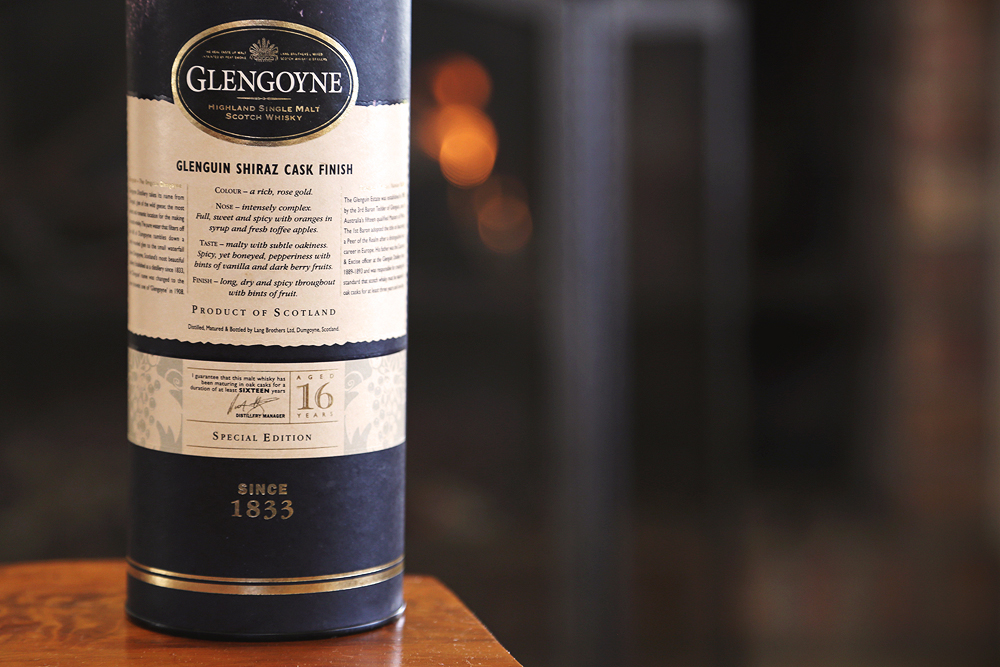
In case you still doubted the Glenguin/Glengoyne connection, I spotted this interesting tube on the counter and dearly hoped we’d be tasting it.

Glengoyne 16 Glenguin

The story goes – around 2007, Glenguin sent 20 ex-shiraz casks over to Glengoyne in Dumgoyne, Scotland where they were filled with 16 year old Glengoyne whisky and left to work their magic. After being carefully monitored for a number of months, the ten best casks were selected and in June 2008, 3,800 individually numbered bottles were released.

Naturally I asked whether there happened to be a spare bottle lying around, but as I suspected, they’re all long gone. I wonder how the other ten casks are coming along?..

Jonathan Scott bringing Glengoyne to life

Re-entering the main room, it was time to take a seat with Jonathan and get down to business. Oh, and in case you’re wondering, yes, Jonathan is Scott by both name and heritage.

Scottish Kilt

Jonathan walked us through the history and heritage of Glengoyne, from Arthur Tedder’s days to the present. Personally, I love the history and stories almost as much as whisky itself, so here are some of the interesting tidbits that really appealed to my whisky nerdism:

  • Glengoyne have a staff of nine and produce in the region of 900,000 litres of spirit per year.
  • They also claim to have the slowest distillation in Scotland. Exactly how slow are we talking? Jonathan tells us that the spirit is collected at a flow rate of just 4.5 litres per minute.
  • Whilst strictly a Highland distillery, you could literally cross the road out the front, walk a short distance and you’d find yourself in the Scottish Lowlands, with distillery neighbours such as Auchentoshan.
  • Up until 1908, Glengoyne was actually called the Glenguin distillery
  • The full Glengoyne range is natural colour and all Glengoyne whiskies are matured in traditional dunnage warehouses, racked three barrels high.
  • Wondering how old their oldest stock is? Around the 40 year old mark.

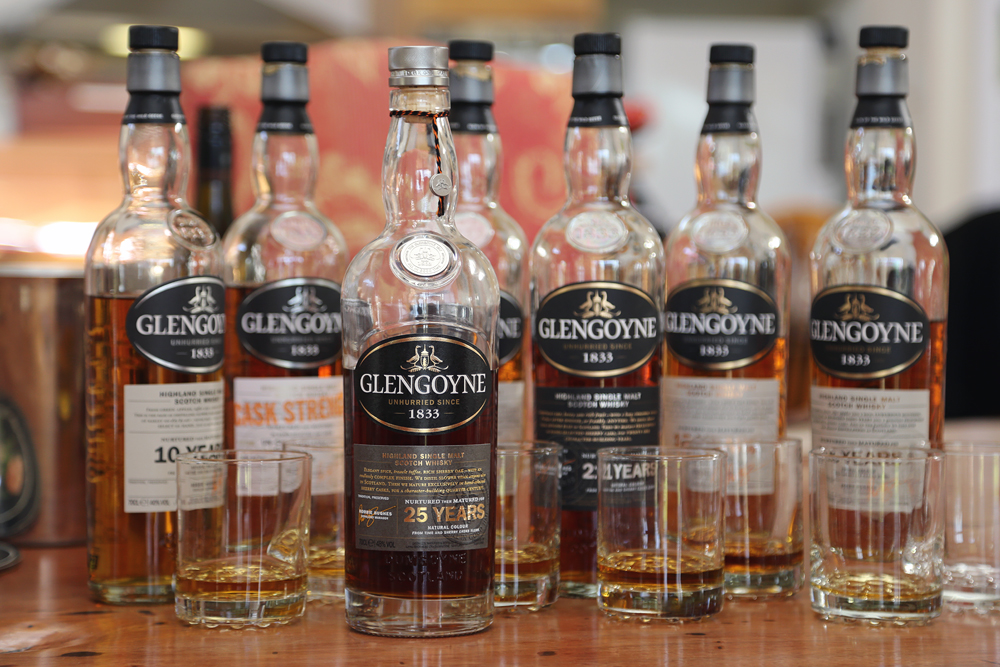
Apart from getting my nerd on, we were lucky enough to taste through the whole core range. I’ll keep my notes limited to the following expressions as this is where I personally encountered the most notable variation in character.

Glengoyne 10 year old 

A make up of both American and European Oak, including around 30% from first fill American Oak casks. Bottled at 40% ABV.

Glengoyne 10 year old

On the nose I got clear toffee apple notes, some light honey and subtle nuttiness. Quite delicate and sweet while being very approachable. These notes translated fairly closely to thin, delicate palate with noticeable pear and apple sweetness, some grassy notes and a fairly short, pleasing finish. I thought this was actually very solid for an entry-level expression.

Glengoyne Cask Strength Batch 1

Again, a composition of both American and European Oak vatted as a small batch release and bottled at a respectable 58.7% ABV.

Glengoyne Cask Strength

On the nose, plenty of creamy honeyed vanilla notes, thick and rich with less of the apple and more zest, custard and a hint of spice. Creamy and mouth coating on the palate with richer sweet vanilla and more spice. A noticeably longer finish than the 10 year old (to be expected), but perhaps not quite as long as you’d expect from a dram at this ABV.

Glengoyne 18 year old

A higher percentage of ex-sherry casks in this expression, bottled at 43% ABV.

Much richer on the nose with more of those typical sherry notes, a lot more spice, some citrus peel, red apples and dried fruits. On the palate, some initial citrus notes (orange), more malty and oaky with a slight zestiness and more spice. This especially showed on the finish, which was slightly nutty with a hint of oaky bitterness and the very end.

Glengoyne 21 year old

Glengoyne 21 year old

A visibly different beast here, so no surprise that this is made up of 100% ex-Oloroso sherry cask spirit. Bottled at 43% ABV

Textbook sherried whisky here, with a rich ‘rounded’ nose of berries, dried fruit, toffee and gentle spice. The nose translated nicely to a palate of stewed red fruits and honeyed spice fading to a spicy and chewy finish.

I found all the flavours to be rounder than the younger expressions, pulling this whisky together as a much more balanced dram. In saying that, I feel as though this could benefit from a slightly higher ABV (not much – maybe 3% to 5%)

Hard work makes me hungry..

..which is a good thing, as a rather delicious lunch of was being quietly prepared in the background as Jonathan took us through our tasting.

Glengoyne main

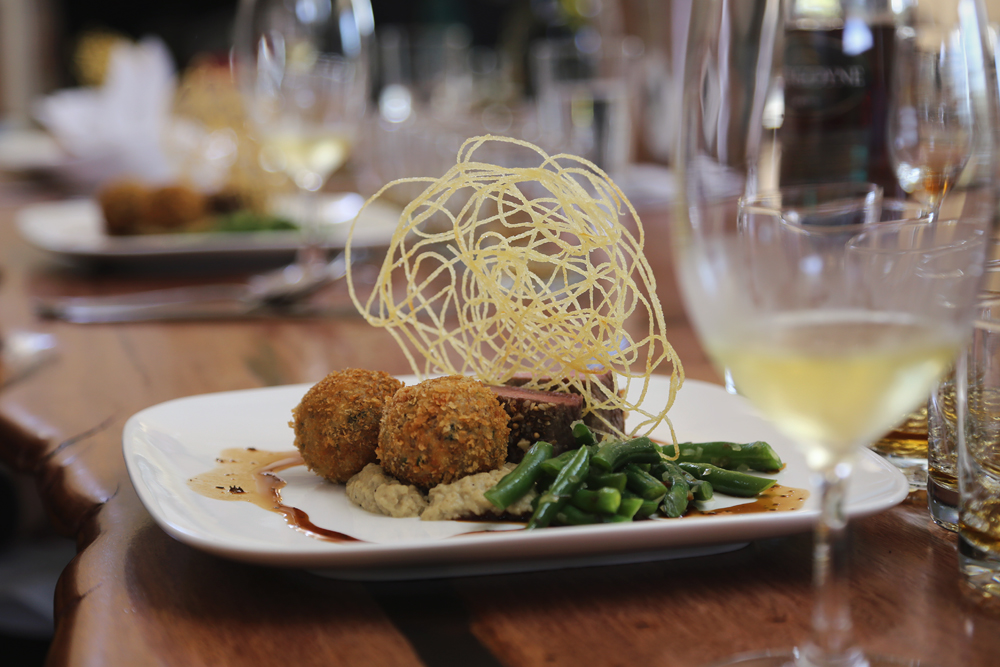
Lunch consisted of a delicious main of dukkah crusted lamb loin, lamb shank croquette, smoked eggplant and thyme jus.

Glengoyne dessert

This was followed but a seriously decadent dark chocolate delice with confit of sour cherry and coconut ice cream.

Both courses were matched with some cracking Glenguin wines, including an amazingly tasty Ironbark Tannat. Not a varietal I’ve ever tried before, this red was super dusty, dry and tannic all while remaining somewhat fresh – which we’re told are hallmarks of this grape from south-western France.

The main event – tasting the Glengoyne 25 year old 

The moment we’d all been waiting for! Truth be told though, I was slightly concerned about the prospect of getting the most out of this dram from a short tumbler, but a small amount of ferreting around in one of the cupboards yielded some small copita glasses – perfect for getting a good nose and palate out of the 25 year old.

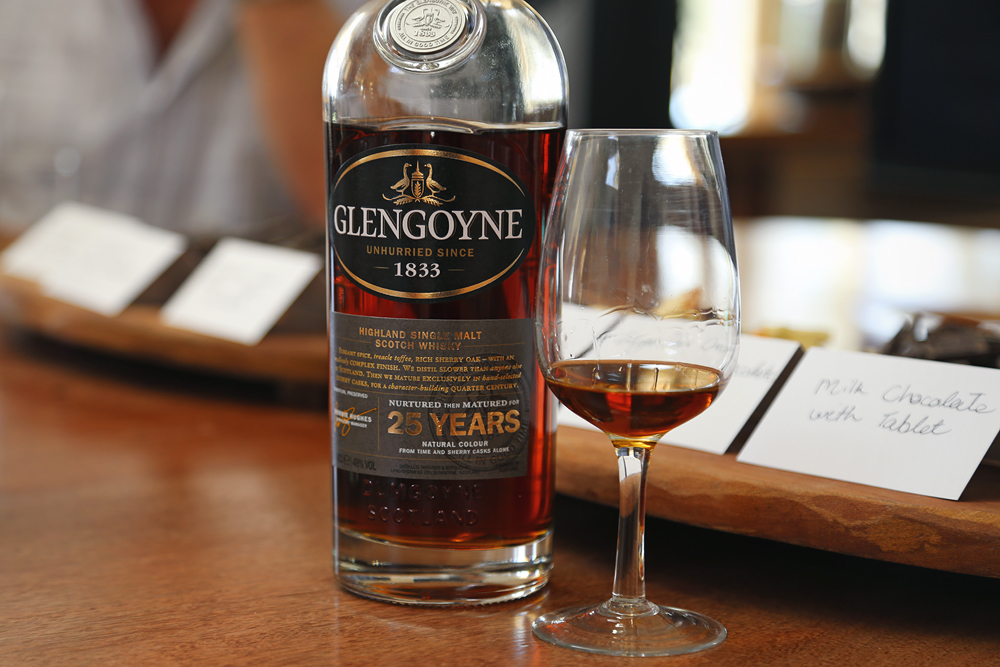
Glengoyne 25 year old

On the nose, ever richer (than the already rich) 21 year old, with some polished oak notes, wet brown sugar, toffee, more citrus and spice. This translated nicely to a much thicker, richer mouthfeel loaded with tart dried fruits, spice and a lingering oily sweetness. The finish was fairly long and rather oaky, but not in a bitter old wood sense.

No desire to add water to this one and that slightly higher strength of 48% seemed spot on to me. It really allowed you taste more of that complexity from the nose. A really satisfying and special dram.

Glengoyne 25 year old

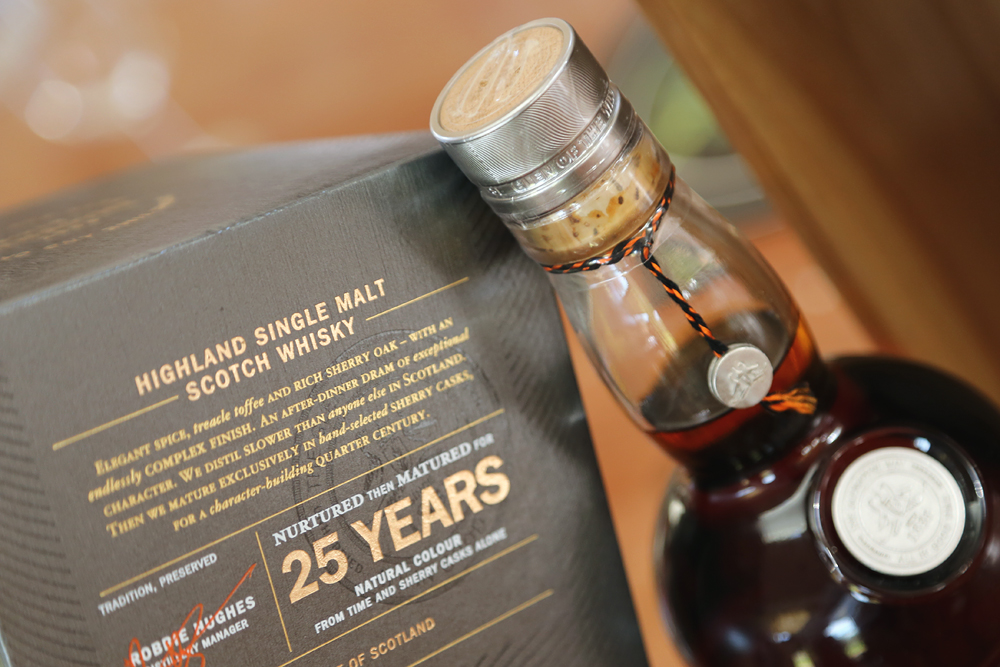
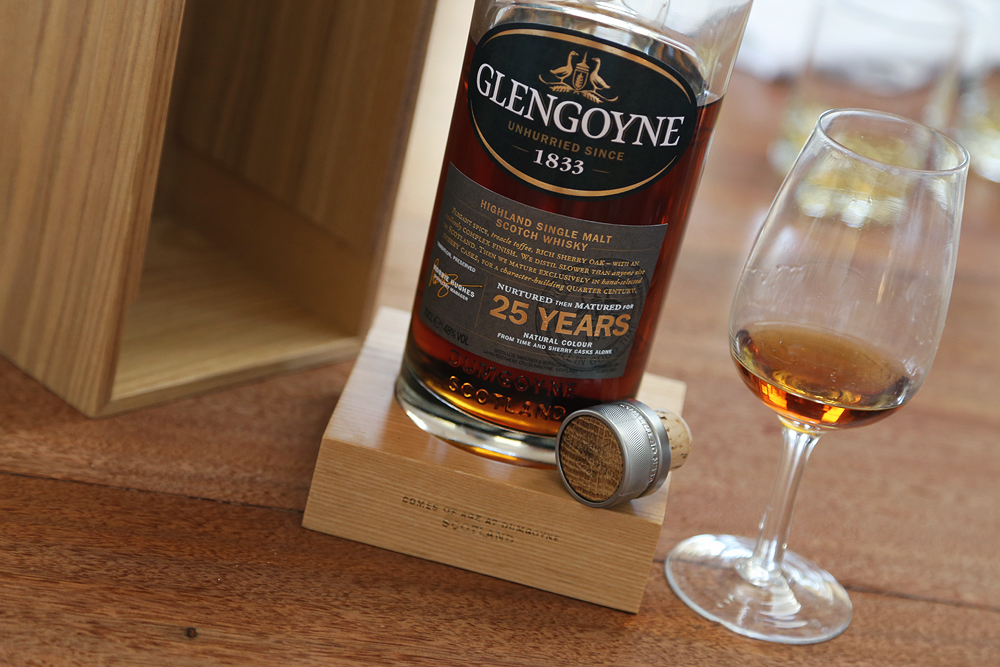
The presentation of the Glengoyne 25 year old is rather special as well. The clear glass bottle differs from the core range with a thick weighted base, silver neck medallion and a weighty oak and metal stopper. This handsome bottle is then packaged up and presented smartly in an oak and card case.

Glengoyne 25 year old

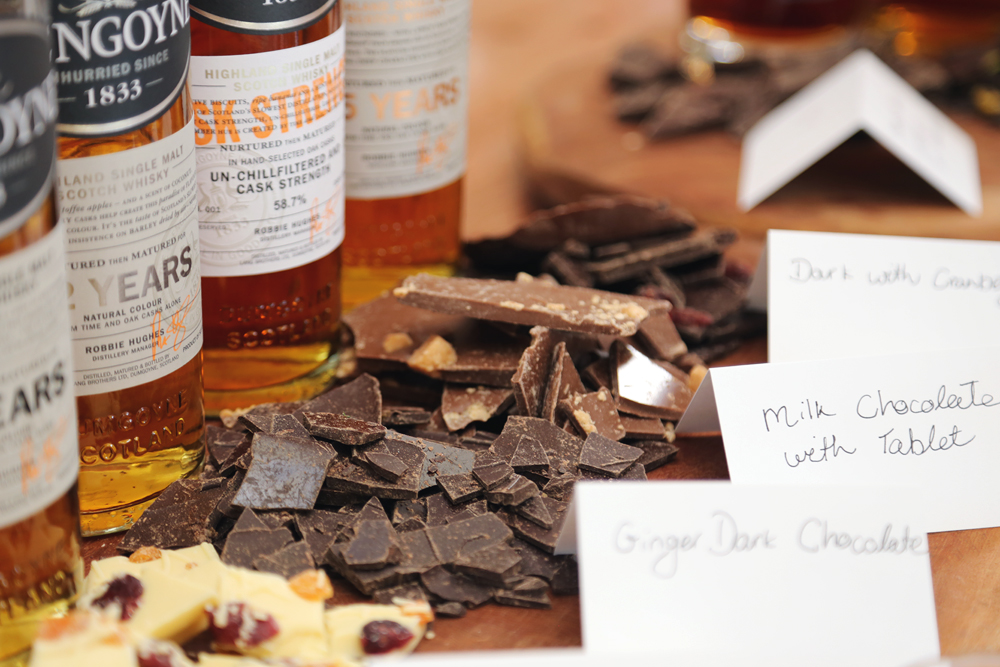
You may have noticed a fair amount of chocolate popping up here and there in the images above. That’s because there was a whole lot of it and it wasn’t there by mistake either!

Glengoyne chocolate

We rounded out the day with a Glengoyne and Scottish chocolate pairing, including some delicious combinations like:

  • Glengoyne 10 year old + 54% dark chocolate with cranberries
  • Glengoyne 18 year old + Banana and pecan milk chocolate
  • Glengoyne 25 year old + Orange and cardamom dark chocolate

A highly enjoyable day and special thanks to our gracious hosts, Glengoyne, Jonathan Scott, Andrew Tedder and Klaus from Glenguin Estate and the kind folks at DEC PR. 

Fancy your own Glengoyne tasting?

The full Glengoyne range is currently available nationwide through Dan Murphy’s and select specialty retailers. The Glengoyne 25 year old will retail for AU$599 when it’s released in September as an online exclusive through Dan Murphy’s.

Glengoyne group

As an aside, if you happen in Melbourne this coming weekend (18th and 19th of July), you can catch Jonathan Scott and Glengoyne at Whisky Live in St Kilda.

Glendronach 2002 single cask

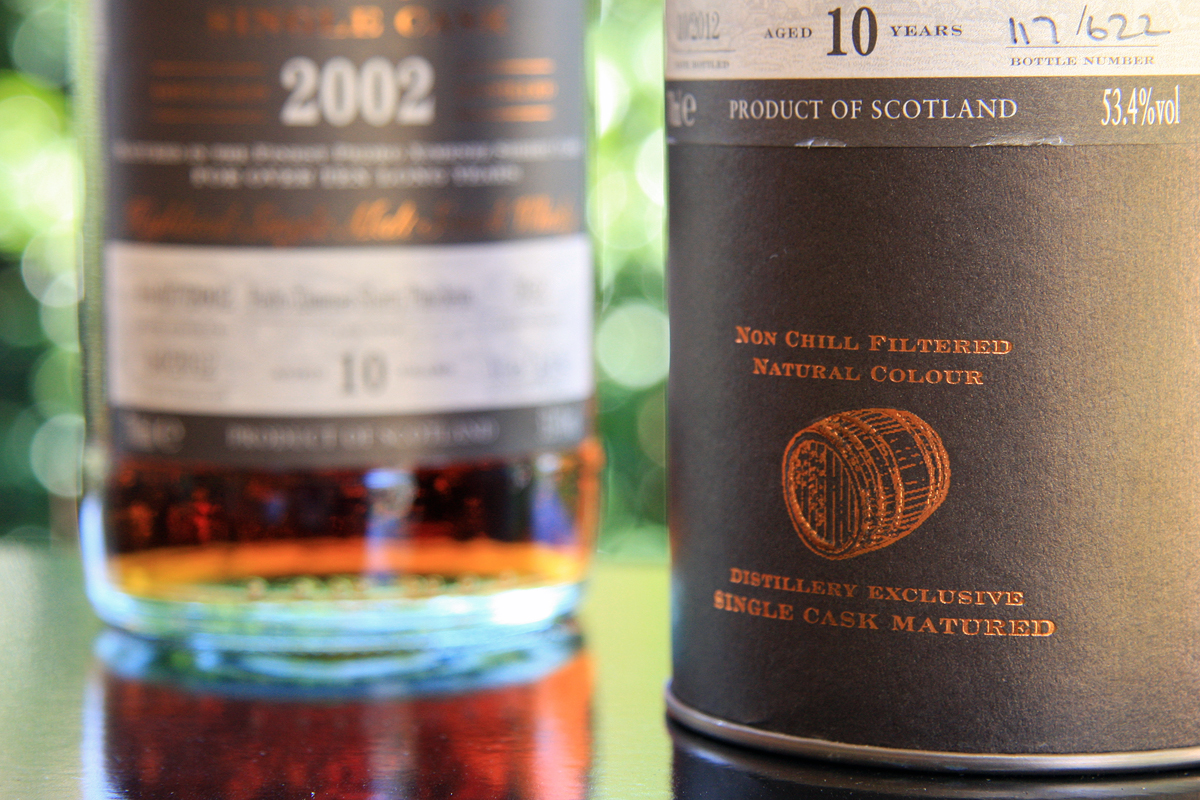
Distilled 2002, 10 years old, Cask No. 2022, 53.4% ABV, Pedro Ximenez Sherry Puncheon, Highlands, Scotland

If you read this blog for any length of time, it’s going to become quite apparent that I’m a fairly big Glendronach fan.

I don’t know if you’ve ever had the kind of moment where one particular bottle cements your love of a distillery, but I’ve had such a moment and it came for me after a few tastings of this particular Glendronach.

Glendronach 2002

This isn’t any ordinary Glendronach though. It’s a single cask expression bottled exclusively for the Netherlands after spending 10 years in Pedro Ximenez sherry puncheon number 2022. Not sure why the tube says ‘distillery exclusive’ on it though!

Glendronach 2002 tube base

The distillation date in July 2002 is a rather curious thing as well, as up until 14 May 2002 Glendronach had been closed for a good six years. That would make this one of their earlier distillates after re-opening in 2002.

That six years of being mothballed resulted in a few changes at Glendronach though and upon re-opening they began buying in their malt in (where they previously floor-malted their own barley).

A few years later they also switched to indirect steam-heated stills, but the distillate in this particular bottling would have still been produced using the direct coal-fired stills they were running at the time.

Glendronach 2002 tube

The presentation is similar to the official Glendronach single cask releases that are put out twice per year. The main difference though, is that the country exclusive bottles are presented in card tubes, instead of the rather more glamorous faux suede-lined cases. I say glamorous, but I’ve also had friends call them coffin boxes, so perhaps the card tube ‘aint so bad after all!

Did you know…

Apart from bottling special releases for specific markets, Glendronach also bottle single cask releases for specific stores, such as Royal Mile Whiskies in the UK, La Maison du Whisky in France and K&L Wines in California.

Glendronach’s biggest market though? According to their Regional Sales Manager, Douglas Cook, it’s actually Taiwan!

Glendronach 2002 label
Nose

Some esthery polish notes when first poured and not immediately sweet. This did open up considerably with some time in the glass, offering hints of bitter, high-cacao dark chocolate, dried tart raisins and some sweetness I’d liken to damp brown sugar. Mid-way through the dram and it became much more lively with a hint of ripe banana, orange and chewy caramel.

Quite a closed and not overly involving nose on this, but much more mature and rounded than I would have expected from a 10 year old whisky.

Palate

Immediately oily and viscous – it coats your tongue and offers nothing for a brief second then literally bursts with big sweet juicy raisin and plum flavours. Super jammy, thick and rich with candied orange rind and a syrupy bitter caramel sweetness. Very lively and bright on the palate.

Finish

Finishes long and warming and remains sweet for an awfully long time with some triple sec (orange liqueur) notes toward the end. I also caught the slightest appearance of oak on the back of the palate as well. 

Some final thoughts

A few drops of water opened up the nose slightly quicker, but killed off that explosive edge I found on the palate. For me, the palate is where I found the real character of this dram, so I decided to keep the water well away from this one.

Despite my overt fondness of this particular Glendronach, it’s not the best I’ve ever had, but it’s been hugely – and consistently – enjoyable, from the moment I opened it, to the very last dram. As much as I love some of their older bottlings, these young post 2002 bottles have so much to offer and can easily be added to that growing list of great young whiskies.

If Glendronach continue to release young bottlings, we’ll eventually see a 2005 bottle which will be the real test for me as it’ll use commercial malt and will have been produced using steam-heated stills. Will it hold up to the rich oily character of these earlier bottles? I guess time will tell.


Suntory whisky launch

Six new expressions for Australia

Until now, Suntory products have been fairly thin on the ground in Australia. Sure you’ve been able to track down the odd bottle of Yamazaki 12 year old, or maybe even a Hibiki (if you know where to look), but as far as official imports go, they’ve been fairly non-existent.

With the recent rise in popularity of whisky – and Japanese whisky specifically – Suntory Australia have started to officially import six expressions, which can now be found in most major liquor stores right throughout the country. For details on the range and pricing, see this recent post.

With that decision came a product launch and on a recent Monday night they hosted a rather decadent soiree in Sydney, which unfolded a bit like this.

Suntory whisky launch, Sydney, Australia

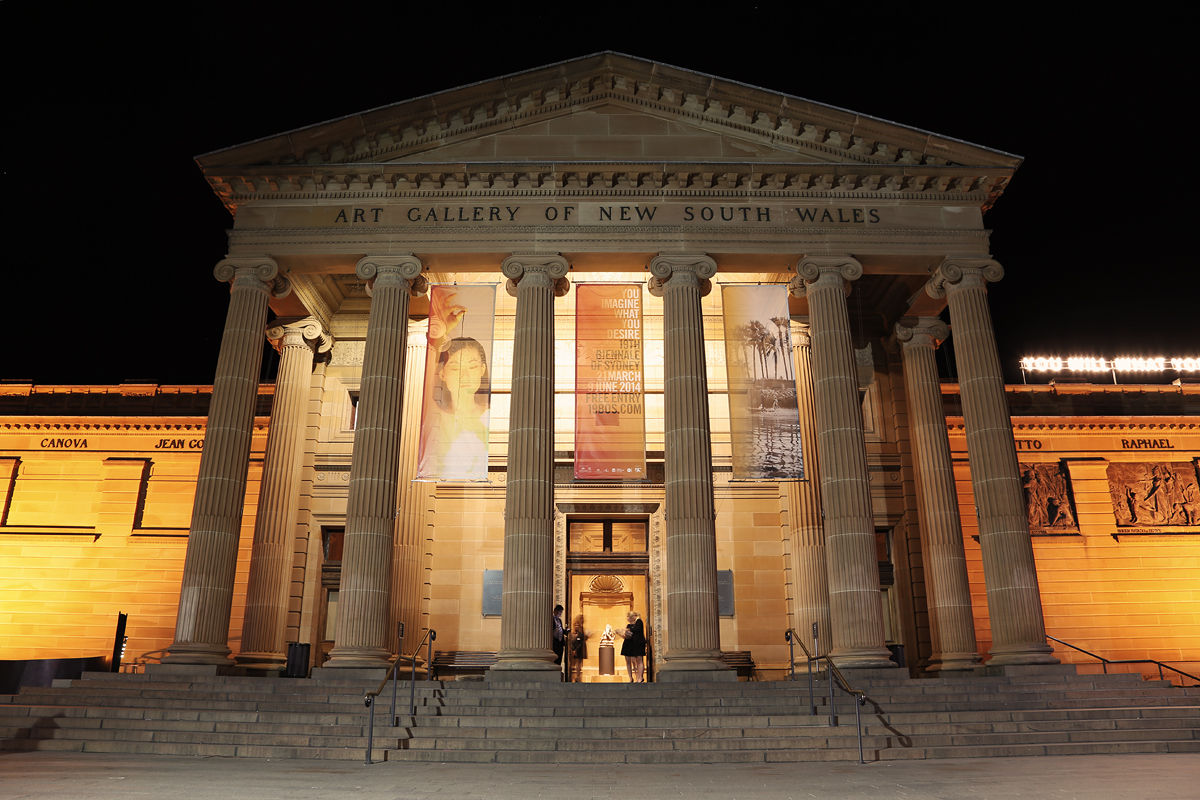
As a general rule, I don’t like Mondays. However, when they involve whisky, and in particular, a rather lavish evening of whisky, excellent food and great company, they all of a sudden become a whole lot better. Such was a recent Monday when Suntory Australia officially launched six of their bottlings in to the Australian market, in Sydney, at the Art Gallery of New South Wales.

Gallery

Upon entry, guests were treated to a highball (whisky + soda water) of Hibiki 12 year old and Perrier sparkling water, served simple and tall in a Champagne flute.

Hibiki 12 Highball

I’ve had whisky + soda before, but never in this ratio. I can’t say I’ve ever really contemplated diluting a quality whisky to this extent, but it was actually really refreshing. I don’t think it’ll replace a good G&T in summer, but I’ll certainly start to alternate my choice of libation on those warmer days!

Crowds

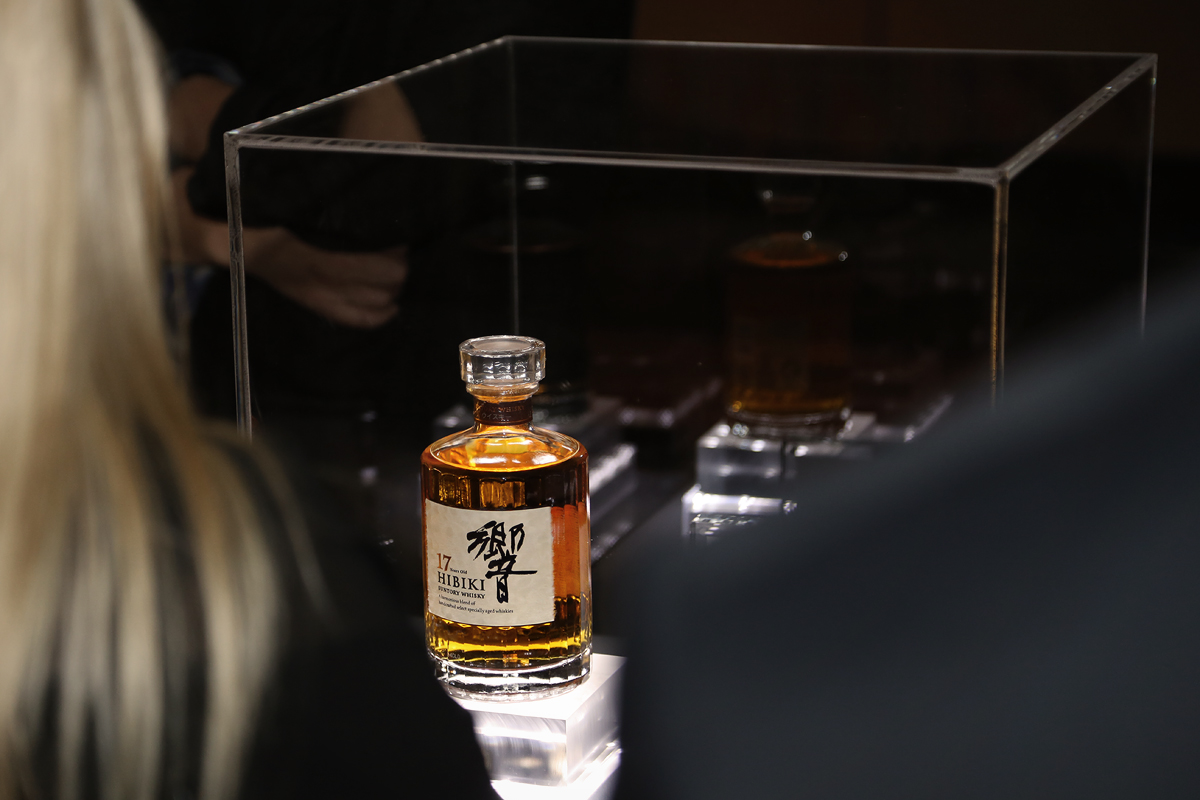
Guests mingled in the main foyer area of the gallery around six illuminated plinths, each housing one of the six Suntory expressions now available locally.

Yamazaki 12

If Suntory were hoping to achieve the whole museum display piece look, then as far as I’m concerned, they nailed it. People stopped and stared, read the placards and took photos. Some seemed to admire them as genuine display pieces (and why wouldn’t you? The faceted Hibiki bottle is a work of art).

Hibiki 17

Although it was mere metres away, I must admit that I was enjoying myself so much that I completely failed to notice the tasting room setup toward the back, right up until we were politely ushered in.

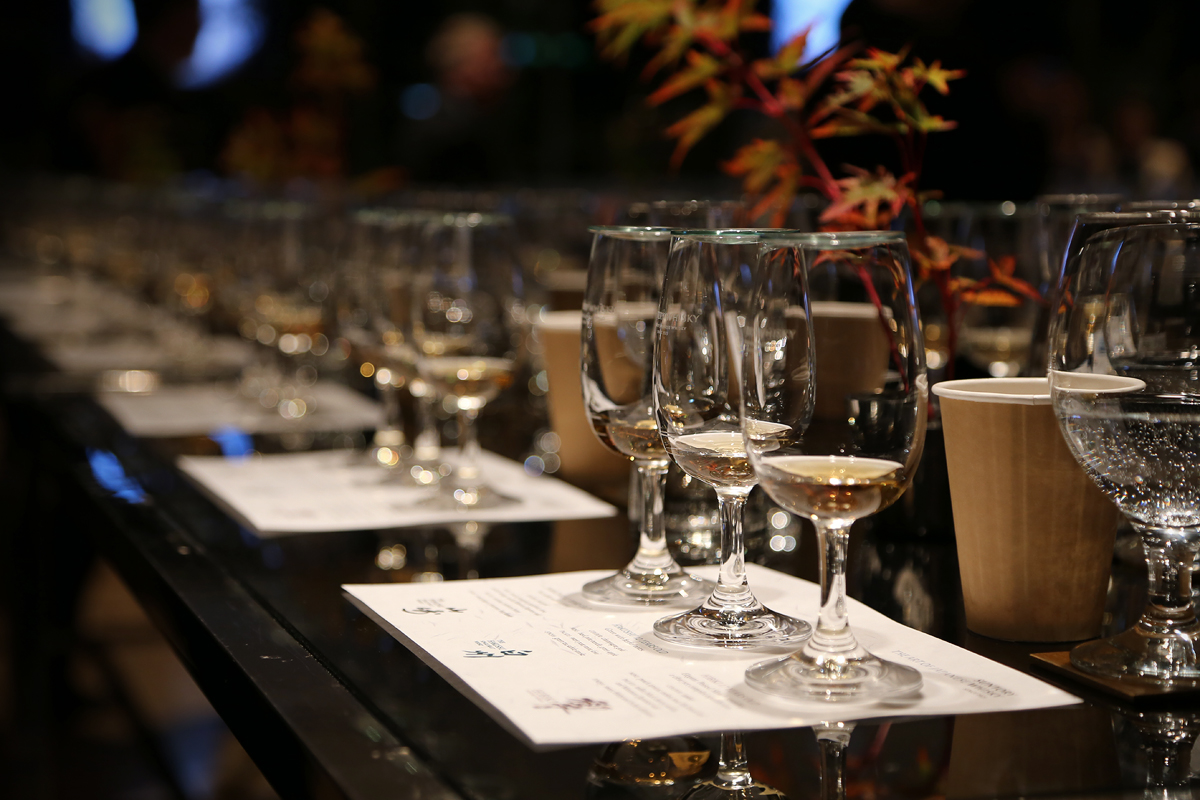
Tasting

As someone who really appreciates detail, the setup of this space was incredibly visually pleasing. Everything was perfectly aligned, miniature maples adorned the waist-height tables, the glasses were all etched – logos facing forward – and were all adorned with perfectly sized watch-glasses.

Glasses

It seemed rather fitting that in a setup of such precision and craftsmanship we were trying Japanese whiskies, created with much the same attention to detail.

Following a brief introduction, Suntory’s Global Brand Ambassador, Hiroyoshi (Mike) Miyamoto, took us through a tasting of the three core expressions in front of us – Yamazaki, Hakushu and Hibiki – all of the 12 year old variety.

Mike

Unfortunately, some of the crowd got a bit restless at times, but I suppose that’s to be expected for a group of 150-200. In any case, I absorbed plenty of new info and will write up my thoughts on these three core 12 year old separately.

Trio

The tasting marked the end of the evening’s formalities. Guests were invited to the adjacent space (which usually holds the Gallery’s main restaurant) to be greeted by whisky and matched canapés, expertly prepared by the Restaurant’s chefs. Think grilled short rib with truffle béarnaise, parmesan and herb gnocchi and seared scallop with passion fruit and vierge dressing – these were seriously tasty.

Canapes

A nightcap wasn’t hard to come by, with three stations spaced around the room, each serving a duo of Yamazaki, Hakushu or Hibiki. Guests were invited to try them neat or on the rock (yes, singular).

Drinks pouring

I say ‘rock’, as each station was equipped with a flawlessly clear block of ice. My initial reaction was that they were for display only (and probably made of plastic). But oh no, they were the real deal and they were being hand-carved and served. I know, I know, it’s a bit crazy to get excited over ice, but these were rather impressive.

Drinks rocks

A DJ kept the beats coming at an ambient level (kudos for not trying to deafen us all on a Monday) and drinks and canapés were still freely flowing as I said my farewells to friends, old and new. A very fitting local introduction for a quality whisky brand steeped in history – just like the rest of the objects within the walls of gallery.

Set

My thoughts on Suntory’s core range will follow in a new post shortly.