Celebrating Australia’s newest Keepers of the Quaich

Keepers of the what now? No, it’s not that flying broomstick game from Harry Potter. A Quaich (pronounced something like ‘quake’) is a two-handled shallow drinking vessel of Scottish origin.
IMG_7934

They’re slightly medieval in appearance and have been used for centuries by Scottish Clans to offer a welcoming drink (often whisky) at Clan gatherings and occasions. As a result, the Quaich has rightly become synonymous with the enjoyment and conviviality of Scotch whisky.

Australia’s newest Keepers

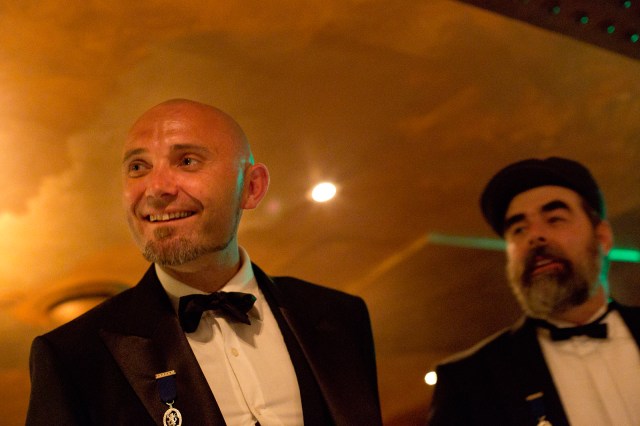
Founded in 1988, The Keepers of the Quaich isn’t the kind of society you can just decide to join. Being invited to become a keeper is an honour bestowed on those who have made an outstanding commitment and contribution to the Scotch whisky industry, so it’s a pretty big deal. A few weeks ago, the society held it latest inductee ceremony at Blair Castle in Scotland where, amongst others, two Australians were inducted, Mr Ben Davidson and Mr Sven Almening.
IMG_8006

So, when such an honour is bestowed on two locals with an impressive background in the drinks industry, what are you to do? Throw a pretty sweet party of course! Sven kindly offered up his flagship bar, Eau De Vie, as the venue whilst Ben brought the goods from the Pernod Ricard stable of whiskies. Even before I walked through the doors, I knew I’d be in for a rather enjoyable Monday night.

Ben Davidson

IMG_7883

Ben earned his stripes in the drinks world as a bartender in LA back in the early 90s, before a career with the illustrious Rockpool Group that began on his return to Australia in 1997. That seems to have paved the way for a successful career with Pernod Ricard (going strong for over 10 years now), where he’s their longest serving ambassador. Having delivered thousands of training and tasting sessions, covering brands like The Glenlivet, Aberlour and Chivas Regal there’s no denying his commitment and that his contribution to the Scotch whisky industry has been considerable.

Sven Almenning

IMG_7925

A lot of Sydneysiders have probably know of Sven in his capacity as the head of the Speakeasy Group; the company behind some of the country’s most iconic cocktail and whisky bars like Eau De Vie, The Roosevelt and Boilermaker House. But there’s actually a lot more to his whisky background – a side that many wouldn’t know about.

IMG_7756colour

Prior to his Speakeasy days, Sven used to own and run a company called Behind Bars where he did a lot of work with whisky, particularly with Diageo and their Johnnie Walker and Classic Malts portfolio. He was instrumental in helping launch both Johnnie Walker Gold and Platinum labels into the Australian market and has done a lot of work on the Johnnie Walker brand over the past decade. He was involved in creating, managing and implementing tasting and training programs for both consumers and the bar industry with these initiatives reaching thousands of consumers and bartenders. No doubt furthering their understanding and appreciation of Scotch whisky.

IMG_7976

In exchanging emails with Sven, I asked him what drew him to Scotch whisky in the first place and his open and candid response really resonated with me. “I think what has lured me into whisky – in addition to the fact I love its taste – is its amazing history, and the immense opportunity for exploration, and continuing education. I also love how whisky can transform a rubbish day to a great day. Or a good moment to a memorable moment”. Now isn’t that the truth!
IMG_8000

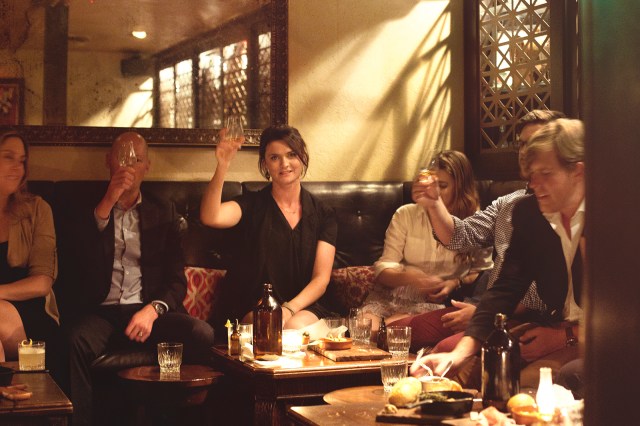
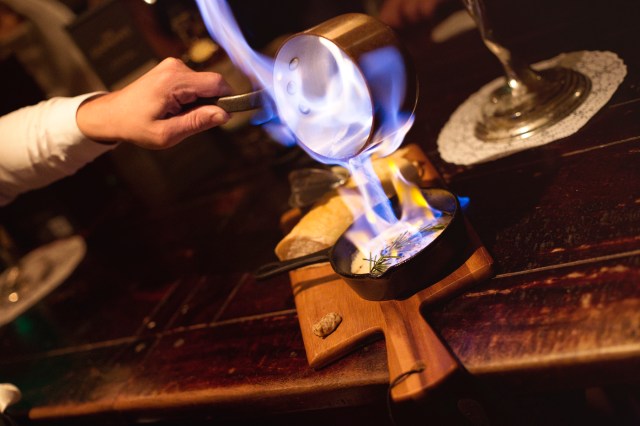
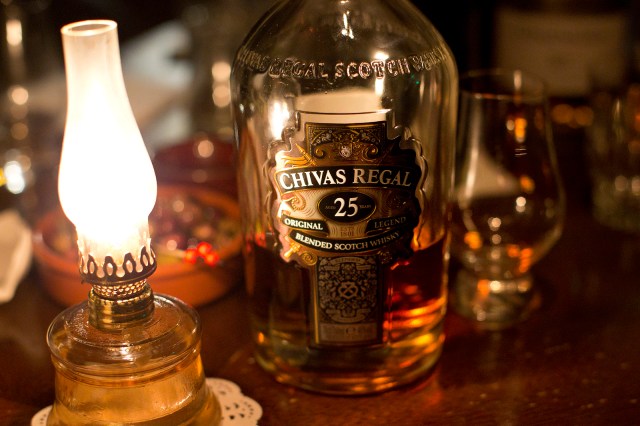
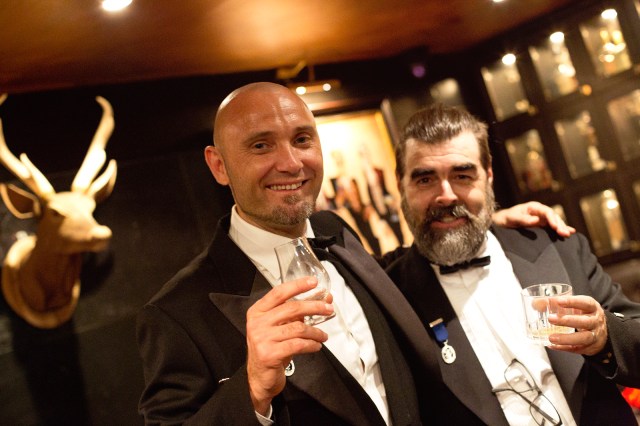
The night was indeed a memorable one. As we took a seat, both Ben and Sven recounted their journey to Scotland and all of the side stories that came along with it. It almost felt as though we sitting comfy in a friend’s lounge room, sipping fine whisky and hearing about an epic holiday. I’ll let the pictures speak for themselves on the drinks front, for this particular evening – and this post – really was all about the people in my opinion and recognizing they’re achievement.
IMG_7898

How one first gets on the radar of the Keepers of the Quaich is something I’ll never know. However, if anyone from the Keepers Society does happen to read this, I suggest you keep a very close eye on Australia and the people contributing great things to the appreciation of Scotch whisky here. Because along with Ben and Sven, I believe we have some very worthy candidates on our shores (Andrew, Brooke and Jules – I’m pointing at you for starters).
IMG_8014

For me personally, it was a privilege to be able to celebrate the achievements of these two local whisky legends, so I’d like to extend a special thanks to Pernod Ricard for the invitation and to Sven and the team at Eau De Vie for hosting us. If only more Mondays were like this.
IMG_8098

For an extended photo set from the evening, head on over to The Whisky Ledger’s new Facebook page and give us a like whilst you’re at it!

Compass Box Flaming Heart and This is Not a Luxury Whisky

You may not be overly familiar with John Glaser and his company Compass Box whisky, especially if you’re reading this in Australia (as distribution is rather limited here). But I feel like you should be and here’s why.

Compass Box and their whisky philosophy

Compass Box are what you could broadly describe as an independent bottler of whisky. What I mean by that is that they don’t actually distil their own whisky, rather they acquire whisky from other, established distilleries then bottle it under their Compass Box brand. Well, that’s how most independent bottlers work, but in the case of Compass Box I’ve just oversimplified it by a fairly big margin.

CB1

A good deal of the independent bottlers out there cater to the segment of the market that enjoy single cask whiskies. They literally get a cask, fill as many bottles as they can, then sell it as is. When it comes to Compass Box though, rather than simply describe them as an independent bottler, the term ‘whisky maker’ is perhaps a better descriptor. Whilst they don’t distil their own whisky, they don’t just ‘bottle’ whisky either. They like to create.

John Glaser and his team have built their reputation on the back of creating some exceptional blended whisky. Add to that their brilliant packaging design and you’ve got a pretty unique product. Another aspect that sets them apart from many others in the industry is that they’re quite happy to actually disclose what goes into their revered blends. If it’s got some 30 year old Caol Ila blended in there, they’ll tell you. Likewise, if the blend contains 12% 8 year old Glen Ord, they’ll also tell you.

The Scotch Whisky Transparency Campaign

Well, that’s what they used to do (and that’s what they’d still like to do), but that recently got them into a bit of hot water with the Scotch Whisky Association (SWA), the governing body of the Scotch whisky industry. Why? Well, the SWA’s guidelines actually prohibit this level of transparency. Sounds a tad crazy, doesn’t it?

This brings me to another reason why I believe you should familiarise yourself with Compass Box. Rather than sit back and live with the SWA’s decision, they’ve decided to do something about it. I’ll let John Glaser do the explaining.

The good people at Bruichladdich were the first to put their hand up and say, ‘yep, we support you!’ Soon after, independent bottler the Boutique-y Whisky Company announced that they would start adding age statements to all of their bottles as well, so it looks like Compass Box aren’t the only ones who believe in transparency.

As John says in the clip, if you think whisky produces should have the option (but not necessarily the obligation) to tell you all about the whisky in your bottle, head on over to the Compass Box website and lend your support.

Compass Box: The whisky

Just in case I haven’t given you enough of my opinion for one post, how about some thoughts on two of their latest releases, the Compass Box Flaming Heart 5th Edition and This Is Not A Luxury Whisky (one of the coolest whisky names in recent times in my opinion!)

Compass Box Flaming Heart 5th Edition

This is actually a fifteenth-anniversary bottling of Flaming Heart and at it’s heart, it’s comprised of 38.5% 14-year-old Caol Ila, 27.1% 30-year-old Caol Ila, 24.1% 20-year old Clynelish and 10.3% seven-year-old blended malt. That blended malt, inside this blended malt is made up of whisky from Clynelish, Teaninich and Dailuaine. How’s that for transparency!

CB3

My first reaction on nosing this one was ‘Ahhh!’. Lots of sweet and dry sooty ash notes. There’s a hint of salty sea spray and some waxy honeycomb notes with a hint of vanilla notes. It’s fairly bright and punchy, but quite well balanced.

Lots of medicinal mossy peat on the palate. I didn’t get much in the way of smoke, but there’s a fair salty tang with a lemon rind/ herbal bitterness and some damp soot. To me, it tasted a lot more mature and older than it nosed.

Compass Box This Is Not A Luxury Whisky

Such a great name. I actually think this is a luxury whisky, but not in the collectable, put it on a shelf and stare at it sense. If that’s what you’re doing with this bottle then I’m sorry, but you’re totally missing the point. No doubt the bottle looks pretty sweet, but the contents, now that’s where the fun really is!

Again, thanks to Compass Box’s transparency, we also know what’s in this one. 79% of the liquid is 19-year-old Glen Ord aged in first-fill sherry butts. 18% is 40-year-old-grain whisky from Strathclyde and Girvan and some 30-year-old Caol Ila (4%) has been blended in there as well.

CB2a

The nose is quite dense and closed, even with some airtime. I got notes of cereal grains (coconutty?), old leather, polished timber, fragrant dried flowers and some cedar wood spice. Given some time, more tropical fruit notes (think pawpaw, papaya and green banana skins) and faint honeycomb sweetness. There’s a mossy peat note in the back there too. Quite a complex nose, one that’s hard to pin down (the power of clever blending!)

On the palate it’s much more lively. Loads of those tropical fruit notes from the nose, some juicy vanilla, spice, honeycomb sweetness and oak. The faint peat notes make it almost meaty and mossy toward the finish, where a lot more of the oak comes out.

Compass Box in Australia

The good news for Australian Compass Box fans is that both of these expressions will go on sale here in the very near future. The bad news is that only a minuscule number of bottles are being brought into the country, so if you want one, start making friends with your flagship Dan Murphy’s store now. And if you want to see more of these here, follow the lead of Compass Box, be a little bit vocal (in a nice way, of course) and let your local store know.


Glenmorangie Milsean

A review of Glenmorangie’s latest Private Edition

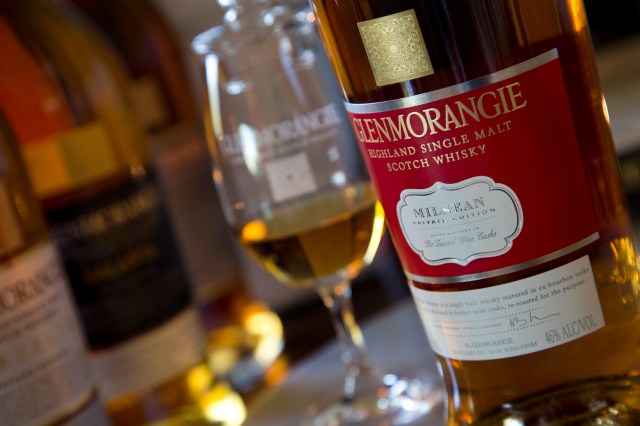
It’s that time of year again when Dr Bill Lumsden raises the curtain on Glenmorangie’s latest Private Edition expression. In it’s seventh year now, the Private Edition collection is Dr Bill’s chance to play with parts of the whisky production process and showcase the versatility of Glenmorangie’s spirit.

Milsean1

Last year he brought us the Tusail, Dr Bill’s vision of an old-school Glenmorangie made with Maris Otter barley that rose to popularity in the brewing industry in late 60s/early 70s. Prior to that we’ve seen Glenmorangie made with lightly peated barley (Finealta), Glenmorangie matured in a host of different ex-wine casks (Artein, Companta) and even a 19 year old expression (Ealanta). And in terms of coming up with yet another crazy concoction, this year’s release is no different!

Milsean explained

The Milsean (‘meel-shawn’ – Gaelic for ‘sweet things’) starts life as regular Glenmorangie spirit matured in ex-bourbon casks for 10 years, before being further matured in ex-wine casks for an extra two and a half years. So whilst it doesn’t carry an age statement on the label, you can do the math on this one!

Milsean4

The ex-wine casks in question are former red wine casks from Portugal that have been re-toasted specifically for this whisky. If you’re not familiar with the process of toasting, it involves heating the wood (in this case, with a direct flame) to scorch or lightly char the inside of the barrel. This process re-invigorates the cask and caramelizes both the natural sugars in the wood and those in the wine residue left behind. The result? Some super sweet toasty goodness, ready to impart bucket-loads of flavor into the Glenmorangie stored within.

Milsean: Tasted

The name Milsean translates to ‘sweet-things’ and the candy-striped packaging conjures up images of an old-school sweets shop, so I’m expecting this to be, well, pretty darn sweet. So is it?

Milsean2

Very first impression on the nose? This thing is sweet. Confectionary sweet. Dig a little deeper though and its oh so rewarding. It instantly reminded me of a freshly opened bag of marshmallows, toffee nut brittle, gummy bears, sweet macerated berries and a hint of hot chocolate powder. There’s loads of creamy vanilla that reminds me of custard powder – the kind mum used to use when we were kids.

On the palate it’s got that classic Glenmorangie backbone you find in the ten year old, but it’s layered with an oily sweetness you definitely do not find in the ten year old. Oily chewy wine gum notes, honey, candied orange peel (including that bitter pith) and super ripe sugary plums. It’s followed by a fair whack of drying spicy oak on the finish, but I feel as though it’s accentuated by the preceding sweetness, which seems to linger into the finish as well.

Milsean5

Australia has received an allocation of 200 cases of Glenmorangie Milsean and it’s available right now in both specialty retailers and through Moet-Hennesy Collection at a retail price of $150. If you – like I – have a bit of a sweet-tooth when it comes to whisky, I have a feeling this will be right up your alley.

Thanks goes to both Moet-Hennessy Australia and the great people at EVH PR for providing the bottle reviewed here.

Paul John Whisky

Indian single malt whisky

If you played a little word association game with the average person and asked ‘what’s the first country you think of when you hear the word whisky?, I’d say there’s a really good chance most people would say Scotland. Some might hit you with Ireland or the United States. Heck, Japan is probably high up on that list these days too! But I don’t think you’d get too many people saying ‘India’.

Paul John Whisky 4

Don’t for one second think that’s because India isn’t a whisky-drinking nation though. It’s quite the opposite actually. According to these statistics, India is actually the biggest whisky-drinking nation on earth! To satisfy that demand they have over 40 whisky-producing distilleries around the country, but only two of those (as far as I’m aware) produce whisky specifically for the export market. The first, and perhaps the more well-known, is Amrut and the second – the feature of this post – is Paul John.

Paul John and John Distilleries

The brand Paul John comes out of John Distilleries’ single malt distillery located in Goa. The facility uses two Indian-made copper pot stills to produce in the region of 3,000 litres of spirit daily (1.1 million litres a year). This makes them similar in scale to a distillery like Ardbeg, who also have a single set of stills and a similar annual production capacity.

Not only does Paul John use Indian-made copper pot stills, but they also use a varietal of Himalayan 6-row Indian barely in the production of their spirit. This gives them a lower alcoholic yield, but Master distiller Michael John is of the belief that it helps give the whisky more characteristics of its country of origin. Casks are filled at 55% ABV (compared to standard Scottish filling of 63.5% ABV) before being matured in one of two warehouses.

Paul John Whisky 7

India’s hot and often humid climate makes whisky mature much faster than it would in Europe or the United States, with Paul John’s annual evaporation (‘The Angel’s Share’) being around 8% per year (compared to Scotland where it’s closer to 2%). As a result, their whiskies are often bottled anywhere between four and seven years of maturation. Paul John isn’t a brand you encounter too often here in Australia, so when they recently contacted me and offered a samples of their full core range I was more than eager to give it a try.

I’ll keep my notes brief, picking out some similarities and differences to try and form a better understanding of Paul John’s single malt profile and how the expressions compare against one another. One thing to note from the get-go is that all of their whisky is 100% natural colour and non-chill filtered.

Paul John Brilliance 46% ABV

The entry level expression in their range. Brilliance is made with un-peated spirit and is aged in ex-Bourbon American Oak casks for around 4 years.

Quite soft on the nose with some sweet vanilla and malty biscuit notes. There’s a hint of citrus, orange pith and oak. It’s chewy and oily on the palate and quite close to the nose – more citrus, zesty notes, spice and oak. It’s like a quality, soft Speyside whisky.

Paul John Whisky 6

Paul John Edited 46% ABV

Edited is also matured in ex-Bourbon American Oak casks for around 4 years, however it contains around 15-20% of peated spirit in the vatting. To get peated spirit, Paul John import peat from Scotland and then peat their preferred 6-row Indian barley themselves.

Very soft again on the nose, almost muted in a way. There’s a definite hint of peat that presents itself in a salty, damp hay smoke kind of way. It’s there, but it’s also fairly subtle and integrated. I still get the same malty biscuit and citrus notes from the Brilliance as well.

On the palate the peat is quite pronounced upfront with a salty saline tang, that great chewy mouthfeel. There’s toffee, maybe even salted caramels and that bitter citrus pith note again.

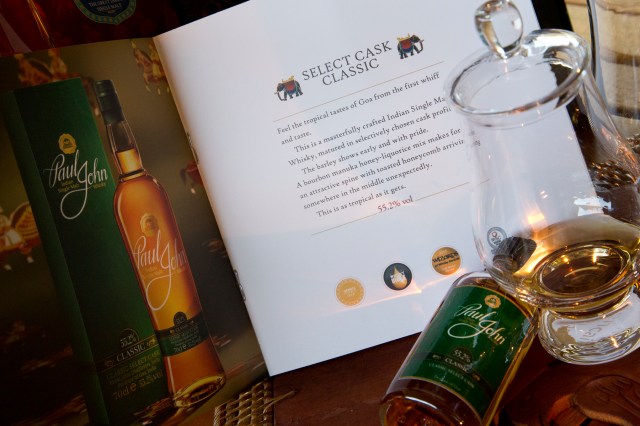
Paul John Classic Select Casks 55.2% ABV

A non-peated cask strength offering. A fuller, deeper and richer nose compared with the Brilliance, really showcasing the oily rich spirit profile. I got deep creamy vanilla, sweet malty cake notes and a hint of orange.

It’s bright and punchy upfront on the palate with a great sweet, oily, malty mouthfeel. Hot cinnamon and cedar-wood spice upfront gives way to sweet chewy vanilla, some honey notes, summer fruit salad. There’s more malt, oak and spice on the finish.

There’s a definitely lineage to the Brilliance in this one – with a similar general profile – but everything is cranked up to 11 and there seems to be more going on in the Classic Select Cask, probably due in part to the higher alcohol level.

Paul John Whisky 8

Paul John Bold 46% ABV 

The ‘Bold’ expression takes us into full peated territory and a single small whiff confirms that. It’s quite deep and bold on the nose with sweet herbal peat notes. It’s quite vegetal though, like a highland peated whisky, with a salty saline tang.

It’s vegetal and peaty on the palate (though not smoky) with that saline tang from the nose, but it also manages to incorporate some sweet notes. It finishes with a big wave of lingering peat that dries out your tongue, leaving behind a slightly bitter oaky woodiness.

Paul John Peated 55.5% ABV

As the name suggests, this takes us into peated territory again, but this time at cask strength. It somehow seems more restrained on the nose, with a nice balance of peat, berry/sherry sweetness and that herbal salty peat note.

Loads of tangy, salty peat upfront on the palate, a hint of crisp drying smoke, vanilla, charred peaches and brown sugar sweetness. The higher ABV carries the peat notes through to a long satisfying finish.

Paul John Whisky 3a

Some overall thoughts

I was really impressed by the whole Paul John range. Not that I expected it to not be good, but I think in the back of my mind I didn’t expect it to taste anywhere near as mature and balanced as it does. None of these five expressions gave off any hint of their youth. The decision to bottle at 46% ABV and above with no chill filtering is a smart move in my opinion, with the full range having a fantastic oily, chewy mouthfeel that carries loads of flavour across the palate. Whilst some of the expressions are slightly restrained in their flavour profile, they were all nicely balanced and tasted like high quality, well-made whisky to me. If I had to pick a favourite out of the five, I think I’d go for the ‘Peated’ expression at cask strength. It had a lot going on in every sip and is genuinely great whisky.

Paul John Whisky 5

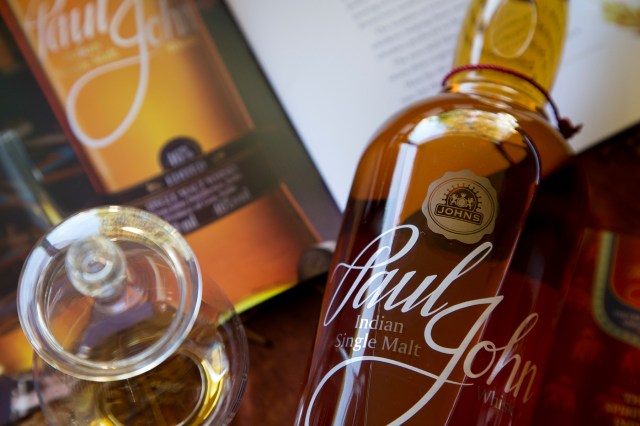
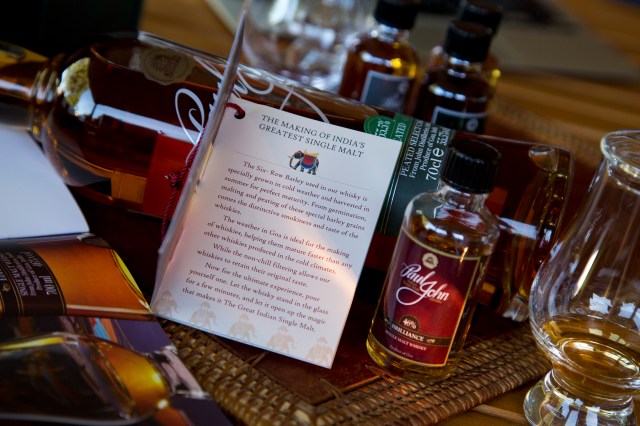
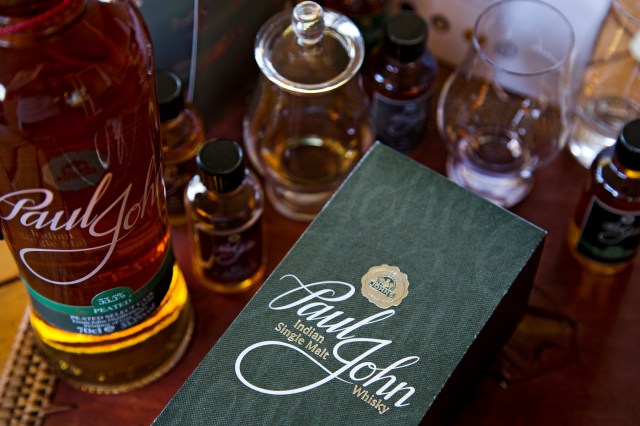
Paul John also kindly included a full-size bottle for me to photograph (pictured throughout this post). I’m a sucker for packaging and presentation and I have to say, the presentation is rather smart! An embossed card box with a magnetic closure opens to reveal a nice clean, modern bottle. The fonts/script used throughout are fresh and clean, the main branding is screen-printed and there’s a nice little swing tag including a booklet on all the basics you need to know about Paul John’s full range.

Paul John Whisky in Sydney 

Mr Madhu Kanna, General Manager – Exports, from Paul John will be in Australia for the Whisky Live whisky show on 8th and 9th April 2016 so if you’ve got yourself a ticket, I encourage you to drop by their stand and try some Paul John whiskies for yourself!

Paul John Whisky 1

Thanks goes to Paul John for the generous whisky samples. I’m looking forward to seeing your brand develop further and tasting whatever you bring out next!

Ardbeg Dark Cove Committee Release

Plus Ardbeg Day 2016.. or should we say, Ardbeg Night

It’s that time of year again when Ardbeg start to tantalise us with cryptic clues of their yearly celebration that is Ardbeg Day. Last year they took us to the future. The year before that saw a human foosball tournament and that infamous golden bottle. They’re always bucket loads of fun and the team are promising that this year’s event will be like no other!

Ardbeg Dark Cove Committee

Things will be done a little differently in 2016 though. For starters, Ardbeg Day is now Ardbeg Night and to keep it exclusive to true Ardbeg fans, only select Ardbeg Committee Members will be lucky enough to attend. To be in the running to score yourself tickets, you first need to be an Ardbeg Committee member. It’s simple and it’s free, so if you’re not one already, what are you waiting for!? Visit this link and sort yourself out post-haste!

Secondly, you need to purchase yourself a bottle of the new, Ardbeg Committee exclusive Dark Cove, only available through the Moet Hennessey Collection site (hint: you’ll need your Ardbeg Committee details handy to make your purchase). Each bottle purchased up to 17 April will put you in the running for tickets to Ardbeg Night 2016 and the lucky recipients will be notified by 20 April.

If you happen to miss out, or if your hip pocket doesn’t permit a bottle purchase at the moment, fear not! Other events will be held at Ardbeg Embassies nationwide and you can find your nearest embassy here.

Ardbeg Dark Cove Committee Release 55% ABV

This year’s celebratory Ardbeg Day bottling is Dark Cove, which is said to pay homage to the shadowy past of Ardbeg’s coastline. Traditionally, the Ardbeg Day celebrations have been the launch pad for the annual celebratory bottling, with all bottles being well and truly embargoed against early release.

As you’ve probably gathered from the opening though, Committee members have been a bit spoilt this year and can actually purchase the special Ardbeg Committee version of Dark Cove now! That being the case, let’s see how it tastes.

Ardbeg Dark Cove

The second that sample bottle was cracked I had an ear-to-ear smile. Sweet, smoky peat notes waft out of the glass immediately. Campfires, sweet sooty embers and savoury smoked meat served with quince paste and sweet onion jam. There are some caramelised berry notes, but the sherry doesn’t dominate. Nicely integrated.

Sweet, sour, salty and peppery on the palate all at once. It has that drying herbal Ardbeg backbone, but with a certain zesty fruitiness. There’s hay smoke, more aged meat notes but with a drying, crisp smokiness to the finish that lingers for a long time.

Too often these days whisky fans online get a bit too caught up in the numbers game. When any new release comes out the same questions come thick and fast; how old is it? How many bottles were produced? How many bottles are available in our country? etc. I’ll be the first to admit that I too wonder about these things. But the one question that people don’t seem to ask nearly as much is ‘does it taste any good?’. At the end of the day, isn’t that the most important thing? It is to me and the new Dark Cove is a winner in my books. Very, very enjoyable.

Dark Cove Tag

The Dark Cove Ardbeg Committee release (55% ABV) is available exclusively to Committee members through the Moet Hennessey Collection now. The general release of Dark Cove (46.5% ABV) will be available from 28 May at a recommended retail price of $169.

I pounced on a Committee bottle the day it was released and after tasting this sample generously supplied by Ardbeg Australia, I’m so very glad I did. Here’s hoping my full-size bottle comes with a winning ticket to Ardbeg Night 2016!