Aberlour 16 year old double cask

16 years old, 43% ABV, Oloroso and American Oak casks, Speyside, Scotland

The Aberlour distillery is nestled away in the Speyside region of Scotland in the town of Aberlour – a couple of minutes down the road from Craigellachie.
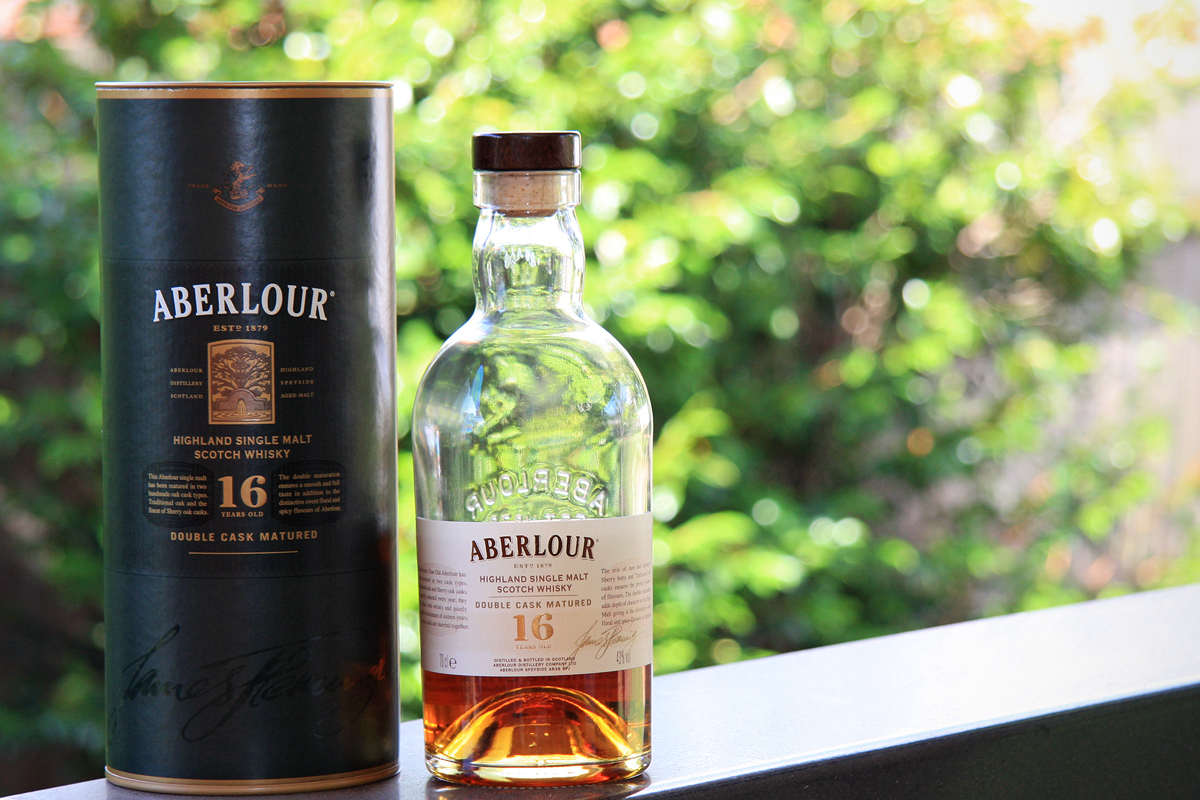
Aberlour 16

Interestingly though, on the package of the 16 year old double cask, Aberlour refer to themselves as both a Highland and Speyside distillery.
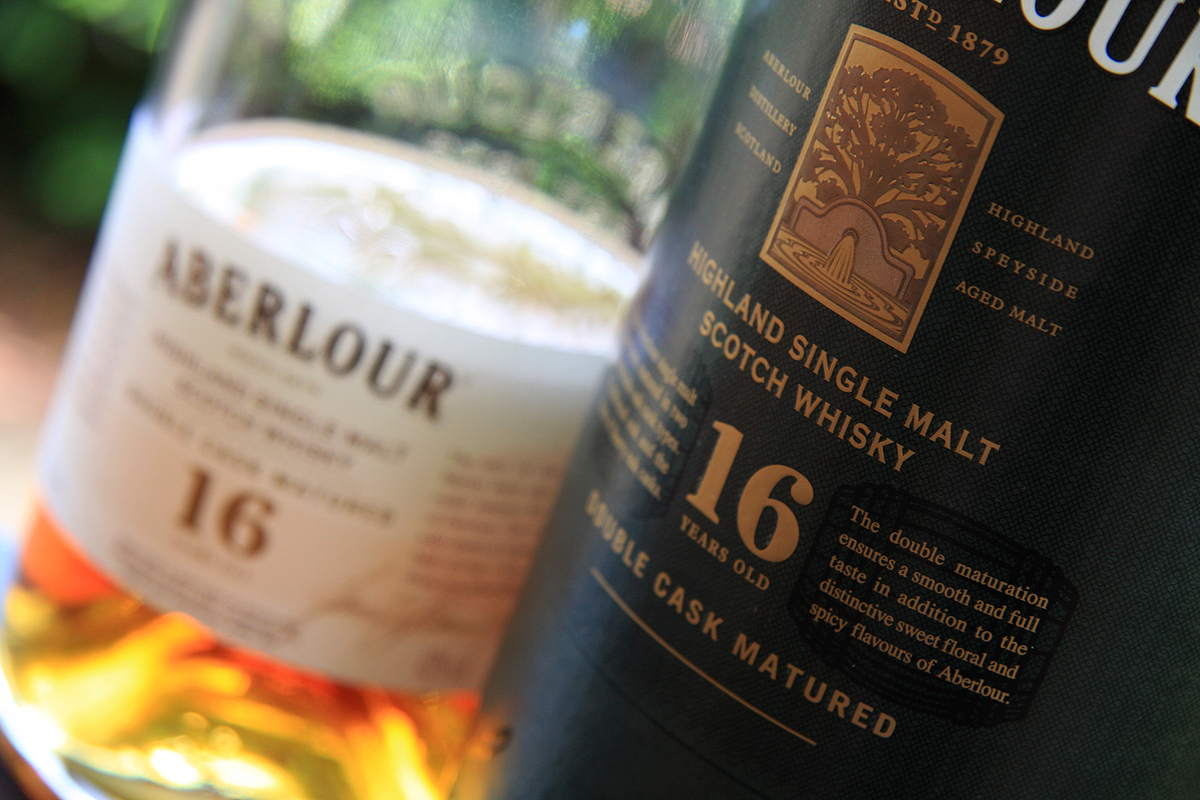
Aberlour 16 tube

The bright copper-coloured 16 year old double cask pictured here is a marriage of two different whiskies.

Aberlour take a whisky that’s been maturing for at least 16 years in first-fill Oloroso sherry casks and a whisky that’s been maturing for at least 16 years in first-fill American Oak. The two are then married together for a period of around three months in a marrying tun before being bottled as the 16 year old double cask.

Aberlour 16 seal

Just as you’re about to open the bottle for the first time, you’re met with this little paper seal scribed with a simple description of what you’re about to taste. I think it’s a nice little touch. (In case you’re wondering, the liquid inside does indeed live up to the description – read on)

Did you know…

The town of Aberlour is also the home of Walker’s Shortbread. I don’t know about your part of the world, but at home in Sydney, there always seemed to be a tin or box of Walker’s Shortbread in our house around Christmas time. Might have to pair one with a dram of Aberlour 16 to see how it goes!

Nose

Initially quite fresh and floral – notes of soft vanilla, light spice, green apples, citrus and gentle sweetness. The nose sweetens after some glass/air time with some malty honey notes showing and something a bit zesty and bitter – orange marmalade comes to mind. A pretty well balanced nose in my opinion.

Palate

A nice medium oily mouth feel on entry – it has a nice weight to it for a 43% whisky. Gentle spice and sweetness come out first, followed by some of those citrus/bitter marmalade flavours. The sweetness and vanilla aren’t as strong as I would have expected from the nose, but they’re still there.  Overall, quite light and soft on the palate.

Finish

The 16 year old finishes with medium warmth and light malty sweetness contrasted with a fair bit of oaky bitter spice.

Comments

With little debate, the cask strength A’bunadh is the most well-known and talked about whisky in Aberlour’s current line up. But I think this is a really underrated gem and one that’s definitely worth exploring.

If A’bunadh is the heavyweight bigger brother packed with boisterous pointed flavours, then the 16 year old double cask is its nimbler sibling with rounder, softer, more harmonious flavours. A well-made high quality whisky at a pretty good price point.

If you’re a fan of A’bunadh and have been wondering about the other offerings in the Aberlour stable – maybe it’s time you gave the 16 year old double cask a go.

As a random side note, this bottle has to have the best sealing cork I’ve come across!

Nicks Wine Merchants

Searching for whisky in Melbourne, Australia

On a recent trip to Melbourne, I finally made the short trek to a store that I’ve visited hundreds of times online – Nicks Wine Merchants.

You’ll find Nicks in Doncaster, around 19km (11 miles) east of Melbourne’s CBD in the same shop they’ve been in for over 50 years. Walk through the doors and it’s pretty hard to not get a little bit excited with this sight.

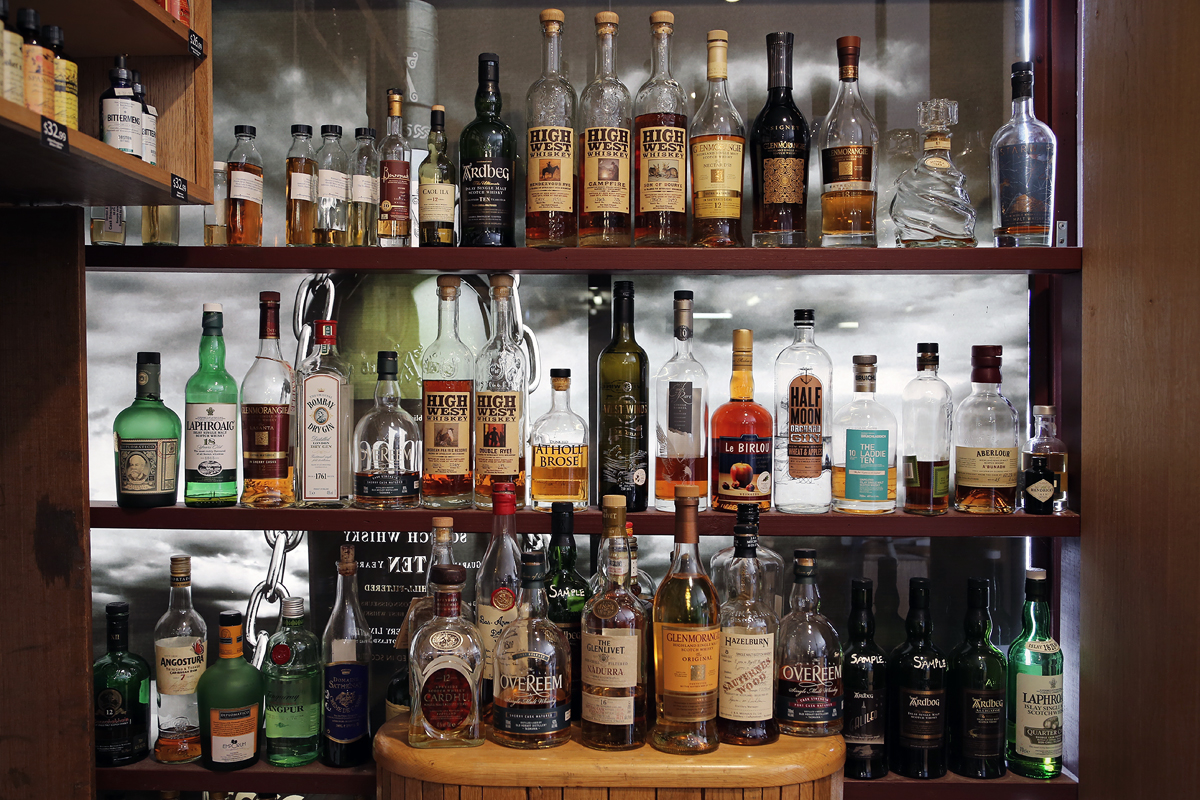
Nicks selection 1

Way better than browsing online! I’m pretty sure I stood there for a good 5 minutes with my mouth slightly agape.

Nicks selection

These photos probably show a third of what they had on their shelves – everything from Glenfiddich 12 year old to Highland Park 40 year old, Jim Beam white label to George T Stagg and hundreds of bottles in between.

They even have a really well-stocked tasting counter where they’ll happily let you try before you buy – and not just core range bottles either!

Nicks - tasting

Hang on a sec, what’s that Ardbeg lurking in the corner?

Nicks - Alligator lurking

That’s right, they even had a bottle of Ardbeg Alligator available to taste! It’s not every day someone offers you a free taste of Alligator.

Nicks - Ardbeg

I didn’t take down any tasting notes, but yes, it was a pretty nice one.  Would I pay current collector prices for a bottle though? No – as I’d want to open it and drink it and just don’t think I’d get three times the enjoyment of a lesser-priced Ardbeg… In saying that, it was pretty special drop and it would be a rather nice feeling to have one of these in your cabinet!

The staff at Nicks were genuinely knowledgeable about whisky (and all of the products they stock). We ended up talking about Glenmorangie Ealanta and The Whisky Bible phenomenon (Ealanta sat on shelves for a good six months in Australia before seemingly selling out over night following the whisky of the year announcement).

I hadn’t actually tried it, but they soon sorted that one out for me, kindly finding an open bottle out the back.

Nicks - Ealanta

Quite unlike any other Scotch whisky I’ve tried before – heavy on the bourbon notes and spice, but still unmistakably Glenmorangie. The small quantity of this that landed in Australia should have sold-out on taste alone – really quite enjoyable. Before you bombard their website – like everyone else, they’re sold out.

A big thanks to the friendly and knowledgeable staff for their time and for the good whisky banter. If you live in Melbourne – or you’re just passing through – Nicks is well worth a visit for any whisky or spirits fan.

Glenmorangie Quinta Ruban

12 years old, 46% ABV, American Oak and Ruby port pipes, Northern Highlands, Scotland

Around 2008, Glenmorangie released what we now know as the current range of  ‘extra-matured’ whiskies. The range of three includes Lassanta (finished in ex- oloroso sherry casks), Nectar d’Or (finished in sweet French sauternes wines casks) and this one, Quinta Ruban which has been finished in Portuguese ruby port pipes.

Quinta Ruban

To arrive at these ‘extra-matured’ whiskies, Glenmorangie start with their standard 10 year old, which has been resting away for ten years in American white oak (first fill and refill casks).

They re-rack this whisky into the wine casks mentioned above for a further two years of maturation, bottling each expression at 12 years of age. The other big difference between the extra-matured range and the standard 10 year old is that they’re each bottled at 46% ABV (instead of 40%). They’re also non-chill filtered – preserving loads more of those delicious oily flavours.

Quinta Ruban label

Did you know…

Glenmorangie have long been considered one of the pioneers of cask finished or ‘extra-matured’ whisky. Well before the current extra-matured range was released, Glenmorangie were re-racking their whisky into various wine casks, as far back as the late 1980’s. Some of these casks were pretty exotic too! Truffle Oak anyone?

Often referred to as one of their best and one that collectors regularly pay big dollars for is their 1975 Tain L’Hermitage. Distilled in 1975, it was moved into Côtes du Rhône wine casks in 1999, then bottled in 2003 at 28 years old (there was also an original version bottled in 1995, but it’s as rare as hen’s teeth).

Nose

The first thing I got was more spirit than usual, not surprising given it’s bottled at 46%. Sweet vanilla bourbon notes from the American white oak are there, but they’re dominated by a rich sweetness. Not super fruity, but more sugared plums, cherry and wine notes. I got a hint of spice and also some curious fresh/cooling notes – butter menthol of some sort?

Palate

On entry, this has a reasonably oily mouth feel and is quite sweet and creamy. I also got a fair amount of spice on the side of my tongue, but it dissipates rather quickly, leaving behind a second wave of creamy sweet plummy notes, some dark cherries and a slightly tingling raspberry jam flavour. The port has had a big influence on this one.

Finish

The spice on the palate fades as fast as it arrives, leaving behind a really curious tingling sensation, almost fizzy or carbonated in a sense. Can’t say I’ve experienced that sensation in a whisky before! Some light oaky bitterness, nice medium length warmth and some traces of that cooling butter menthol from the nose start to emerge.

Comments

Even though the port finish is pretty heavy on the nose and palate, this is still unmistakably Glenmorangie. I love the fact it’s non-chill filtered and that they’ve bottled it at 46% ABV (makes me wish the standard 10 year old was the same).

I personally found the fizzy tingling sensation a little odd and the port dominated a bit too much for my liking, taking away from the more delicate Glenmorangie notes that I really enjoy. In saying that, I can definitely see this being enjoyed by many as a great digestif style whisky.

News for Australian Glenmorangie & Ardbeg fans

Glenmorangie Companta

If you’re a Glenmorangie fan, there’s a good chance you’ve heard of their annual ‘Private Edition’ release. It all started with the highly-praised Sonnalta PX back in 2009, followed by Finealta and Artein. Then there was last year’s release, Ealanta, which was awarded whisky of the year by the author of the Whisky Bible, Jim Murray. The 2014 Private Edition release – Companta – has just gone on sale in both the UK and USA and is fast selling out by the looks of it.

From what I understand, approx. 60% of the whisky in Companta has been matured in ex-Grand Cru casks from Clos de Tart, with the remaining 40% coming from whisky that’s been matured in ex-Rasteau fortified wine casks from Cotes du Rhone.  These were then married together, producing the amazing crimson-amber hue seen in the photo below.

serlin_32729

Source: Kevin Mackintosh for Glenmorangie

The Australian market missed out on the first few releases, but the folks at Moet-Hennessy (the Australian importers of Glenmorangie & Ardbeg) did bring Ealanta to our shores last year. Will we see Companta arrive this year?

No official confirmation from Moet-Hennessy at this stage, but I’ve heard from someone in the industry that Companta will be reaching our shores around April. Let’s hope they’re right, as I for one am really looking forward to trying it.

Ardbeg Auriverdes

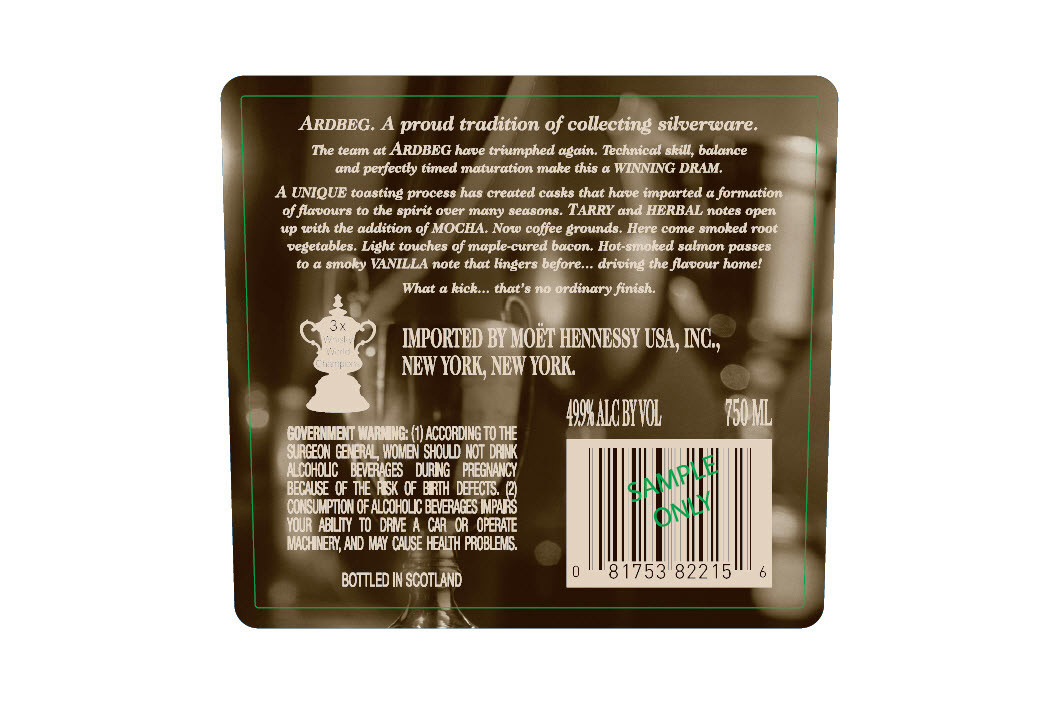
This next one hasn’t been officially announced just yet, but someone did a little digging around online and managed to find these very curious front and rear labels for the new Ardbeg Auriverdes. I have a feeling we’ll be hearing a lot more about this one in the coming months!

Auriverdes frontAuriverdes rear

Along with the name (which I believe translates to ‘Gold and Green’), the wording and imagery on the label has lead many to speculate that Ardbeg’s latest has some association with the 2014 FIFA World Cup in Brazil.  Here in Australia, we’d like to think the green and gold reference has something to do with us – I somehow don’t think that’s the case though.

As with Companta, there’s no official confirmation from Moet-Hennessy just yet, but rumour has it we will see this expression in Australia around June. In time for Ardbeg Day 2014 perhaps? I guess we’ll just have to wait and see.

I don’t know about you, but I can’t wait to try both of these expressions!

ps. I always like to include my own photography in my posts, but until I’m able to get my hands on these gems, these stock images will just have to do! Isn’t Kevin Mackintosh’s photography magical!

Highland Park 12 year old

12 years old, 40% ABV, European Oak ex-sherry casks, Orkney Islands, Scotland

In the far north of Scotland – off the tip of the mainland – you’ll find the Orkney Islands, home of the Highland Park distillery. Among their core range you’ll find the expression reviewed here, the Highland Park 12 year old.

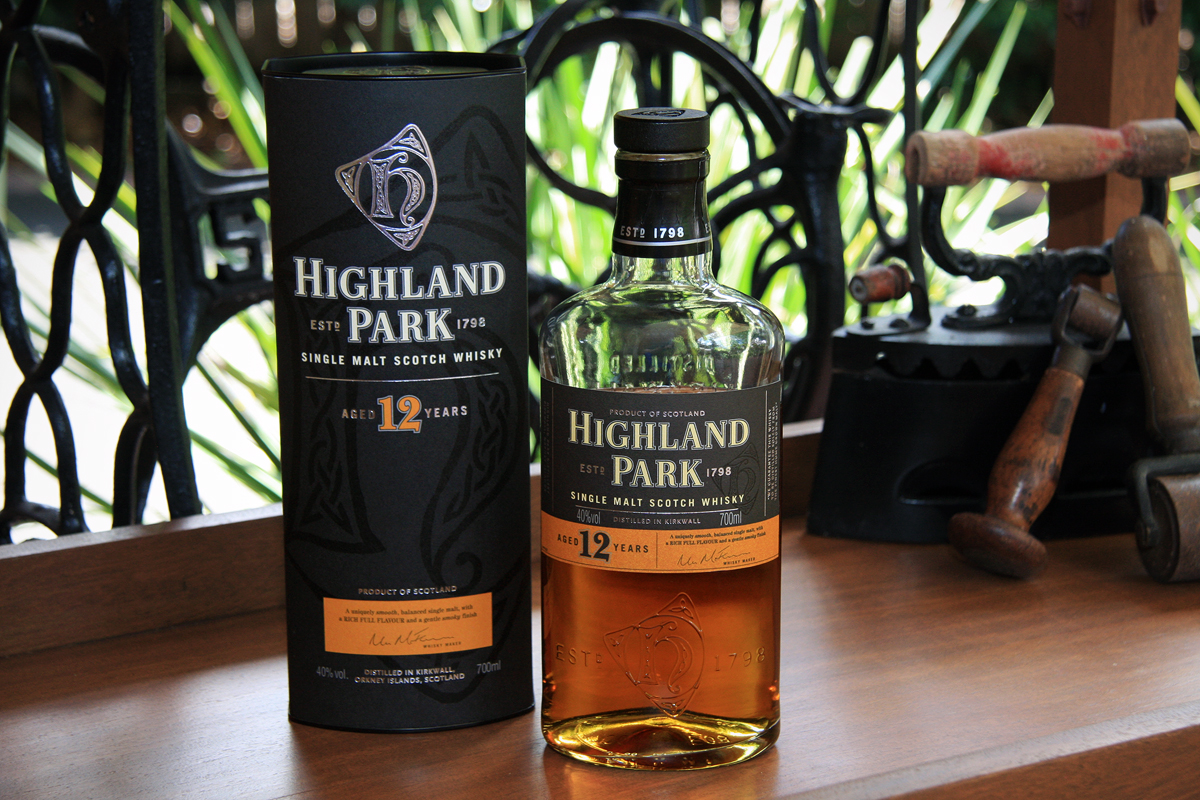
Highland Park 12

The 12 year old is matured in European Oak ex-sherry casks and is bottled at its natural colour. The flask shape bottle you see in these pictures (and used for the rest of the Highland Park range) was first introduced around 2006.

Highland Park 12 tube

The canister has moved into the new age as well, with interesting use of typography on the back. It even has QR code printed down the bottom, which takes you to the Highland Park’s member’s club, The Inner Circle.

Did you know…

According to Highland Park, they first began distilling whisky in 1798 – that’s just 10 years after Australian was colonised by European settlers! However, like many distilleries at the time, it wasn’t all above board and they weren’t actually granted a licence to distill until some 28 years later in 1826.

Nose

From a freshly poured dram I got an immediate hit of sugary confectionary-like sweetness, closely followed by fragrant smoke. This has quite a rich, creamy sugary nose. Left to sit in the glass for a while, the sweetness seems to fade, highlighting more of the flinty, fragrant pipe-smoke notes.

Palate

I found this to have a pretty oily, creamy mouth coating texture – quite surprising from something bottled at 40% ABV! The sweetness from the nose carries through, followed by some sweet smoky tobacco notes. A chewy palate shows some oaky spice on the sides of your tongue towards the end.

Finish

Sweet and creamy with a fairly short finish (warmth wise). The smoke lingers on the back of your palate and becomes a bit earthier and peatier as the minutes roll on.

Comments

If you search for list of the top ten single malts anyone new to whisky should try, there’s a good chance you’ll see Highland Park 12 mentioned – and for good reason. The quality sherry casks really seem to impart a honeyed sweetness that works well with the gentle peat smoke, creating a nicely balanced dram (albeit a tad on the sweet side for my liking).

If you’re not overly keen on the boisterous peat of a big Islay whisky (like an Ardbeg or Laphroaig) but you’re still intrigued by smokey whisky – I highly recommend giving the Highland Park 12 a try.