Kilchoman tasting with Anthony Wills

Five expressions from Islay’s newest distillery

It doesn’t matter quite how busy my week gets, I always look forward to the whisky tastings held at the Oak Barrel in Sydney. The other week was no exception, so as soon as 6.30pm hit, into the tasting cave we ventured for a rather special Kilchoman masterclass.

Kilchoman brochure

The Oak Barrel’s whisky expert, Dave, normally runs the tastings. But occasionally he takes a seat with the rest of us and invites someone along to present instead. It’s fair to say that he keeps pretty good company, because the other week we were privileged to have someone pretty special presenting for us – the founder and owner of Kilchoman Distillery, Mr Anthony Wills.

Kilchoman: The story 

You may know of Kilchoman as the first new distillery to be built on Islay in 125 years, but here are a few things you may not be aware of.

Kilchoman (pronounced kil-ho-man) is the brainchild of former independent whisky bottler, Mr Anthony Wills. After finding that it was becoming increasingly difficult for him to get his hands on quality single cask whiskies to bottle, Anthony came to the conclusion that there was only going to be one way for him to secure his own supply of whisky well into the future. How? To build his very own distillery of course!

I’m sure there are a lot of people out there who’ve had similar dreams, but the number who’ve actually turned that dream into reality? My guess is that you can probably count them on one hand.
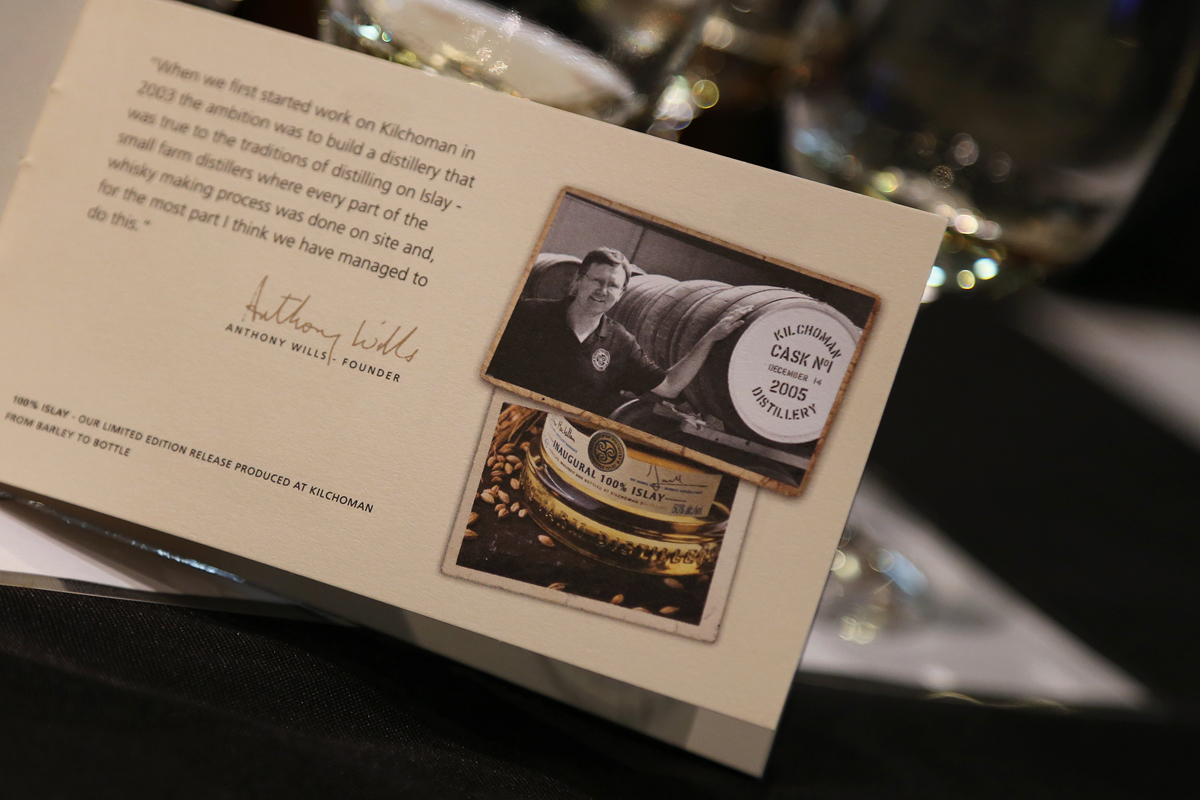
Kilchoman - Brochure Anthony

With the financial and moral support of his family, in 2005 Anthony & Co. sunk a million pounds into refurbishing and rebuilding the distillery’s buildings and purchasing the required equipment.

With no money left for production (and no actual distilling experience), Anthony managed to convince John Maclellan to leave his secure, long-term job as Master Distiller at Bunnahabhain and come and work for him. He was joined by Dr Jim Swan, whom Anthony brought on-board to help define and craft a specific spirit for Kilchoman, one Anthony describes as ‘clean, floral, sweet and peaty’. And so by the end of 2005, the stills were run for the first time and Kilchoman’s very first American Oak cask was filled on 14 December 2005.

Kilchoman managed to make a trading profit after just five years in business and last year they produced over 130,000 litres of spirit – coming a very long way from their first year of production where they produced 50,000 litres of spirit and filled just 12 casks a week!

Edit: I’ve been reliably informed that John Maclellan didn’t actually join Kilchoman until 2010, well after the stills started running. Thanks to Andrew for clearing that up for me!

Kilchoman: The whiskies

After Anthony delivered this interesting and informative intro, it was time to get down to business and taste some whisky.

Kilchoman tasting glasses

Before we get into each one though, here are some Kilchoman fast facts:

  • The barley for all of their expression (except 100% Islay) comes from Port Ellen Maltings (who also supply to the likes of Ardbeg and Lagavulin).
  • The barley from Port Ellen Maltings is malted to standard Ardbeg specs, which is around 50 PPM
  • Kilchoman fill their barrels at 63.5% ABV
  • All of Kilchoman’s first fill bourbon barrels are sourced from Buffalo Trace in Kentucky
  • Their sherry casks are all from Miguel Martin in Jerez, Spain (the same supplier Glenfarclas use for all of their casks)
  • All Kilchoman bottlings (which are bottled on-site mind you) are Non-Chill Filtered and natural colour.

Summer 2010 Release 

You may have guessed it from the name, but this expression was released in the Summer of 2010 (Winter, if you were in Australia at the time.. it was probably the same temperature as a Scottish summer!) This release was matured in first fill bourbon barrels and after three years was bottled at a respectable 46% ABV.

Kilchoman - Summer 2010 

Quite fresh and light on the nose with some floral notes, light sweetness, hints of citrus and maybe some pineapple. Quite crisp and not overly peaty. This translated to a medium oily palate, with some sweet creamy floral vanilla and a big wave of fresh peat that hung around for a good while. A light salty tang on the finish. Delicate, but not my favourite. 

Interestingly, this expression was bottled in their original generic style bottle, before they had their own bespoke bottle mould produced. Ever wondered what a bottle mould costs? Kilchoman paid a cool 20,000 pounds! 

100% Islay 2nd edition 

The second expression personified what Kilchoman was all about when Anthony originally envisaged it – making a whisky that was 100% Islay. And so from the barley grown at Rockside Farm next door to the distillery, to the in-house malting using local peat, to the distilling, maturation and eventual bottling – it’s all done on Islay.

Kilchoman - 100 Islay

Does that actually give it a different profile though? You bet it did. A vatting of three and four year old whiskies, bottled at 50% ABV, 100% Islay had a noticeably different nose.

I got some malty grassy notes, vanilla, crème caramel and bananas nicely balanced out by the peat. This carried through to a lovely creamy and oily palate, vanilla and floral with peat sitting at the back of the palate. It finished with waves of warmth and hints of spice.

In case you’re wondering, the Rockside Farm barley is peated on-site using local peat for around 20 hours. This results in a level of around 10-20 PPM (parts per million). The barley is malted in two tonne batches and the whole malting process takes around 12-14 days. 

Machir Bay 2012 edition 

The first of Kilchoman’s core expressions, Machir Bay was released in 2012 as a vatting of three and four year old whiskies, with ‘a splash of five year old’ as Anthony put it. All came from first fill American Oak ex-bourbon barrels, however the vatting was finished in 20 year old ex-Oloroso casks for a couple of months prior to bottling.
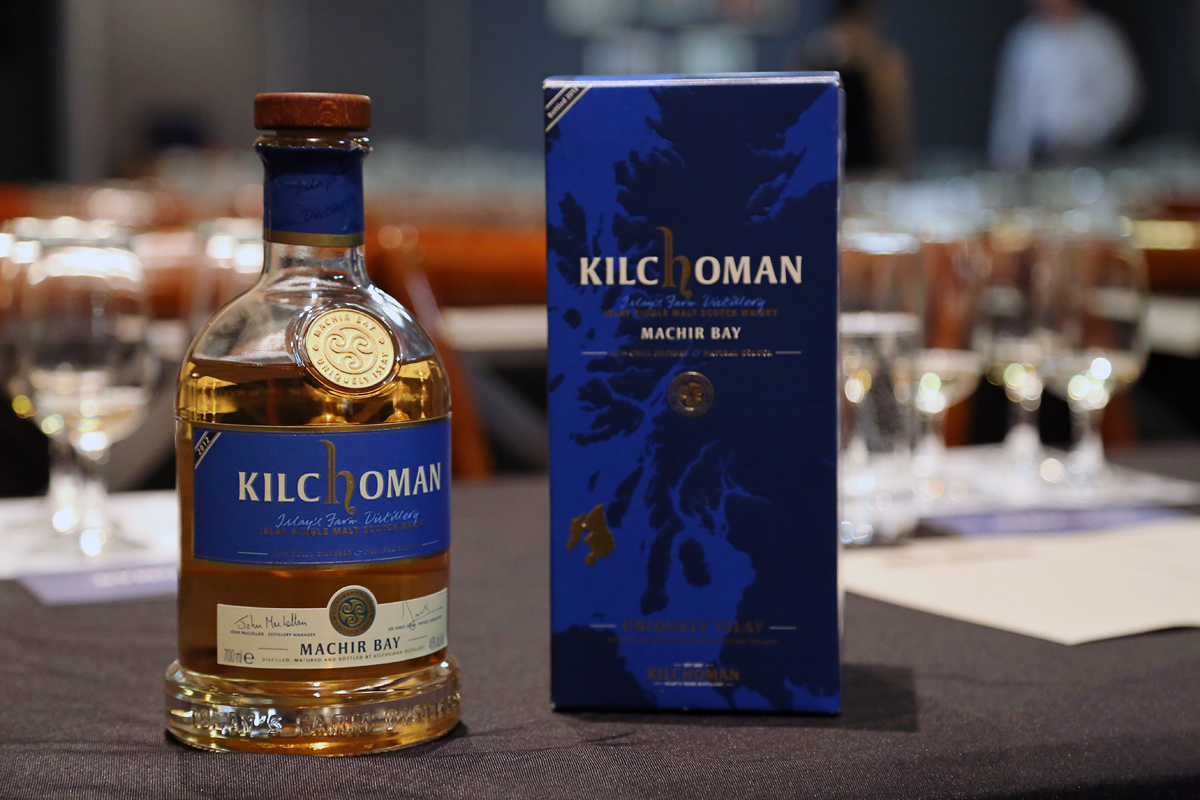
Kilchoman - Machir Bay 

This has a noticeably heavier nose to the two before it – I got some hints of kiwi, a pleasant sourness, some fruitiness, light peat and hints of spice (presumably from the sherry finishing). Slightly thinner on the palate, but still creamy and sweet followed by a pronounced wave of vibrant peat.

Still a remarkably fresh and bright whisky, with none of the tarry medicinal notes often associated with bolder peated whiskies. 

Loch Gorm 1st release 

First released in 2013, Loch Gorm is a five year old Kilchoman solely matured in ex-European Oak sherry casks. In case that wasn’t enough, it’s then finished for a few months in fresh, first fill Oloroso casks, imparting the lovely dark liquid amber colour seen here.
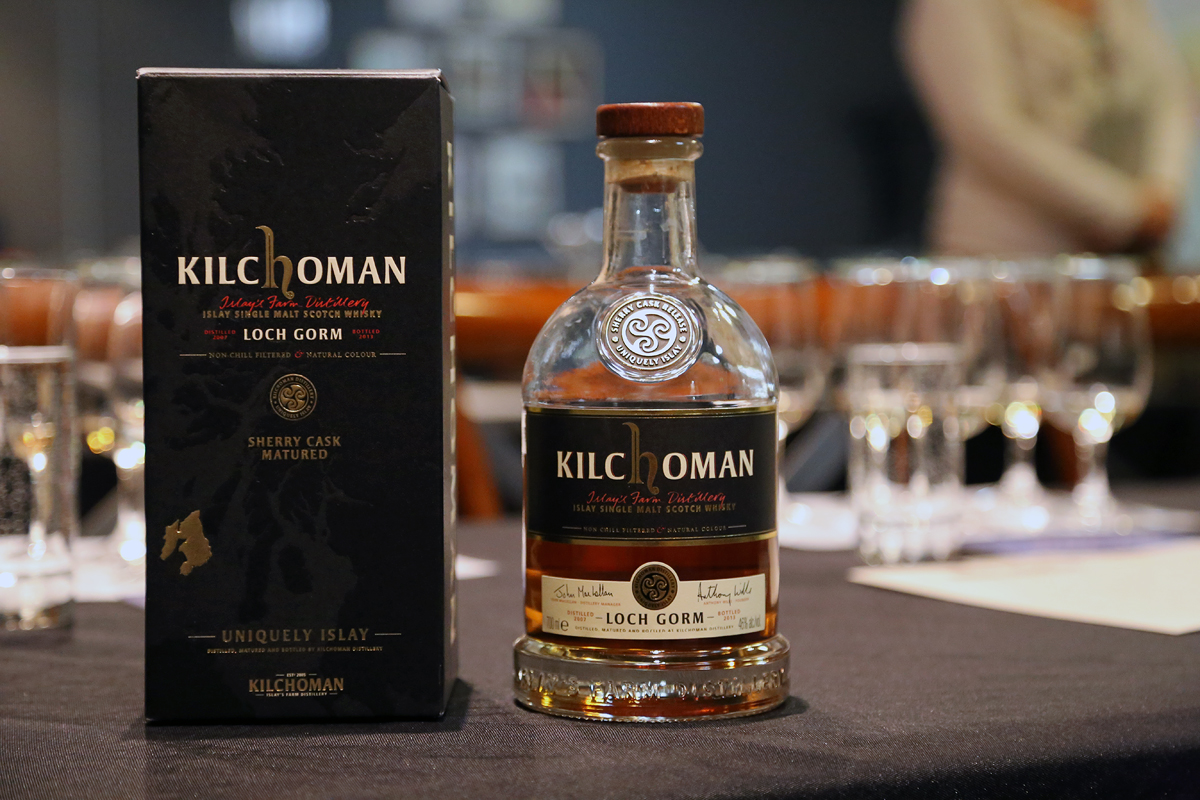
Kilchoman - Loch Gorm

Compared to the three before it, Loch Gorm has a much weightier, heavy, meatier nose. You can see some more of my notes here but I want to mention something that I couldn’t articulate last time I tried Loch Gorm.

On our previous encounter, Loch Gorm confused me slightly. On initial nosing, it wasn’t the peat monster I was expecting, nor was it a fruity sherry bomb. The more I concentrated, the more these flavour profiles played hide and seek with one another.

Whilst I couldn’t put my finger on it at the time, I now feel as though this was simply a hallmark of a rather well-balanced nose. Indeed, Anthony was quite proud of Loch Gorm and mentioned that he felt much the same.

Cask strength small batch release

As far as I’m aware, this is the first time a single cask Kilchoman has been on taste in Australia. Another five year old, but this time matured in first fill bourbon barrels, then finished for around six weeks in Oloroso sherry casks. As for strength? A big and gutsy 58.2%…

Kilchoman - Small Batch

…but you wouldn’t have picked it from the nose! Certainly noticeable as a higher ABV whisky, but I wouldn’t have picked it being that high at all. Amazingly fresh, creamy nose with big waves of milk chocolate, mars bars and coffee beans, magically mixed with some grassy notes, pine trees, fresh peat and vanilla.

Much of this translated straight to the palate – lovely round, creamy flavours. More vanilla, milk chocolate, hints of salted caramel and a nice helping of peat looming in the background. Long, warming, creamy finish.

You should have seen the flurry of people filling in order forms for this one. It was seriously good!

Some final thoughts 

In many ways, the story of Kilchoman reminds me of some of Australia’s very own young distilleries. And like some of Australia’s young distilleries, Kilchoman’s output really is testament to the fact that young whisky can be bloody good whisky.

Anthony took the time to explain that he and Jim Swan set out to produce a spirit that would mature reasonably quickly and taste great when bottled young. With that in mind, I think he and his team have really hit the mark with their latest round of releases.

As for the evening – It’s always great to hear from brand ambassadors, especially those who are knowledgable and enthusiastic. But there’s something different about listening to someone who’s been there from day one, someone who had an idea and saw it become reality and someone who knows the ins and outs of every aspect of their distillery and is happy to share every little detail.

Anthony Wills

On that note, I’d like to say a sincere thanks to Mr Anthony Wills for flying half way across the world to share the story of Kilchoman with us. A special thank you is also in order for Dave and The Oak Barrel for hosting another fantastic tasting and to Island2Island for bringing Kilchoman and Anthony to our shores.

Johnnie Walker – The Gold Route

No age statement, Travel Retail exclusive, released 2013, 40% ABV, American Oak

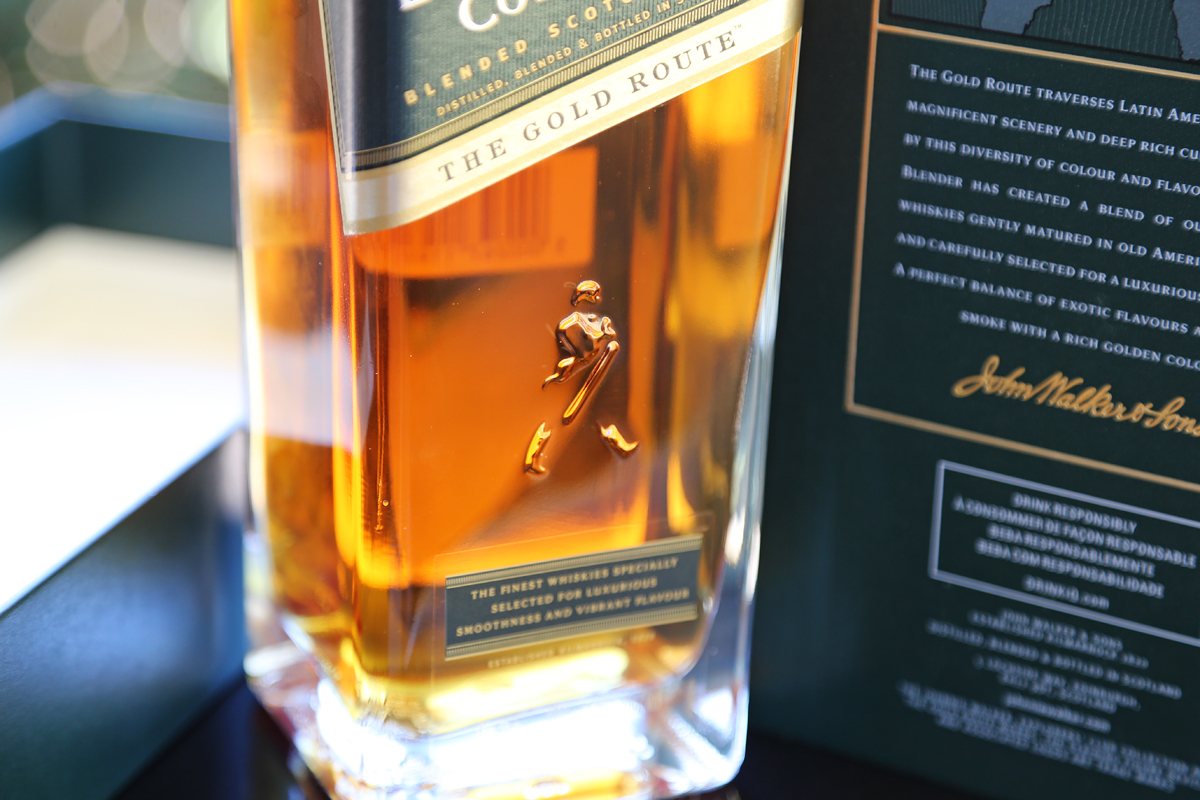
Late last year my father was given this handsomely presented Johnnie Walker for his birthday (along with two other JW’s – people, get a bit more creative with your whisky selections!)

JW Gold Route - Box

I didn’t know a single thing about it, so I hit the ole’ interwebz to do a bit of research and reading to get a better understanding of what I was about to taste.

Launched around March 2013, The Gold Route is the second release in the Johnnie Walker Explorers’ Club Collection – Trade Route Series (what a mouthful). It followed on from 2012’s The Spice Road and preceded the final release in the series, The Royal Silk Route which came out in October last year.

JW Gold Route - Lid

A series of three duty free/travel retail exclusives, the Trade Route Series pays homage to the travelling heritage of the John Walker & Sons agents who journeyed the world, bringing the Johnnie Walker brand to over 120 countries by the 1920s.

It’s a well-presented whisky, that’s for sure, and it’s not hard to see why someone travelling through an airport would be attracted to it.

JW Gold Route - Striding Man

This particular expression pays tribute to The Gold Route (or The Route of Gold), which runs through Central America, the Andean mountains and along the coast of the Pacific Ocean. The gold to come out of this region was used in some of Europe’s most well known churches and palaces and also provided some of the wealth on which cities like Rio and Lisbon were built.

JW Gold Route - Map

Not surprisingly, Johnnie Walker’s owners, Diageo, were able to put together a pretty impressive marketing campaign for this release (and indeed the whole Explorers’ Club Collection).

JW Gold Route - Stock photo

There was a full photographic series featuring evocative images (such as the one above), elaborate store displays in airports around the world and a youtube video for each expression in the series

http://www.youtube.com/watch?v=tYzNryMTNRs

Although it was likely dreamt up by a clever marketing department, the whole celebration of travel and trade theme ties in rather nicely with the fact that it was only available in travel retail. I sometimes wonder how many purchasers would actually make that connection for themselves, but in any case, I noticed it and thought it was a nice touch.

What Master Blender, Jim Beveridge, says

“On the nose, there is an immediate wave of an exotic mix of bananas, mango and pitaya, complemented by a hint of vanilla sweetness. On first sip, the palate embarks on a journey that is as distinct and magnificent as the vistas of Latin America: tantalising flavours, a perfect blend of fruitiness with hints of pineapples, guava, passion fruit and raisins, all balanced perfectly by deep charred peaty notes, in keeping with the signature bold and smoky JOHNNIE WALKER flavour”

Here’s what I think

Nose

Sweet peat, a few meaty sherry notes, quite sooty and malty with hints of vanilla and some light coastal notes in there. A few months later, much softer and sweeter, really faint underlying smoke (almost completely gone), more of a zesty lemon tang kind of note, a touch of honey and some papaya hidden in there somewhere.

Despite the comments above, I would still call this a light-weight nose. Not overly heavy or deep (if that makes any sense).

Palate

First impression is that it’s thin and has a really soft entry. A decent amount of medicinal peat, tart orange marmalade, very little heat and very little spice. A few months later, quite a bit sweeter than I remember, hints of raisin, very little-to-no peat on the palate and a bit grainy.

Initially it was much peatier and smokier than any JW expression I’ve tried before, but that seems to have faded dramatically.

Finish

Initially quite mild, with very mild mouth warmth and some residual peat. Little-to-no spice or oak. After a few months, still a very mild finish in terms of length and warmth, but much more drying spice and some earthy/woody notes. Pencil shavings? (no, I’ve never eaten pencil shavings, but I imagine this is what they’d taste like!)

Comments

I must admit, I was somewhat surprised with this release (in a pleasant kind of way). I’ve never been overly thrilled with the Johnnie Walker’s I’ve tried to date. Not because of the whole ‘blend stigma’, but because I’ve always just found them a bit flat for my liking and lacking in any kind of complexity.

This on the other hand does actually have some degree of complexity to it. It’s got a rather interesting nose and the palate leaves you curious as to its make-up.

I do have to say though, the nose and palate on this changed dramatically between the time the bottle was first opened and month or two later. I’m not sure which nose I prefer, but the bottle has lost almost all of the smoky-peat notes on both the nose and palate and is generally a bit sweeter.

Overall, it’s still too thin, young and grainy for my liking, but it’s a pretty solid offering. I know big one litre bottles are a travel retail thing, but for someone who enjoys their whisky neat, I would rather have seen this in a 700ml bottle, bottled at 43% ABV, instead of one litre at 40% ABV. I think that would have gone some way to helping the thin mouth-feel and short finish.

The Gold Route retails for around AU $90 in Sydney, which isn’t too bad and I’m sure it’ll sell quite well.

The Campbell Corner Whisk(e)y Co-operative

A new way to enjoy whisky – The Wild Rover, Sydney

The other week I attended a great masterclass with Burn Stewart’s Ian MacMillan at one of Sydney’s newer bars, The Wild Rover in Surry Hills.

You’ll find The Wild Rover an easy five to ten minute stroll from Sydney’s Central Station behind this rather unassuming shop front on the corner of Campbell and Foster Street in Surry Hills. Despite the faded signage, there’s no shirts being measured and made behind that green door…

Outside

… just a whole lot of quality drinks and good times!

Downstairs

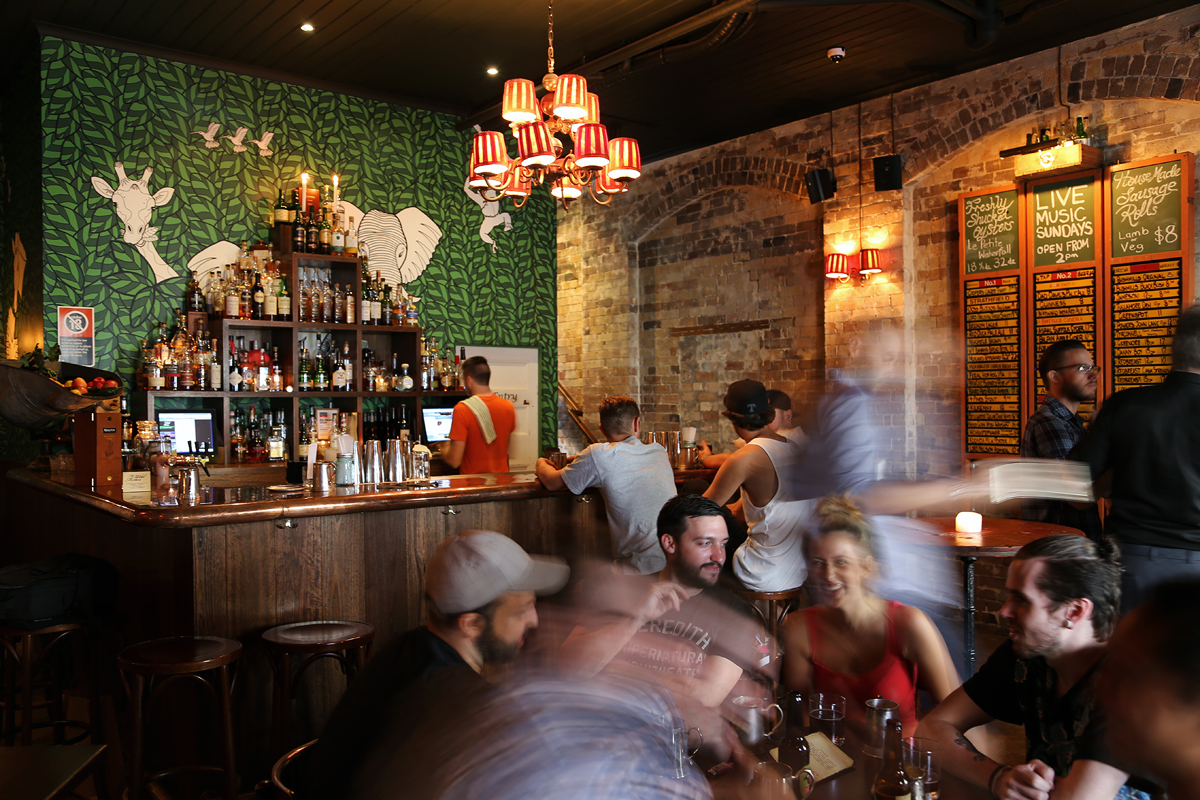
The copper-coloured bar, old railway destination boards and red and white candy-striped lamp shades work so well with the bare brick-work and those jungle murals – the place just pops with life. It’s such a warm and inviting space.

Downstairs

About the whisky though

Kim McDiarmid, Manager of The Wild Rover, explained that he’s rather wild about whisky & whiskey, so it makes perfect sense that the bar he manages would have a decent selection of the stuff.

He and the team have gone one step further though and created the Campbell Corner Whisk(e)y Co-operative (CCWC), which aims to bring like-minded enjoyers of whisky together over a dram of the glorious stuff.

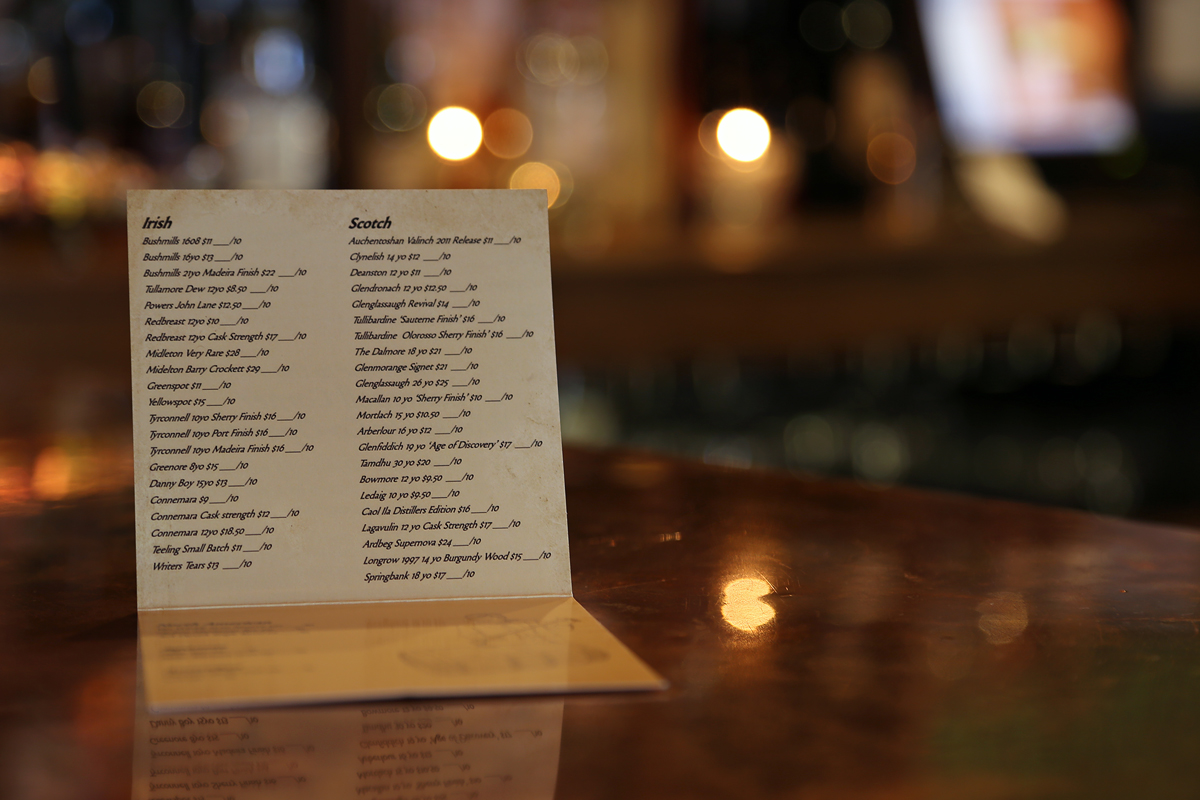
Joining the CCWC will set you back $20, but for that you’ll get a dram of something special (to the value of $25), plus your very own personal “Inventory Of Whiskeys” – a passbook of 50 whiskies and whiskeys available at The Wild Rover that you can work your way through at your own pace.

Dram passport

The CCWC isn’t just about your own personal whisky adventure though. The dedicated fans who manage to tick off each dram will be granted privileged access to The Wild Rover’s reserve selection (a locked cabinet that’s about to go up on the wall) which already includes some pretty rare drops. Think Bushmills 12 year old Distillery Reserve (a distillery exclusive), Connemara Bog Oak and Teeling 21 year old Silver Reserve. For the Scotch Whisky fans, there’s also a Tamdhu 30 year old and plans for a tasty Port Ellen are in the works, along with some others.

If that doesn’t do it for you, Kim tells me that whisk(e)y buffs who get through their inventory will have access to these drams at cost price, a special thank you for their on-going support.

Being a CCWC member also grants you access to a bunch of ‘member only’ events to be held once a month. The first one held a couple of weeks ago was a Glendronach tasting, featuring Global Brand Ambassador from BenRiach and Glendronach distilleries, Mr Douglas Cooke. Unfortunately I couldn’t make it, but Martin from Timeforwhisky.com was there and has put together this excellent write up, so head on over and check it out.

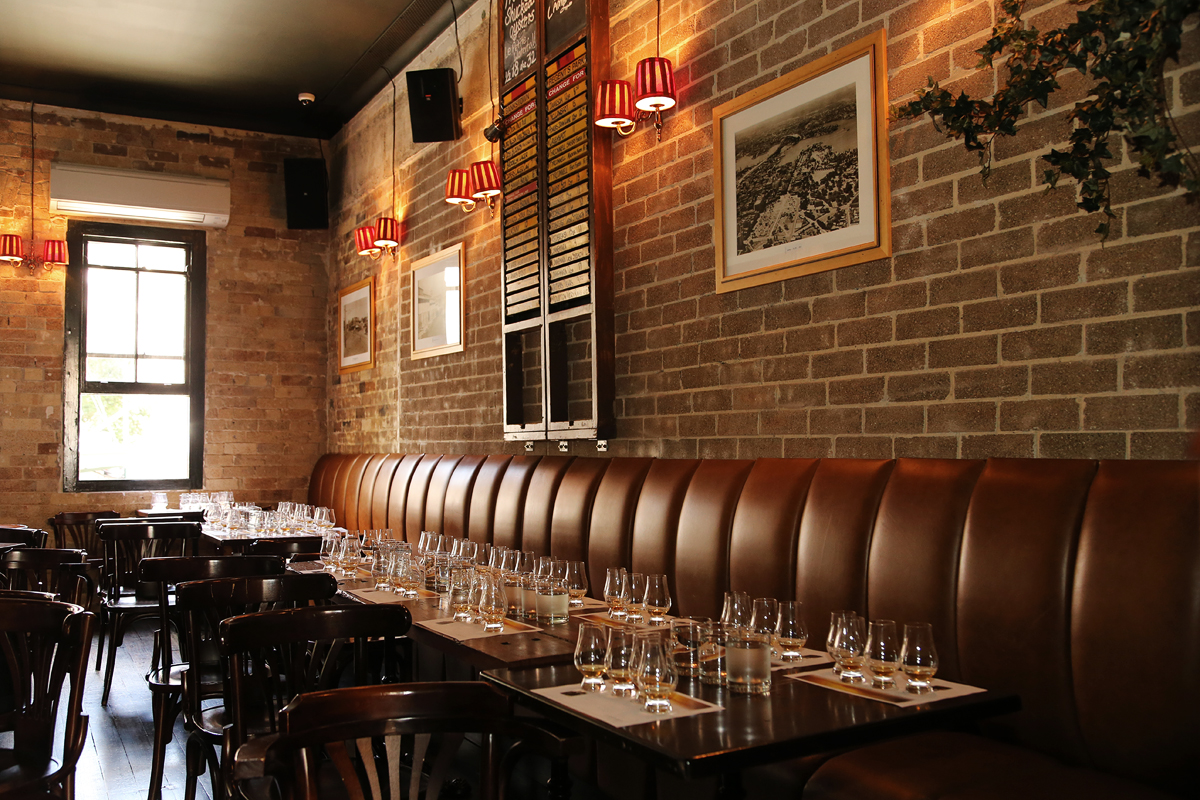
Upstairs

This picture shows the upstairs set-up for the recent Ian MacMillan masterclass and I imagine it would look somewhat similar for their CCWC events. Such a great space to be enjoying your drams.

If you’re in Sydney and you missed out on the Glendronach tasting, fear not! The second CCWC event is being held on 10 March and features none other than the owner and Master Distiller of Kilchoman, Mr Anthony Wills. Not a member? Not to worry, you can join on the night, sip your special dram and enjoy the tasting.

Full details on The Wild Rover’s facebook page.

Nikka whisky tasting

A round of Nikka nightcaps at Shirt Bar in Sydney

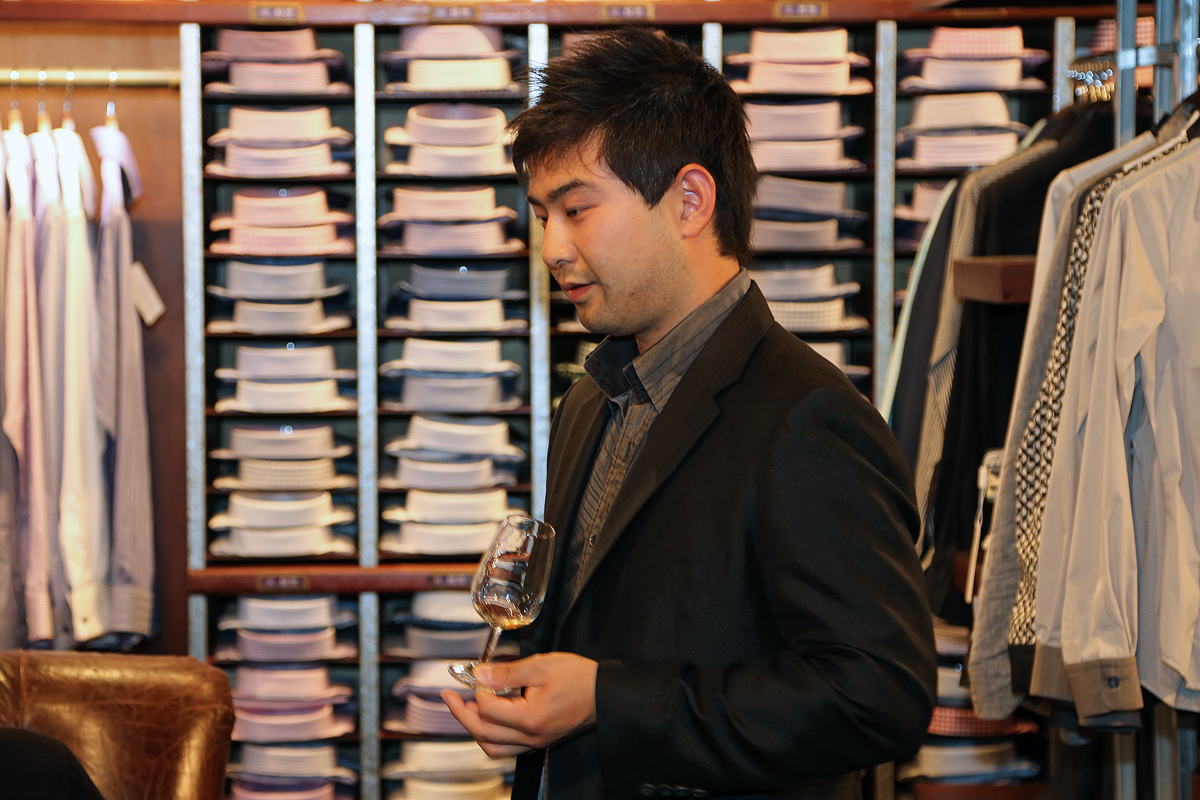
A stroll from Sydney’s Wynyard Station in a small laneway separating Kent Street and Sussex Street, you’ll find a cosy coffee by day/drinks by night establishment called Shirt Bar. Oh I left one thing out, they also sell shirts – lots of them!

Shirt bar

According to their site, they’re all about three of the things they love ‘tailored shirts, freshly roasted coffee and great whisky’. Walk through the doors and it’s not hard to see this represented in the eclectic styling of the warm and friendly fit-out.

Shirt Bar - Menu

Anyone who knows me knows how much I enjoy a nicely tailored shirt and a good coffee. But on a miserable, rainy Wednesday evening, it was Shirt Bar’s third love that saw me perched at a table up the back with some like-minded company. See, they don’t just enjoy and serve great whisky, but they’ve gone one step further and have set up their own appreciation group aptly called Scotch Club.

Pouring

I always keep an eye out for drinks and whisky tastings in Sydney and I’d read a bit about Scotch Club. I’m on their mailing list and I’ve read some great reviews of their events by fellow whisky fans Martin and The Baron – but their events always happened to fall on a weeknight when priorities clashed, so I’d never actually been along to one.

This was about to change though. My first Scotch Club was all about some of the whiskies that come out of Japan’s Nikka distilleries, Miyagikyo and Yoichi. To take us through four of their whiskies, our host for the evening was their Australian brand ambassador, Taka.

Taka

I must admit I haven’t had a whole lot of exposure to Japanese whisky, so I was really looking forward to this tasting. Here’s what we got to taste.

Miyagikyo 12 year old

Miyagiko 12

First up was a single malt from the Miyagikyo distillery, which you’ll find in northern Honshu, near Sendai. Built in 1969, the Miyagikyo distillery produces a lighter style of whisky thanks to its steam-fired bell-shaped stills, which require a longer and gentler distilling process. Interestingly (for a whisky nerd like me), the stills also have an ascending lyne arm, ensuring only the lightest spirit is collected.

This was indeed noticeable when nosing and tasting. On the nose, I got some citrus, apple cider notes, pear and a touch of sweetness and spice. I also got a note that I couldn’t quite put my finger on, but I jotted down ‘oddly meaty’ – whatever that means!

Fairly thin and light on the palate (surprising for a 45% ABV), reminded me very much of a Lowland style Scotch whisky. Soft sweetness, slight sourness, pears and quite a dry white wine-like finish.

Yoichi 15 year old

Yoichi 15

The next single malt came from the second distillery in Nikka’s portfolio, Yoichi.

In contrast to Miyagikyo, at Yoichi, they have a much faster and more intense distilling process, using direct coal-fired straight column stills fitted with descending lyne arms. Their water source is an interesting one too – using naturally peated water collected from an underground aquifer that lies beneath the distillery itself. All of these factors contribute toward producing a much heavier style of whisky.

On the nose I got a hint of sweet smoke, salted caramel notes and something a bit raisin-y. Much heavier on the palate than the Miyagikyo (they’re both bottled at 45% ABV) with some salty/saline notes, seaweed, light smoke and a bit of spice on the finish.

Taketsuru 12 year old

Taketsuru

The Taketsuru Pure Malt 12 year old is a blend of both Yoichi and Miyagikyo single malt whiskies (so there’s no grain in this one – similar idea to the Johnnie Walker Green Label).

Bottled at 40% ABV, this was the lightest of them all. I got some green apples and pears on the nose, vanilla notes and touch of spice. Reminded me a little bit of The Glenlivet 12 year old. Very smooth on the first sip, light sweetness, some gentle sour apple notes, maybe a touch of nuttiness, then bang – nothing. This has got to be the shortest finishing whisky I’ve ever come across. I think apple juice probably has a longer finish then this.

That’s not to say it’s a bad whisky (because its not), but I personally didn’t find it overly satisfying. I can see this being a great introductory whisky for a first-timer.

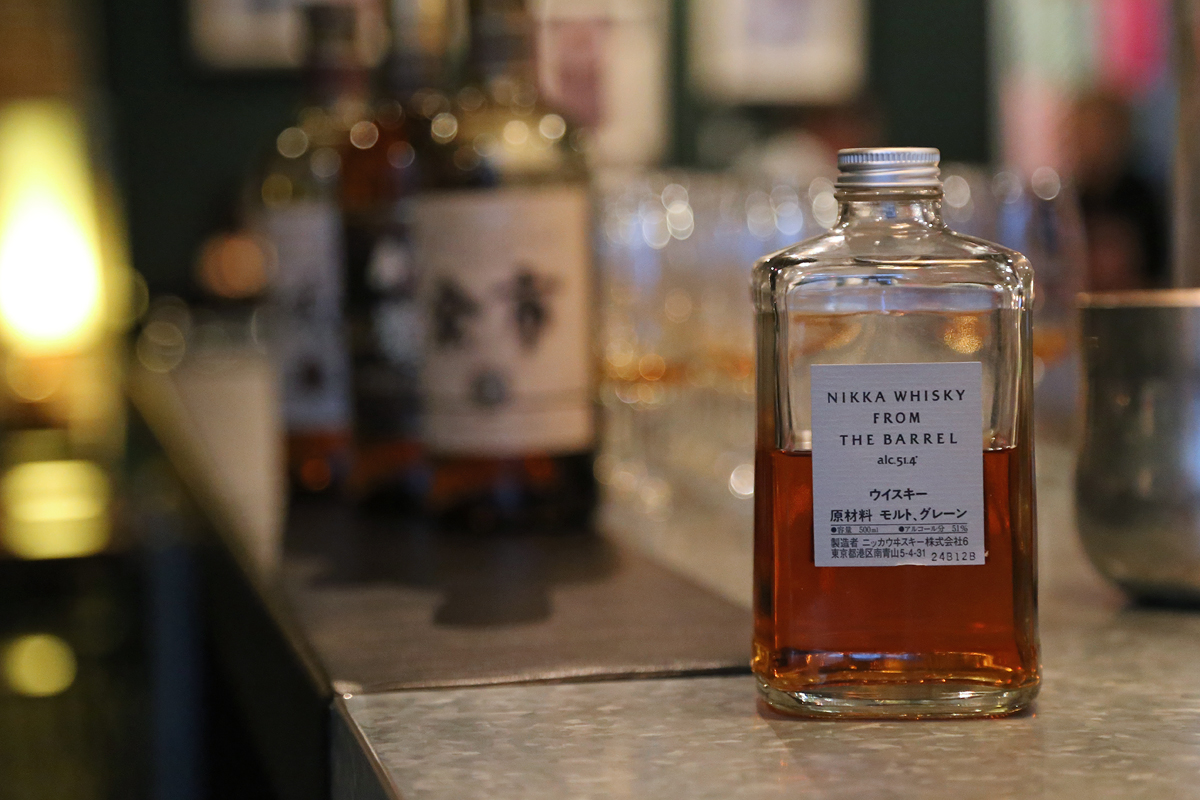
Nikka from the barrel

Nikka

The last whisky of the evening was also a blend of single malts from Yoichi and Miyagikyo, but this time there’s some aged grain spirit in there too – specifically, a grain spirit produced at Miyagikyo using imported corn from the US! The components are then married together and left to sit for a few months before being bottled.

Lovely and rich on the nose, sweet fruits, creamy, hints of spice and some faint bourbon notes. Big and juicy on the palate (it’s bottled at 51.4% ABV), caramel sweetness and some vanilla finish with pleasing spice notes.

I had only ever heard good things about Nikka from the barrel and it’s not hard to see why – it’s a mighty fine blend indeed.

Some final thoughts

Group

I should also mention that the tasting was accompanied by some quality food – individual servings of sushi, plus generously-sized charcuterie and cheese share plates.

As for the venue, Shirt Bar really is quite a cosy spot. The eclectic styling, interesting furnishings and odd bits of bar and tailoring paraphernalia make it an enjoyable spot to just sit back, relax and enjoy a few drinks, and that’s what the crowd seemed to do. Whatever your reason for being there, it looked like everyone was enjoying themselves.

The pours were a bit on the light side and I probably didn’t get to taste enough of each whisky to develop a proper opinion. But one thing I did get out of the evening was a real interest in exploring the world of Japanese whisky a whole lot more.

Whilst it’s a much younger industry (compared to the Scotch whisky industry), it’s still rich with history and great stories that make some of these whiskies truly fascinating.

Whisky tasting with Ian MacMillan

Sampling some of Burn Stewart’s finest single malts at The Wild Rover, Sydney

Earlier this week I was fortunate enough to be invited to a rather special whisky masterclass hosted by a true stalwart of the whisky industry, Mr Ian MacMillan.

A long way from home, Ian was on his first-ever Australian visit to attend the Top Shelf boutique drinks festival down in Melbourne. But before making the 17,000-odd kilometer journey back to Scotland, he generously found some time in his schedule to host this great masterclass at The Wild Rover in Sydney’s Surry Hills (keep an eye out for a post on this very cool bar shortly!)

Ian MacMillan

I refer to Ian as a true stalwart as he entered the whisky industry at the age of 18, starting his career at the Glengoyne distillery back in 1973. Over the following 40 years, Ian worked his way through numerous distilleries, from the ground up. He proudly tells us that he’s one of few in the industry today who can honestly say that they’ve ‘worked every single job in a distillery’.

It’s this kind of dedication that’s lead him to where he is today, as Head of Distilleries and Master Blender for Burn Stewart Distillers. Even if you haven’t heard of Burn Stewart, you’ve probably heard of their single malts – Deasnton, Bunnahabhain and Tobermory.

On with the drams then!

I would have been pretty happy to just listen to Ian’s fascinating stories all afternoon, but we were at The Wild Rover to taste some whisky – and taste whisky we did.

Tasting glasses

Before I launch into these though, it’d be remiss of me to not mention something about Ian’s whisky making philosophy. You see, he took great pride in explaining that when it comes to whisky making, he considers himself a ‘pure traditionalist’.

Among other things, he made a particular point of  recognising the role that people play in making the whiskies in the Burn Stewart portfolio. ‘The people working at these distilleries have such pride and are so proud of what they make … tell me of any computer panel that has that kind of passion for making liquid’.

It’s also worth pointing out that all four of the single malts we tried were non-chill filtered, natural colour and bottled at a generously enjoyable 46.3% ABV.

Ian talking

Ian’s reasoning behind non-chill filtering was a pretty good one too.. ‘we’d been making whisky for 800-odd years before chill filtration was invented and there was bugger-all wrong with it back then’ – so why do it now? Classic.

I found his whole approach pretty admirable and after hearing what Ian had to say, I couldn’t help but feel like it added a little something special to the four whiskies we were about to taste.

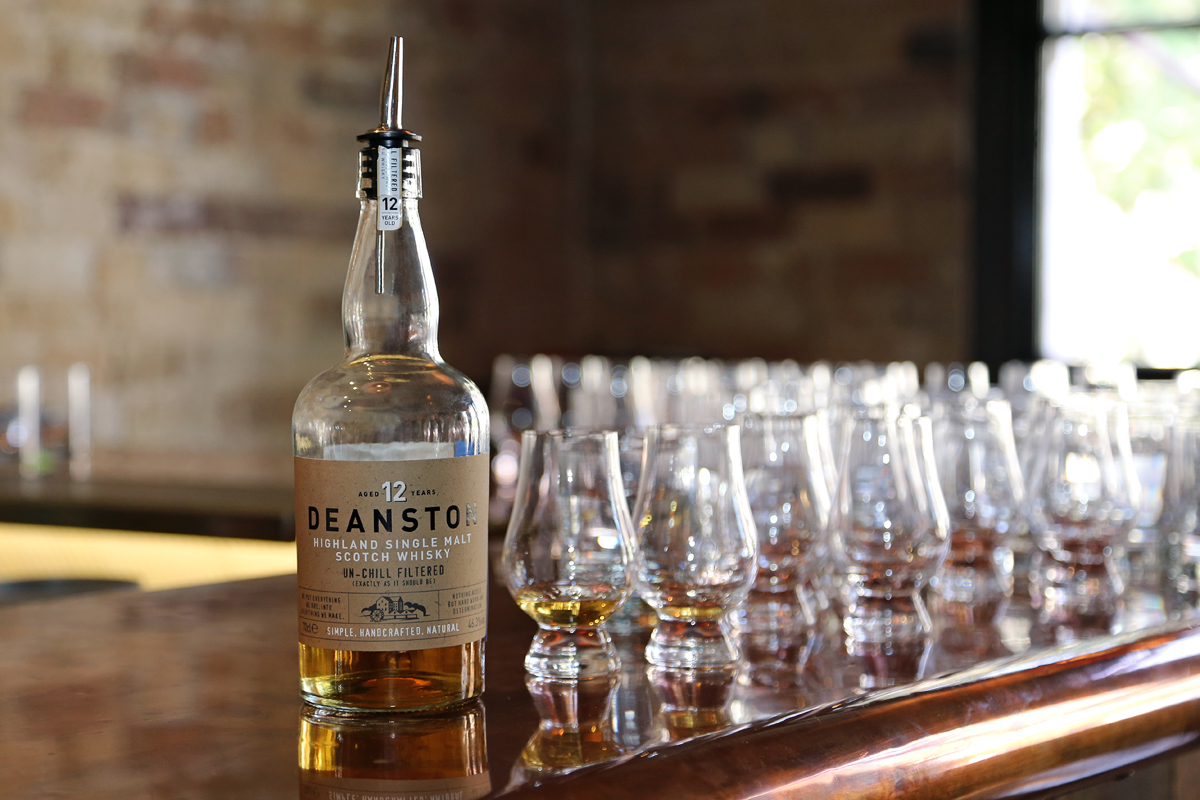
Deanston 12 year old

First cab off the rank was a whisky that I’d heard of, but never tasted – Deanston 12 year old. From Perthshire in the Central Highlands region, Deanston was opened in 1966 in an old cotton mill.

Deanston 12

Ian reckon’s it’s the most honey-influenced malt you’ll find. I always thought The Balvenie would hold that crown, but after tasting it, he could indeed be right!

Matured solely in ex-bourbon American Oak casks, I got some big honey notes on the nose, with hints of a citrus-tang, sweetness, orange zest and vanilla. This translated rather nicely to the creamy, oily palate with fresh zesty citrus notes and honeycomb sweetness finishing with some light spice.

Bunnahabhain 12 year old

For those of you who haven’t encountered Bunnahabhain before, it’s produced on the isle of Islay, but unlike some of its heavily peated brethren, Bunnahabhain’s core range is actually un-peated (well, that’s a little lie, it’s peated to around 2 – 3 parts per million – but that’s almost nothing).

Bunnahabhain 12

Around 40% of the content in the 12 year old is matured in first-fill ex-Oloroso sherry casks, so you get some wonderful nutty raisin notes mixed in with some light zesty fruit, sweet cured meat (well, that’s what I was reminded of anyway!) and the faintest whiff of smoke.

The intriguing nose is followed by a lovely viscous palate that nicely balances sweet and salty elements, fruit and really mild peat, finishing with a briny/salty tang. I’ve got a bit of a soft spot for this one.

Tobermory 15 year old 

You’ll find Tobermory off the west-coast of Scotland on the Isle of Mull where they’ve officially been distilling since 1798. I say ‘official’, as records show that they actually started some 300 years earlier, back in the 15th century! 

Tobermory 15

Quite a unique, heavy nose on this. I got hints of roasted coffee, dark chocolate, dark fruits and a faint salty/tangy note. Looking back over my notes, I think I wrote the word ‘rich’ about three times without realizing it.

As with the other two, another lovely oily mouth-feel on the Tobermory. Flavour wise, I couldn’t help but be reminded of fruit and nut chocolate, fruity sherry (minus the sweetness) and a slight tang, all giving way to a long warming finish. 

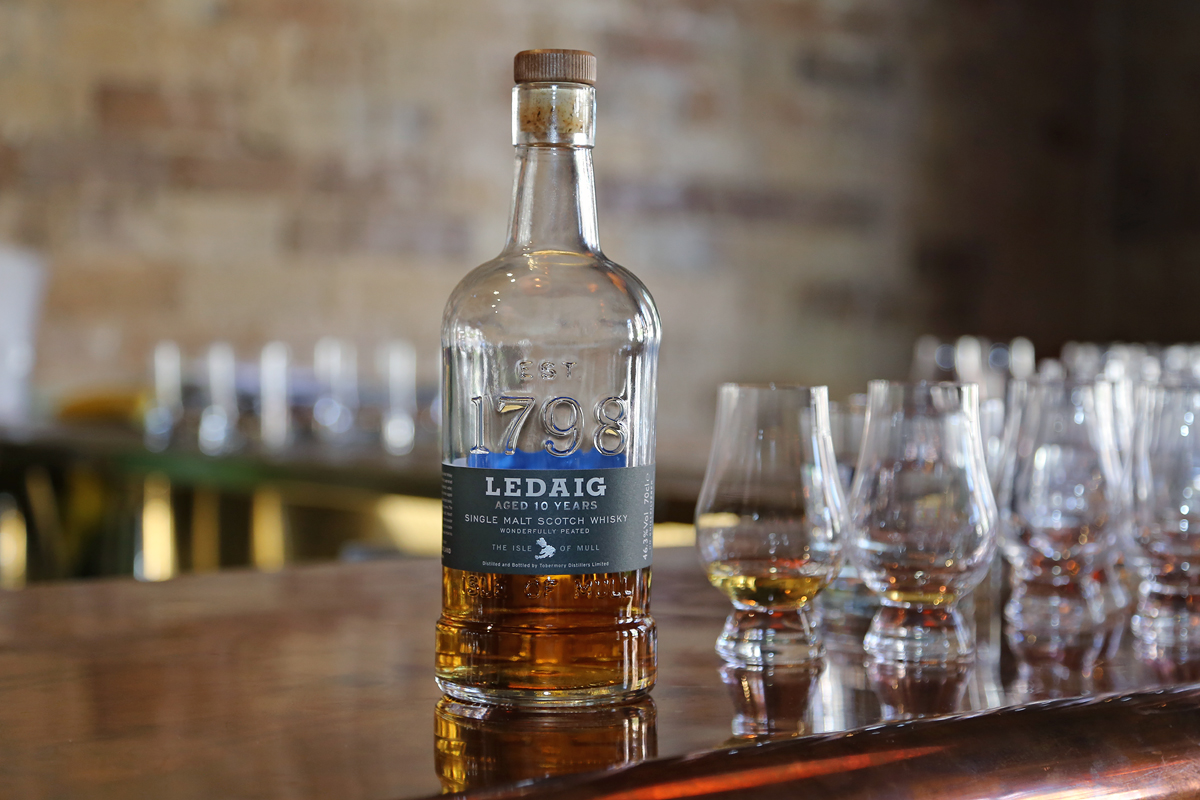
Ledaig 10 year old 

Ah Ledaig. Looks simple to pronounce – Lé day-g – but if you, like me, thought that’s how it’s pronounced, then you’d be wrong. Ian tells us it’s pronounced something like ‘Lech-igg’ or ‘Led-chigg’. Got to love Gaelic. 

Ledaig 10

Produced at Tobermory, Ian informs us that with Ledaig, he set out to produce a whisky that was similar in characteristic to what would have originally been produced at Tobermory.

On the nose, the Ledaig 10 year old has light, warming wood-smoke honey notes. This translates nicely to an oily palate and a warming finish, with hints of citrus that turn rather drying after a short while.

Some final thoughts

The masterclass drew a crowd predominantly made up of industry and bar staff from all over Sydney, but there also happened to be two of Sydney’s finest drinks bloggers in the room – Corinne from Gourmantic and Matt from Distant Thunder Whisky Club – two fellow whisky fans whose sites are well worth the read. It was a real pleasure meeting you both!

I don’t know about everyone else in the room, but I already had a bit of a soft spot for Bunnahabhain and Tobermory. After hearing more about them, I feel as though these are a couple of quality, underrated whiskies that drink a fair bit higher than they’re often scored. I’d definitely keep an eye out for these behind your favourite bar if you’re looking to try something new.

A sincere thanks to Ian MacMillan for his time and to the folks at Island2Island Beverage Company for brining him out to Australia. I genuinely hope we get to see more of him, and his whiskies, in the near future.