Wild Turkey Master’s Keep Decades Review

The second release in the Master’s Keep range

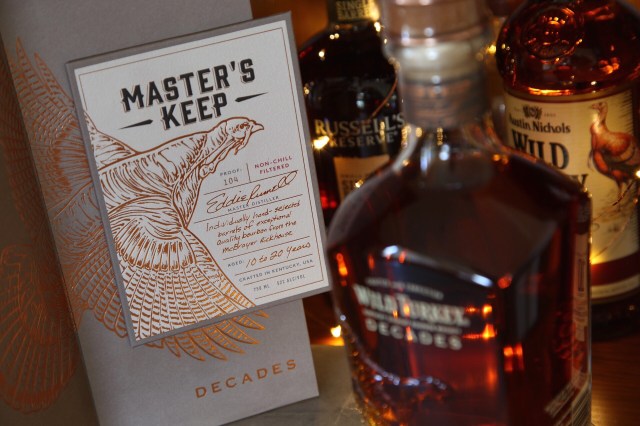
Wild Turkey Master Distiller Eddie Russell has just notched up a not-insignificant 35 years in the family business. To celebrate the momentous occasion he’s put together a rather special release, recently unveiling the Wild Turkey Master’s Keep Decades, just in time for Christmas! If the presentation of this one looks familiar, that’s because it’s the second limited release in Wild Turkey’s Master’s Keep series, the follow-up to last year’s 17 year old.
image

Don’t think of it as merely a follow-up to the the 17 year old Master’s Keep though, as this is an entirely different beast. Whilst this one does’t carry a specific age statement like last year’s, the ‘Decades’ reference is a nod to the fact that it’s comprised of quality bourbons aged for between 10 to 20 years, some of the oldest to be bottled by Wild Turkey to date.

The barrels that have gone into this release were all matured in Wild Turkey’s McBrayer Rickhouse. We’re told that “unlike other wooden rickhouses on the distillery’s property, the McBrayer Rickhouse is located at a lower elevation on the property where the temperature does not fluctuate as much, allowing for a higher proof and deep, bold flavour”. I’m no authority on the subject, but after tasting this bottle I’ll take them at their word on that claim – the Master’s Keep Decades is one rich, tasty bourbon, but more on that soon.
image

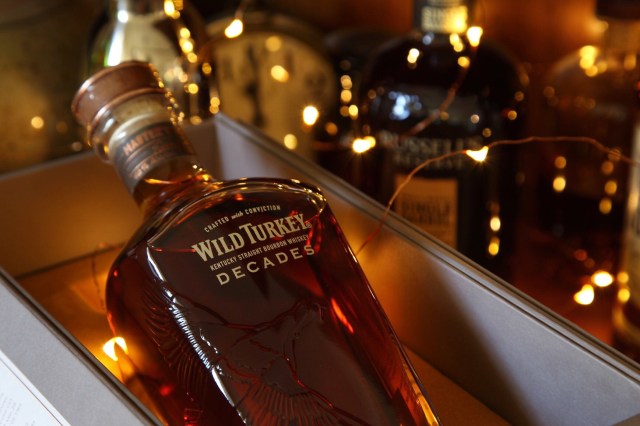
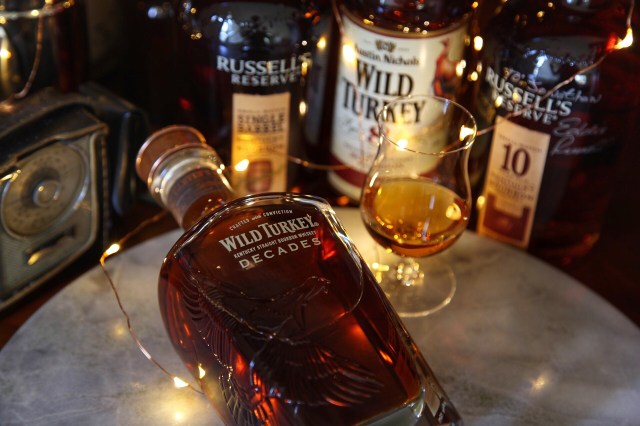
I know when it comes to whiskey that it’s really all about the taste, but I’d be lying if I said I didn’t give two hoots about the packaging and presentation of my whiskey. And on that note, the presentation of this one is really on the money in my opinion. From the front-opening gift box, to the thick, weighed bottle base, raised-embossed turkey motif and that copper and wood stopper. It’s probably one of the best looking bourbon bottles I’ve seen. So, we’ve established that this thing looks good, but how does it actually taste?

image

Tasting notes

Nose: Straight of the bat with notes of caramel, hard toffee, dark dried fruits, peanut husks, sawmills, flaky dry pastries and baking spice. The nose is quite deep and complex, opening up and changing with airtime, but overall I’d characterise it as rich and dry.

Palate: Immediately this is oily and viscous on the palate, with a nice chew to it. Creamy honey-sweet notes role across the tongue before I got big notes of peanut brittle and caramel. A few seconds later, dried dark fruit and hints of fresh minty-rye spice that turn almost cooling-menthol in character. The finish on the palate stays sweet but turns leathery and drying with old oak coming through. I can’t say I’ve ever had a Wild Turkey quite like this before. It’s rich and complex and is the kind of bourbon I’d be happy to spend quite some time with.

Overall verdict? For me, the higher proof (52% abv) on this is a very welcome addition. It helps carry the rich, bold flavours of this well-aged bourbon and in conjunction with this being non-chill filtered it gives it a wonderfully chewy, oily mouthfeel. A few drops of water open it up slightly quicker than having it to air and whilst I personally don’t add ice to my whiskey, I imagine this would cope pretty well if you decided to add a rock or two. A really enjoyable release in my opinion and very different to last year’s Master’s Keep.
image

With the silly season just around the corner the new Master’s Keep Decades would no doubt make a great Christmas gift for the bourbon-fan in your family, especially given how darn good it looks and tastes. Oh yeah, and a 10 – 20 year old bourbon, that’s actually accessible, for AU$200? I can’t think of anyone else who’s doing that this Christmas! A pretty unique offering.

A special thanks goes out to Wild Turkey Australia for providing the bottle pictured (and enjoyed) here and for letting me write up my own thoughts and opinions.
Johnnie Walker Blender’s Batch Red Rye Finish

Tasting & Review

I think it’s fair to say that Johnnie Walker are best known for their mainstay blended whiskies, the kind you’re likely to find on pretty much every back-bar across the globe. They’re not one to put their feet up and stop experimenting though. Their quest to continue focusing on developing and understanding alternative flavour profiles has led them to the launch of the new sub-range known as the Blender’s Batch series.

Johnnie Walker Red Rye.jpg

Johnnie Walker’s master blender, Dr Jim Beveridge, tells us that “At any one time, there are hundreds of experiments into flavour being carried out by our blenders which involve making adjustments to atmospheric conditions, the types of wood and grain used, cask finishes and other elements of whisky-making in the pursuit of exceptional new flavours.”

Canapes.jpg

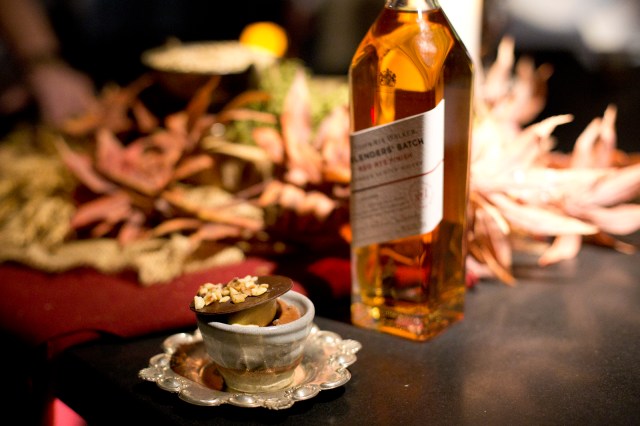
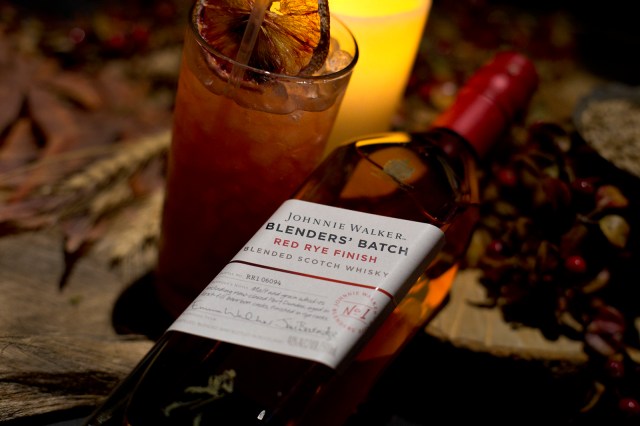
The first release in the series is the Johnnie Walker 
Blenders’ Batch Red Rye Finish, which is the result of experiments that have been conducted into the influence of bourbon and rye whiskey flavours, on Scotch. For the non Bourbon and Rye drinkers in the room, American whiskeys can often be characterised by their particularly sweet nature, something that comes from their use of alternate grains like corn and wheat and also from the fact that they’re matured in heavily charred, virgin American oak barrels. Rye whiskey (where the grainbill is predominantly rye) often carries notes of fresh mint, spearmint or dill and has a general spicy character that sets it apart from a low-rye whiskey. So even before tasting this new expression, I suppose I had those notes in mind when I spotted that it had a ‘rye finish’
 
Johnnie Walker Cocktail.jpg

Tasting notes

On the nose I got some sweet vanilla grain notes, runny caramel sauce and a hint of soft spice. Digging deeper, a touch of fresh pineapple, grilled peaches and maybe the faintest suggestion of mint. If I had to characterise the nose, I’d probably refer to it as round and creamy.
 
It’s fairly thin on the palate (to be expected given the low ABV), but it carries that creamy sweet grain profile nicely. A touch of spice (baking/ mixed spice), vanilla and some orchard fruits present themselves in what is a fairly balanced delivery.

Cocktail 1.jpg

What’s in the bottle

As for what’s in the bottle? I’m not entirely sure to be honest! But we’re told it contains a decent amount of malt whisky from Cardhu (the backbone of most Johnnie Walker expressions), along with grain whisky distilled at the now-closed Port Dundas distillery. For those of you playing at home, Port Dundas closed in 2010 so the grain component would have to be at least 5 – 6 years old. The remaining malt and grain components could come from any number of Diageo’s other distilleries, but any guess on my part would be purely that. The components were all matured in first-fill American Oak casks, before being finished for up to six months in ex-rye whiskey casks.

Johnnie Walker Red Rye Scotch.jpg

You’ve probably already guessed it from the photos, but I was recently invited along to the Australian launch held at the brand new Bouche on Bridge Street, Sydney. Sean Baxter, a man who’s equally enamoured with the idea of developing magical flavour profiles – as Jim Beveridge and his team – treated us to an evening of decadent food and cocktail pairings with some help from the Bouchon on Bridge team.

Cocktail 2.jpg

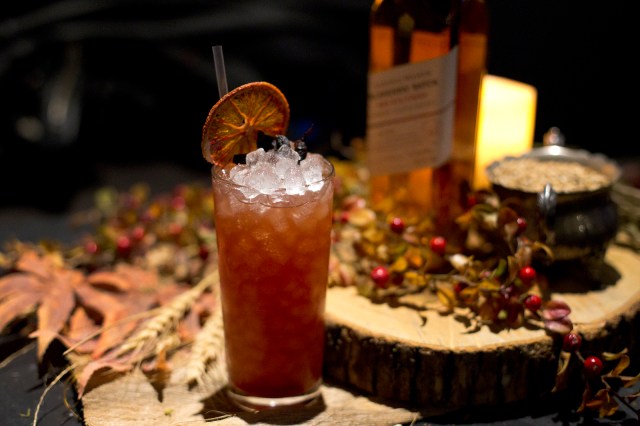
Sean made no secret of the fact that the Red Rye Finish can be used as a perfect mixing whisky and we got to see this first hand in a series of pretty smashing cocktails, such as the;

Rye-talian: Johnnie Walker Red Rye Finish, Cascara Campari, blood orange and potato maple
Rye and Dry: Johnnie Walker Red Rye Finish, Capi ginger ale and basil
New Yorker: Johnnie Walker Red Rye Finish, lemon and grenadine
Red Rye Manhattan: Johnnie Walker Red Rye Finish, Dolin rouge, bitters
Whisky cocktails can be hit and miss in my opinion and rarely do I have a ‘wow moment’ when drinking them, but these were all executed to perfection in my opinion. Big props to Sean and Matt Linklater (pictured above) for brining us these seriously tasty treats.

Dessert.jpg
The new Johnnie Walker Blender’s Batch Red Rye Finish is already available in good bars and has started to hit shelves at a retail price of around AU$50 a bottle. For more cocktail inspiration using the Johnnie Walker Blender’s Batch Red Rye Finish, check out this link.
As always, a sincere thanks goes out to the team from Diageo and Leo Burnett for the generous invite to an enjoyably decadent evening.

Lagavulin 8 year old

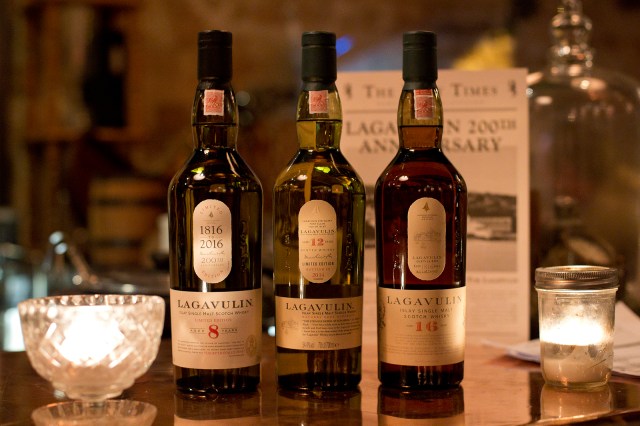
One of Islay’s favourites celebrates its 200th anniversary

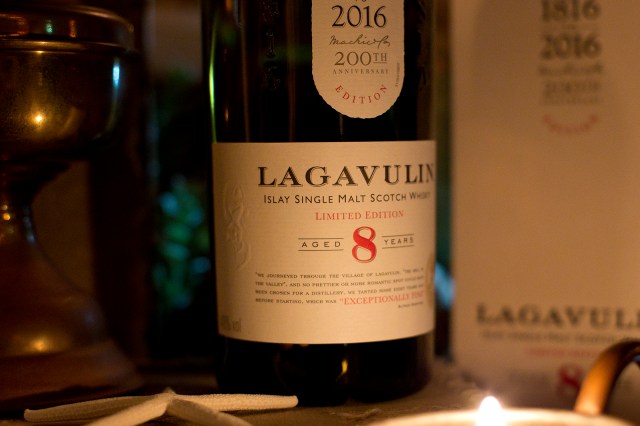
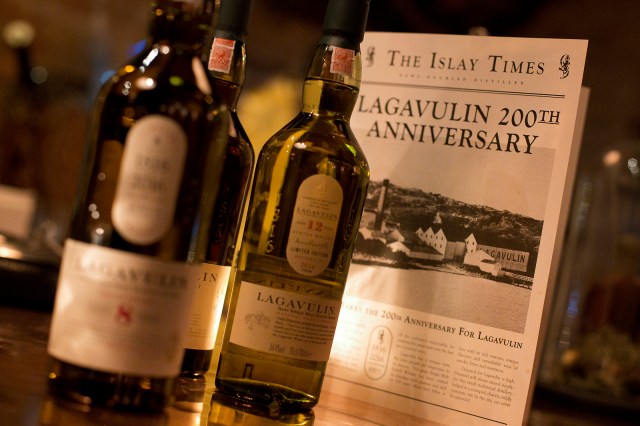
Lagavulin hits the big two-zero-zero this year and to celebrate the milestone they’ve released a trio of limited expressions. At one end of the spectrum there’s a 25 year old Lagavulin matured solely in ex-sherry casks. Then there’s the 18 year Feis Ile bottle that was only available at the distillery during the Feis Ile festival.

Lagavulin 8.jpg

They’re two expressions that sound absolutely incredible, but probably not what you’d describe as overly ‘accessible’ to the average Lagavulin fan. For that reason, I think Diageo has been rather clever in releasing a third expression, one that the vast majority of us fans will be able to access, afford and enjoy. Say hello to the 200th anniversary Lagavulin 8 year old.

Lagavulin to me

I’ve got a bit of a soft spot for Lagavulin. If I were to rewind the whisky clock a number of years, I can honestly say that the very first bottle of peated Islay whisky I ever purchased was the Lagavulin 16 year old. I vividly remember the first time I tried it. I was out to dinner for my birthday and being new to the world of whisky I thought I’d try something I’d never heard of. Out came a glass of this smoulderingly smoky, sweet yet salty whisky. At that point, my interest was well and truly piqued. It was the kind of whisky that made me riase an eyebrow each time I brought the glass close to my face and it was barely a couple of days before one of the three bottles on my shelf was a brand spanking new Lagavulin 16 year old.

Lagavulin 200 news

I’m not the only one who’s been charmed by it either. You still regularly see people post on facebook or message forums who’ve newly discovered the world of peat when trying their first Lagavulin. It’s quite incredible to think that the distillery has garnered such a fan base with essentially one core bottle; the mainstay 16 year old.

Lagavulin 8 launches in Sydney

So all of that being the case, I’ve been eagerly looking forward to trying the new 8 year old ever since it was launched overseas back in March and I recently had the chance when I was invited along to the Sydney launch event at The Wild Rover.

Sean Baxter

Diageo National Ambassador, Sean Baxter, was on hand to walk us through the 8, 12 and 16 year old expressions, but before we did so, we were treated to a sensory experience unlike anything I’ve encountered before – a 3D virtual tour of the Lagavulin distillery!

I’ve always found the whole 3D goggle thing to be a bit of a kitsch novelty, but using it for a virtual distillery tour? Now that’s pure genius! We donned our branded goggles, put on our headphones and were transported to the isle of Islay.

Lagavulin VR.jpg

Starting on the pier, we took in our surroundings before moving through to a field of barley, then to a malting room where the raging kiln was charged with peat. The still house was up next, followed by the warehouse and finally to the Lagavulin tasting room. I wish I could have somehow captured the tour itself in photos, but you’ll just have to take my word for it when I say it was pretty damn cool.

Peat.jpg

Our visual and auditory senses weren’t the only ones being tantalised. As the tour progressed, a team of helpers (or as I like to call them, scent ninjas) introduced various scents to complement the scenes. Think being misted with sea spray when we were on the pier, the smell of oak and earth whilst we were in the dunnage warehouse and even the the burning of peat whilst we were checking out the kiln (damn it smells good).

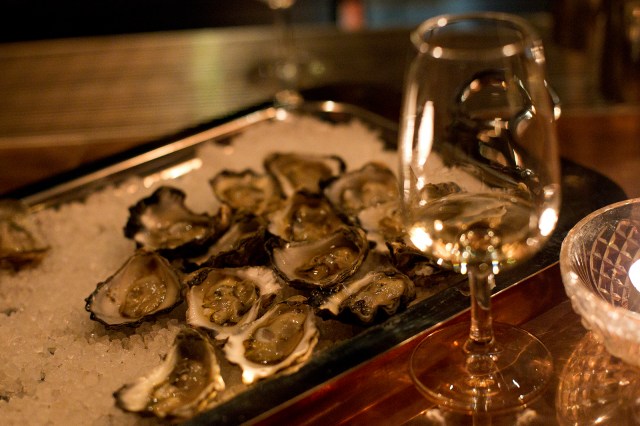
Lagavulin Oysters.jpg

Oysters were shucked, canapés were served and some blazing libations were crafted to round out the evening, but not before the hero was sampled.

Lagavulin Cocktail

Tasting notes

The new Lagavulin 8 year old is solely matured in refill American Oak casks and bottled at 48% ABV. Before I get stuck into the notes, I’ve got to hand it to Diageo for releasing this at a very respectable ABV and with a young age statement boldly (and proudly) printed on the label. Well done chaps!

Nose

Where the 16 year old could possibly be described as round, even supple, I’d say this is bright, punchy and active. A clean pronounced sweet peat note, oily charred citrus zest, face-puckering lemons, fresh tart pineapple and a salty saline tang. It smells youngish, a tad mescal-ish, feisty and fun.

Palate

Again, compared to the 16 year old, the palate is noticeably oily and creamy in texture, thanks in large part to the higher alcohol strength and lack of chill-filtering (a very welcome addition in my books). It’s bright and hits the palate high with a sweet rock-salt tang, crisp smoke, smouldering coals and ash before some fruit kicks in (green pears and underripe peach). On the finish I felt it turned sweeter again, whilst being both drying and ashy, with very little in the way of oak or bitterness.

Lagavulin

The 200th anniversary Lagavulin 8 year old is available in Australia right now at a recommended retail price of $95. A big thanks to Sean and the team from Diageo for inviting The Whisky Ledger along as a guest.

Auchentoshan American Oak

Auchentoshan is a unique distillery in that they practice the process of triple distillation – something that no other Scottish distillery currently does. If you’re thinking that sounds interesting, but have no idea what that means – please read on!

The process of triple distillation

If you’re not familiar with how whisky is made, get ready for a really crude, highly-unscientific crash course that should help put the concept of triple distillation into perspective. To make whisky, you essentially start with a beer-like solution of malted barley, water and yeast which you run through a still. Liquid goes into the still, it simmers away (like a big ‘ole kettle) and the lightest, purest vapours rise to top. These vapours are condensed back into liquid and are kept aside to be run through a still for a second time.

Auchentoshan American Oak

Most Scottish distilleries do this twice, but – you guessed it – Auchentoshan distil their spirit three times, in three different size and shape stills no less. That’s pretty much it in a nut-shell. If you’d like a technically accurate description of triple distillation (unlike mine!) I can highly recommend this great article from Whisky and Wisdom.

The Auchentoshan profile

Each time you distil something you’re essentially purifying it. So generally speaking, something distilled thrice is going to be cleaner and purer than something distilled twice. I’ve tasted a few Auchentoshans before and a couple of descriptors that always come to mind are the words ‘clean’ and ‘light’. Perhaps even delicate.

That’s not to say that everything coming out of Auchentoshan can be (or should be) labelled as ‘light’ in nature. But it’s a characteristic I tend to expect when approaching their whisky, something that I suspect comes from their triple distilled process.

With this in mind (or not), let’s take a look at their newest release in Australia – the Auchentoshan American Oak – a no age statement whisky matured solely in first fill ex-bourbon barrels and bottled at 40% abv.

AM copy

Nose

The nose is thin, but also quite fresh and bright; far more so than I expected (in a really good way). I got some lovely bright jammy notes up front, apricots, stone fruit, orange and lemon citrus and some light vanilla crème anglaise. There’s a light dose of malt in the background and some faint toasty coconut and oak.

Palate

The palate is rather thin and silky on entry, but still delivers plenty of soft flavour. There’s a fair amount of vanilla and toasty coconut and oak from the first fill casks, but those notes are nicely matched with a wave of gentle spice and soft, creamy, sweet custard flavours. Orange peel, apricots, white peach and vanilla join midway through before the palate fades to a fairly short sugary finish.

Are you distilled different?

Beam Suntory have partnered with their Australian bartender society – The Blend – to showcase three things I genuinely love; whisky, cocktails and photography. Running until 30 June 2016, the #DistilledDifferentAU campaign aims to track down Australia’s best bartenders who are up for the challenge of mixing up something special featuring the Auchentoshan American Oak, whilst pairing it with some inspirational photography. The winning bartender team and photographer score a killer prize including a trip to Scotland and gallery event showcasing their work.

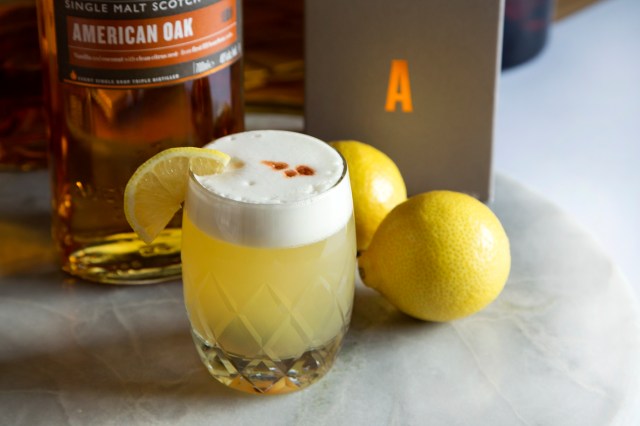
Whisky Sour

I don’t meet the entry criteria, but that wasn’t going to stop me mixing up a few classic libations of my own. I’m happy to report that the Auchentoshan American Oak works an absolute treat in a whisky sour or a bastardised Rob Roy (I subbed in a touch of Grand Marnier and orange bitters to boost the citrus notes).

Rob Roy

If I can crank these out I’ve got no doubt our local talent can easily put me to shame. Australian bartenders; head on over to the-blend.com.au, sign up, check out this competition and show-off your skills. You’ll be in the running for something pretty awesome!

A big thanks goes out to Beam Suntory for kindly supplying the bottle featured here.

Compass Box Flaming Heart and This is Not a Luxury Whisky

You may not be overly familiar with John Glaser and his company Compass Box whisky, especially if you’re reading this in Australia (as distribution is rather limited here). But I feel like you should be and here’s why.

Compass Box and their whisky philosophy

Compass Box are what you could broadly describe as an independent bottler of whisky. What I mean by that is that they don’t actually distil their own whisky, rather they acquire whisky from other, established distilleries then bottle it under their Compass Box brand. Well, that’s how most independent bottlers work, but in the case of Compass Box I’ve just oversimplified it by a fairly big margin.

CB1

A good deal of the independent bottlers out there cater to the segment of the market that enjoy single cask whiskies. They literally get a cask, fill as many bottles as they can, then sell it as is. When it comes to Compass Box though, rather than simply describe them as an independent bottler, the term ‘whisky maker’ is perhaps a better descriptor. Whilst they don’t distil their own whisky, they don’t just ‘bottle’ whisky either. They like to create.

John Glaser and his team have built their reputation on the back of creating some exceptional blended whisky. Add to that their brilliant packaging design and you’ve got a pretty unique product. Another aspect that sets them apart from many others in the industry is that they’re quite happy to actually disclose what goes into their revered blends. If it’s got some 30 year old Caol Ila blended in there, they’ll tell you. Likewise, if the blend contains 12% 8 year old Glen Ord, they’ll also tell you.

The Scotch Whisky Transparency Campaign

Well, that’s what they used to do (and that’s what they’d still like to do), but that recently got them into a bit of hot water with the Scotch Whisky Association (SWA), the governing body of the Scotch whisky industry. Why? Well, the SWA’s guidelines actually prohibit this level of transparency. Sounds a tad crazy, doesn’t it?

This brings me to another reason why I believe you should familiarise yourself with Compass Box. Rather than sit back and live with the SWA’s decision, they’ve decided to do something about it. I’ll let John Glaser do the explaining.

The good people at Bruichladdich were the first to put their hand up and say, ‘yep, we support you!’ Soon after, independent bottler the Boutique-y Whisky Company announced that they would start adding age statements to all of their bottles as well, so it looks like Compass Box aren’t the only ones who believe in transparency.

As John says in the clip, if you think whisky produces should have the option (but not necessarily the obligation) to tell you all about the whisky in your bottle, head on over to the Compass Box website and lend your support.

Compass Box: The whisky

Just in case I haven’t given you enough of my opinion for one post, how about some thoughts on two of their latest releases, the Compass Box Flaming Heart 5th Edition and This Is Not A Luxury Whisky (one of the coolest whisky names in recent times in my opinion!)

Compass Box Flaming Heart 5th Edition

This is actually a fifteenth-anniversary bottling of Flaming Heart and at it’s heart, it’s comprised of 38.5% 14-year-old Caol Ila, 27.1% 30-year-old Caol Ila, 24.1% 20-year old Clynelish and 10.3% seven-year-old blended malt. That blended malt, inside this blended malt is made up of whisky from Clynelish, Teaninich and Dailuaine. How’s that for transparency!

CB3

My first reaction on nosing this one was ‘Ahhh!’. Lots of sweet and dry sooty ash notes. There’s a hint of salty sea spray and some waxy honeycomb notes with a hint of vanilla notes. It’s fairly bright and punchy, but quite well balanced.

Lots of medicinal mossy peat on the palate. I didn’t get much in the way of smoke, but there’s a fair salty tang with a lemon rind/ herbal bitterness and some damp soot. To me, it tasted a lot more mature and older than it nosed.

Compass Box This Is Not A Luxury Whisky

Such a great name. I actually think this is a luxury whisky, but not in the collectable, put it on a shelf and stare at it sense. If that’s what you’re doing with this bottle then I’m sorry, but you’re totally missing the point. No doubt the bottle looks pretty sweet, but the contents, now that’s where the fun really is!

Again, thanks to Compass Box’s transparency, we also know what’s in this one. 79% of the liquid is 19-year-old Glen Ord aged in first-fill sherry butts. 18% is 40-year-old-grain whisky from Strathclyde and Girvan and some 30-year-old Caol Ila (4%) has been blended in there as well.

CB2a

The nose is quite dense and closed, even with some airtime. I got notes of cereal grains (coconutty?), old leather, polished timber, fragrant dried flowers and some cedar wood spice. Given some time, more tropical fruit notes (think pawpaw, papaya and green banana skins) and faint honeycomb sweetness. There’s a mossy peat note in the back there too. Quite a complex nose, one that’s hard to pin down (the power of clever blending!)

On the palate it’s much more lively. Loads of those tropical fruit notes from the nose, some juicy vanilla, spice, honeycomb sweetness and oak. The faint peat notes make it almost meaty and mossy toward the finish, where a lot more of the oak comes out.

Compass Box in Australia

The good news for Australian Compass Box fans is that both of these expressions will go on sale here in the very near future. The bad news is that only a minuscule number of bottles are being brought into the country, so if you want one, start making friends with your flagship Dan Murphy’s store now. And if you want to see more of these here, follow the lead of Compass Box, be a little bit vocal (in a nice way, of course) and let your local store know.