A Benromach whisky quartet

Tasting four whiskies from Benromach

Like many of Scotland’s distilleries, Benromach has had an eventful history of ups and downs over the years. It was originally founded back in 1898, but over the course of the next one hundred years or so it was sold, closed and re-opened numerous times, before falling under the ownership of Diageo (known as DCL back then). It was then closed for last time in 1983.

If that year sounds familiar to seasoned whisky fans, that’s because it’s the very same year DCL closed numerous other distilleries inducing the likes of Port Ellen, Brora and St Magdalene.. and we all know what happened to them; they were lost forever. So the simple fact that Benromach managed to survive the 1983 closing-spree is something quite special in itself.

IMG_6057

Fast forward to 1998 and the distillery was eventually purchased by one of Scotland’s oldest independent bottlers, Gordon and MacPhail. It is they who lovingly brought things back to life at Benromach and are essentially responsible for producing the whiskies I sampled below.

Benromach Organic 43%

Organic eggs, organic yoghurt and now organic whisky! Not just a health-food fad, the Benromach Organic truly is an organic whisky. When it was originally certified, it was the first whisky to meet the rigorous standards set by by the UK Soil Association which cover the full whisky production process, from barley growing through distillation, maturation and bottling.

IMG_6116

The nose smells quite bright, fresh and young with green notes of cut grass, underripe banana, orchard fruits and fresh oak. There’s also some light vanilla, honey and dry malty cereal in the background.

A nice medium creamy weight to the palate with flavours reminiscent of honeyed oats, porridge sprinkled with cinnamon and sugar and some toffee. Much sweeter on the palate than the nose would suggest, fading to a medium length finish loaded with a good whack of young toasty oak spice and coffee grounds (many of these notes coming from the virgin oak maturation, I suspect).

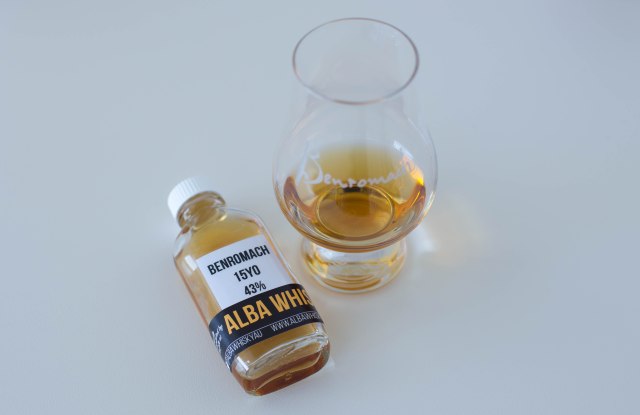
Benromach 15 year old 43%

Not long after Benromach released the highly anticipated 10 year old 100 degrees proof (tasted here), a slightly more mature and demure sibling was announced, the Benromach 15 year old. As I raise the glass to my nose for the first time – fresh from tasting the spritely Benromach Organic – I find myself in a whole different world.
IMG_6119.jpg

The nose is rich and deep; slow-moving if you will. There’s a heady old-world combination of sherry, malt, wood and funk. Stewed apples, dusty bookcases, leather chesterfields, butterscotch and orange skin. There’s also a peated vegetal note in the background with the faintest trace of dry earthy smoke. Really quite complex and plenty here to keep you entertained for a long while.

Another nice medium creamy weight to the palate, this time softer in its delivery with lots of sweet stewed fruits, runny honey, poached figs and vegetal earthy peat. There’s a decent amount of oak on the finish, which runs for quite some time. It tastes stately and has a definite old-world charm that you really don’t come across too often; especially not in any other modern 15 year old whisky I’ve encountered.

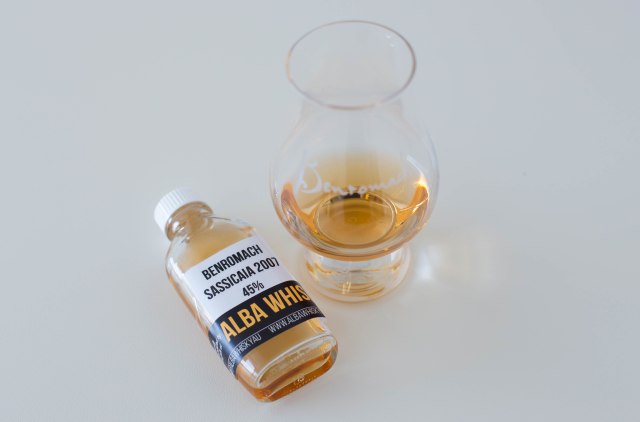
Benromach Sassicaia 2007 45%

The next expression starts life as ex-bourbon cask matured Benromach before being finished for a little over two years in former Sassicaia wine casks. Sassy-what now!? Sass-ih-kay-ah. A single-estate Cabernet Sauvignon wine from Bolgheri, in Tuscany, Italy. It’s an estate that is so critically acclaimed it was even granted its very own DOC (controlled designation, similar to the appellation system used in France).
IMG_6122.jpg

On the nose it’s almost somewhere in between the Organic and the 15 year old, but with a big berry-whack to it. It’s got that youthful fresh, bright note with an undertone of tart red currants, berries, oak, jam and some earthy smoke.

Slightly thinner on the palate than the 15 year old with bright punchy fruits, menthol, earthy spice, crystallised ginger, citrus pith and cracked pepper. There’s a definite berry sweetness in there from the wine casks with a lot of earthy oak, spice and smoke char on the finish.

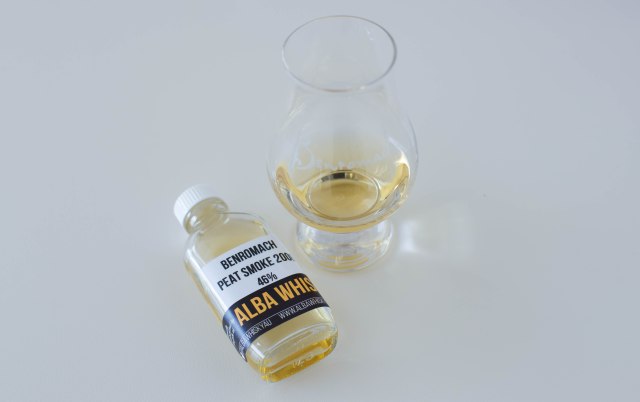
Benromach Peat Smoke 2006 46%

When I see the word ‘peat’ I know I immediately think of those big smoky, briny whiskies from Islay, but although this is peated, I’m expecting it to be a little different as we’re dealing with Highland peat here, decayed vegetation that has a very different composition – and flavour – to that found on the rugged west-coast of Scotland. Peated to a hefty 67 parts per million (PPM), these small-batch peated releases are full-term matured in first fill ex-bourbon barrels.
IMG_6129.jpg

On the nose it’s immediately crisp, dry and ashy with some lemon zest, cracked pepper, green apple skins, light floral honey, and some light oak. A fresh, crisp light campfire smoke lingers in the background somewhere.

Nice and oily on the palate with the crisp, dry theme from the nose continuing. Stewed apples, a touch of honey, star anise, tobacco leaf, macerated strawberries, lemon, earthy tea and dry smoke on the finish.

The Benromach range

Whisky drinkers can be a funny bunch sometimes. It seems like everyone talks about the whisky they can no longer find, the whisky that’s too expensive these days or the whisky that’s lost its age statement or become homogenised. In my mind, here we almost have the complete opposite of the whisky described above. We have a whisky that’s widely available and affordable, a core range that proudly carries age statements (or vintages) and a whisky with loads of individual spirit character, especially in the 10 and 15 year old expressions. Yet even with all of that up its sleeve, Benromach still seems to fly under the radar for so many. Wake up people!

In a few months time I’m hoping to visit Benromach for myself, so watch this space. Hopefully I’ll be able to bring you some interesting tidbits on my return.

A special thanks to Ian and the team at Alba Whisky (the Australian importer of Benromach) for providing the samples tasted here.

Diageo Special Releases Collection

Tasting and Review

There are so many so-called ‘special’ or ‘limited’ release bottles coming out these days that it’s virtually impossible to keep up with them all, even for someone like me who spends a good deal of time following everything whisky online. But if there’s one series that has the pedigree and really does deserve the ‘special/ limited’ moniker, surely it’s the annual Diageo Special Releases series.

Diageo Special Releases

Simon McGoram, Australian National Whisky Ambassador for Diageo, tells us that over the past 16 years there have been more than 143 different bottlings released under the annual series, including regular appearances by rarities including Port Ellen and Brora. This year’s (2016) release is no exception, with bottles from these two closed distilleries appearing again, alongside eight other distilleries from Diageo’s extensive portfolio. Before getting into my tasting notes, it’s worth exploring exactly what these bottles are and what they represent.

Diageo Special Releases Tasting

Diageo owns more distilleries in Scotland than any other company (27, not including closed distilleries). Whisky from some of these distilleries can be found in bars and on store shelves the world over. Others though are seldom seen as a single malt or grain (when was the last time you saw a Linkwood or Cambus on the shelf?). The annual Special Releases give Diageo a chance to change all of that though and they release official bottles of single malt (and grain) from their portfolio that are rarely seen, or considerably different to the standard core expressions you might encounter.

Port Ellen Brora

The 2016 Special Releases featured ten different bottles and I recently had the chance to sit down and taste the following five.

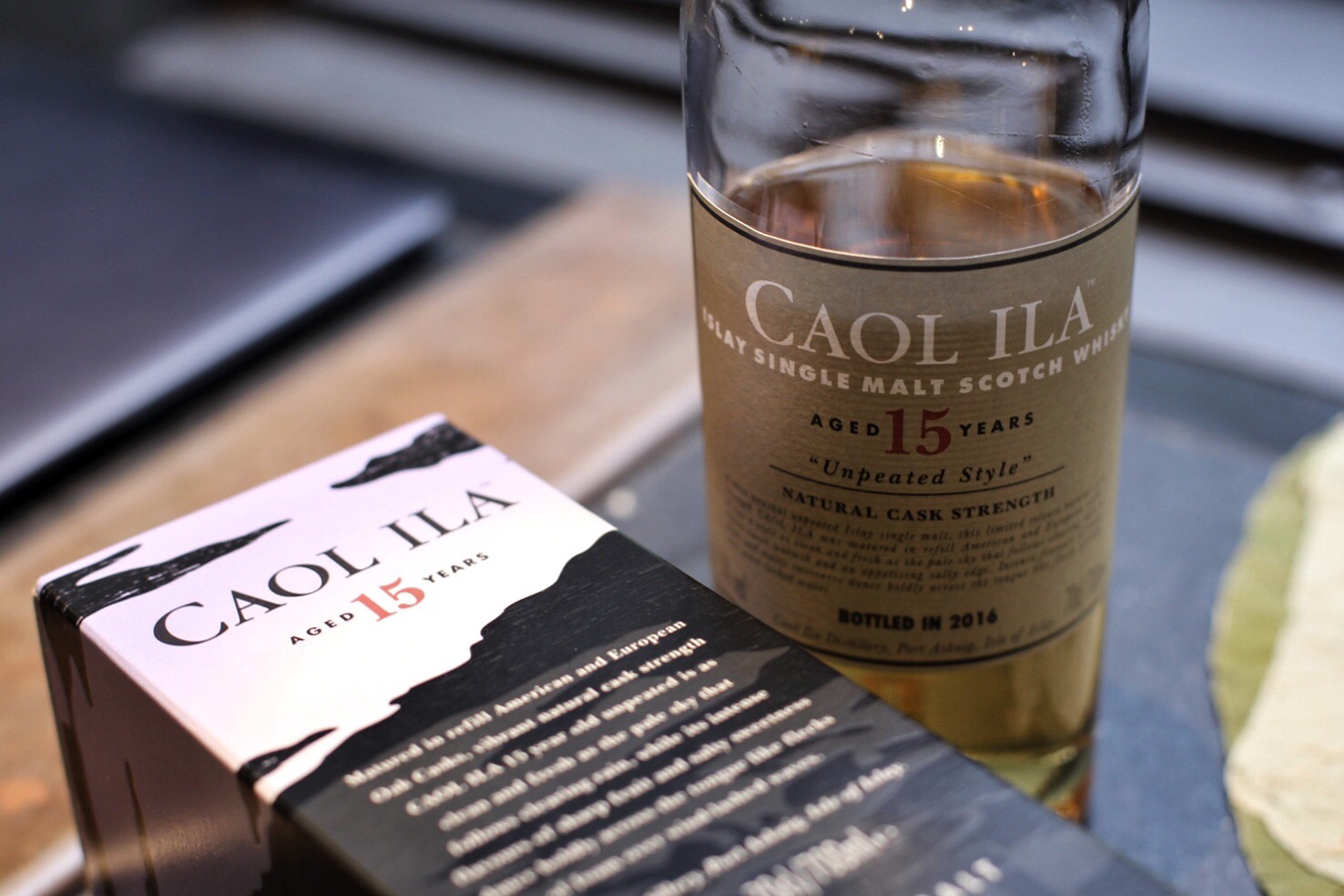
Caol Ila 2000 15 YO unpeated 61.5% ABV

Whilst Caol Ila is famed for their heavily peated whisky, for quite a few years now the Special Releases series has featured an unpeated Caol Ila expression. Interestingly it’s not just a case of producing standard Caol Ila with unpeated malt. Simon informed us that they actually use a longer fermentation to specifically develop more fruity esters in the unpeated spirit. This particular release has then been matured in a combination of refill American Oak casks and European Oak butts.

Caol Ila 2000 unpeated

On the nose it’s definitely quite vibrant and fruity, with waxy orchard fruits, pine , sweet grassy notes and toffee. Despite being unpeated, there’s still a good whiff of steam-train smoky soot in the background but overall it’s quite a clean nose. The palate was thick and oily, almost syrupy in mouthfeel. More of those waxy orchard fruits, quite a lot of dry cereal, nutty wood spice and lemon skins with that dry coal soot in the background.

I’ve always enjoyed these unpeated Caol Ilas (the Stitchell Reserve is one of my favourites) and this one was no exception. I would love to see a well-aged (20 year +) unpeated Caol Ila in this series one day. I suspect it would be pretty magical.

Cragganmore (No Age Statement) 55.7% ABV

We’re used to seeing Cragganmore with an age statement (the 12 year old and the annual Distillers Edition) but this year’s Special Release is the only one in the lineup presented with no age statement. That doesn’t mean it’s young, of course, but an interesting move, similar to last year’s Clynelish.

Cragganmore Special Releases

Thick and honeyed on the nose with porridge and spiced stewed fruits. I found it to be quite oily, earthy and almost savoury, with nutty cereal notes on the back. Sweet and rich on the palate with a savoury apple tart note, citrus pith, baked stone fruit, tannic and quite spicy on the finish.

It doesn’t exactly leap out of the glass, but it delivered such a rich spirit character with loads of texture. The milkshake of the lineup.

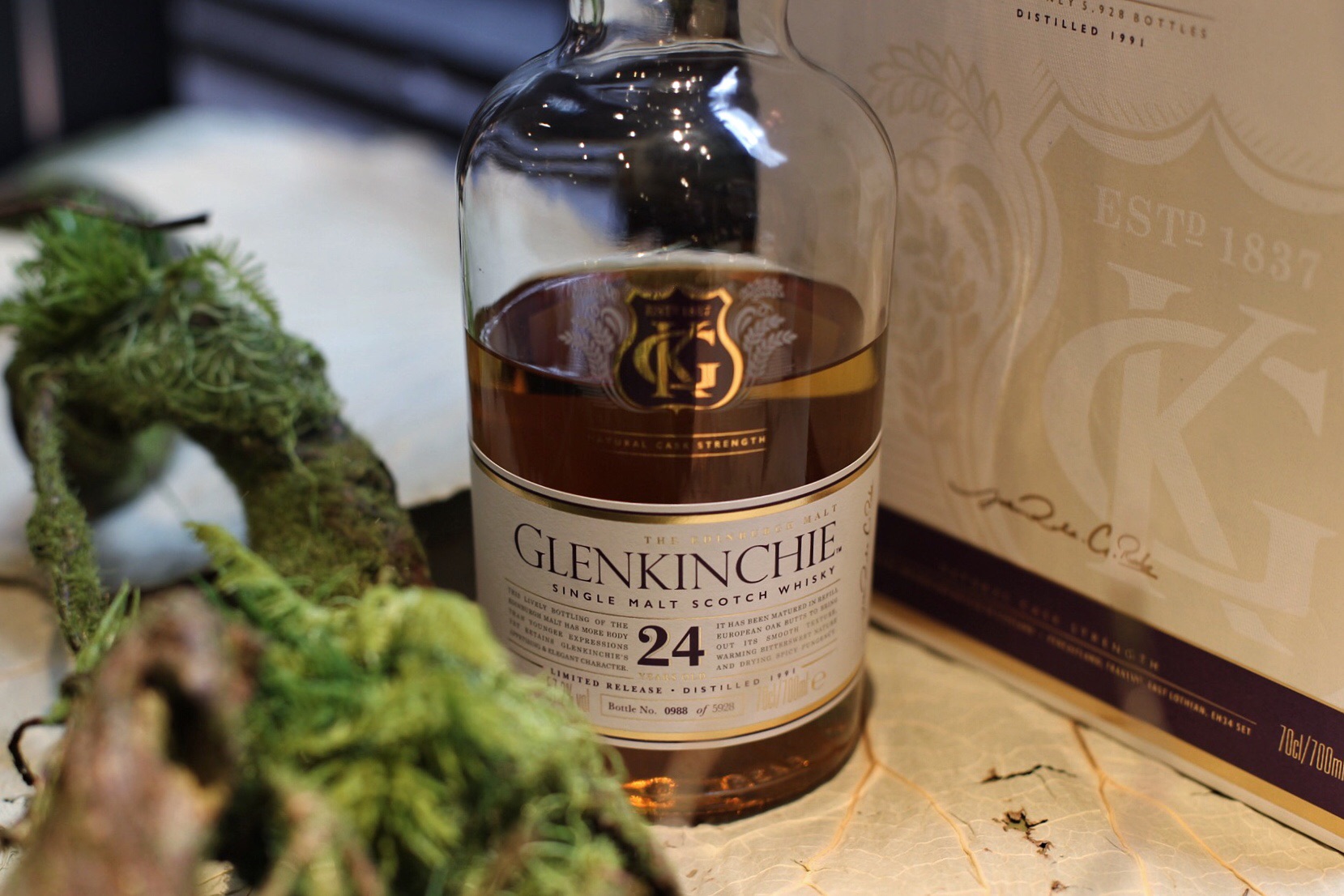
Glenkinchie 1991 24 YO 57.2% ABV

As with the Cragganmore, we normally only see two different expressions from this Lowland distillery. This release is the oldest Glenkinchie bottled by Diageo, having been matured in European Oak for 24 years.

Glenkinchie 24 year old 1991

If you describe the Cragganmore before it as a bit of a slow mover, this would be it’s brighter, zingy counterpart. Sweet fruity citrus, green apple skins, dried flowers and furniture polish on the nose. Tropical fruits, prickly tart pineapple and hot oak on the palate and finish.

We’re told this was fully matured in European Oak, but I’m not sure I would have ever picked that as it’s missing the darker, spicier fragrant wood notes I would normally associate with something that’s spent 24 years slumbering in Quercus Robur (that’s botanical-nerd for European Oak).

Brora 1977 38 YO 48.6% ABV

First appearing in the Special Releases back in 2002, Brora has featured every year since and is always one of the most sought after. Although Brora closed in 1983, many don’t realise that the peated malt runs it’s famous for actually ceased in 1977, so given the vintage of this particular release, it’s a rarity indeed.

Brora 1977 38 year old

Immediately complex on the nose. After mere seconds you know this is the kind of dram you’d love to spend some time with. Thick and oily with a salty maritime note, waxy lemons, sooty coal ash, bees-waxed leather, poached pears and fermenting pineapple. It’s coastal, earthy and has a meatiness to it as well, like a quality wagyu Bresaola.

The delivery on the palate is calm, with big oils, smoked tropical fruits, papaya, green banana skins, shredded green mango, leather and honey and a long sooty, iodine finish. It’s balanced and stately. A dram that slows time down.

When quizzed on how much Brora Diageo still have in stock, Simon responded with ‘we’re told it has been depleted.. but as to what that actually means, I don’t really know’. I think it’s safe to say that there can’t be too much of this still lying around.

Port Ellen 1978 37 YO 55.2% ABV

Featuring every year since the Special Releases were launched back in 2001, these annual Port Ellen bottles are probably the most well-known bottlings from this long-lost distillery. It’s the only distillery that has featured every year and this year’s 37 year old is the not only the oldest Port Ellen bottled under the series, but at the time of writing, it’s the oldest Port Ellen bottled by anyone to date.

Port Ellen 1978 37 year old

On the nose it was surprisingly lively for something of that age. Rich honeyed biscuits, shortbread, oily brine, soft fragrant wood smoke, hessian sacks and ozone. It carries a coastal maritime note but definitely not something you’d describe a peaty. The palate is rich again, honey and cracked pepper, bright tropical fruits, pineapple chunks, smouldering cinders, soot and citrus finishing dry and oaky.

The Special Releases in Australia

Nine of the ten 2016 Diageo Special Releases will shortly be availably through specialist retailers in Australia, with pricing and available quantities listed below.

Auchroisk 25 year old, distilled 1990
RRP $520, 3.954 bottles worldwide, 216 in Australia

Brora 38 year old, distilled 1977
RRP $2,800, 2,984 bottles worldwide, 108 in Australia

Cambus 40 year old, distilled 1975
RRP $1,400, 1,812 bottles worldwide, 68 in Australia

Caol Ila 15 year old, distilled 2000
RRP $170, limited quantities worldwide, 450 in Australia

Cragganmore NAS
RRP $750, 4,932 bottles worldwide, 180 in Australia

Glenkinchie 24 year old, distilled 1991
RRP $520, 5,928 bottles worldwide, 282 in Australia

Linkwood 37 year old, distilled 1978
RRP $1,100, 6,114 bottles worldwide, 300 in Australia

Mannochmore 25 year old, distilled 1990
RRP $550, 3,954 bottles worldwide, 240 in Australia

Port Ellen 37 year old, distilled 1978
RRP $5,000, 2,940 bottles worldwide, 128 in Australia

It was an amazing experience to be able to taste these five and not one I’d be able to repeat without the generosity of Diageo Australia, so a sincere thank you for the great afternoon.

Paul John Single Malt and the man behind the name

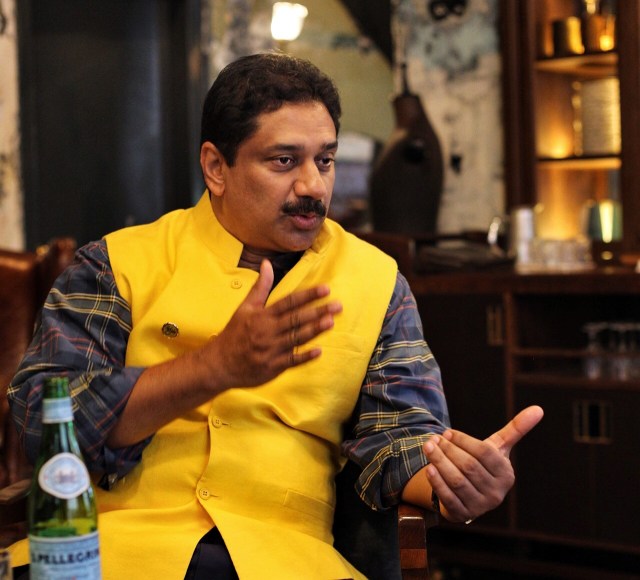
If I go and pick up any whisky bottle on my shelf, more often than not there’ll be some story behind the name on the bottle. It might be named after a valley, a region, a water source or some other aspect related to the liquid inside. Less often though do I pick up a bottle that bares someone’s  full name and even less often than that have I had the chance to actually meet said person. But thanks to a very special invite from Dramnation I can now tick that one off the list after having met Mr Paul John, the man – and the namesake – behind Paul John Indian Single Malt Whisky.

image

He was in town recently to meet some of Sydney’s biggest whisky fans and to also give us a sneak peak at a rather special new release, but more on that shortly. During his fleeting visit I had the chance to sit down with a couple of other whisky regulars and have a casual chat with Paul John, picking up some fantastic insight into the man and the Paul John single malt brand.

Paul John and John Distilleries

To better understand Paul John Indian Single Malt, it’s worth noting that it’s just one of a number of brands in the John Distilleries Pvt Ltd (JDL) portfolio. A portfolio of brandy, wine and whisky that caters heavily to the local Indian market and includes ‘Original Choice’ whisky, which sells over 10 million cases per year in India alone.

Despite JDL’s huge success in their local market with their other brands, Mr John tells us that Paul John Indian Single Malt only launched in India around a year ago. “I’m rather surprised in the response we’ve got so far and how many people are interested in single malt. Especially because of the way they generally drink whisky, which is completely different to the way you’d appreciate a single malt”. When asked about the size of the local market for their single malt, Mr John tells us that in the first year along, around 30-35% of their total output was sold in India and that going forward he sees it as being their largest market. To keep up with future forecasted demand they’ve recently doubled the size of their distillery with the addition of new fermenters and stills, allowing them to now produce 6,000 litres per day.

image

So given that the Indian whisky-drinking culture hasn’t really been focussed on the appreciation of single malts, I asked Paul John what actually led him to setting up a single malt distillery there?

“My father was in the alcohol distribution business and when I got out of college, I worked there”. This led to an alcohol manufacturing licence, which in turn led to the creation of Original Choice which would go on to become one of the largest selling brands in the world.

The birth of Paul John Indian Single Malt

His work took him to the US for eight years and it was there where he was introduced to single malt whisky. “I had the volume of business coming in (from Original Choice) but from a production point of view it wasn’t really giving me the satisfaction, so I started thinking, I could make a world class single malt. Not for the money, but for the passion of being able to make one”.

Mr John started out by doing his homework, firstly to see whether there was any reason why a ‘world class’ single malt couldn’t be made in India. There were numerous trips to distilleries, he tasted their water sources and even carried some back to India to be lab-tested to see whether there was a marked difference between what other distilleries had and what was available to him at home. “If you look back at our history when we were ruled by the British, even the Maharajahs would carry water from India in big steel pots when they visited the UK. India does actually have excellent water”.

When he set out in 2004 to create the single malt that bears his name, the idea of it being of ‘world class’ quality was always at the fore. Mr John told us that although India doesn’t have any regulations on how whisky should be made, he took it upon himself to make sure that he followed all of the regs set out by the Scotch Whisky Association.

We further spoke of cask selection and India’s complex tax regime before we arrived at this, their latest release, the Paul John Oloroso Single Cask.

image

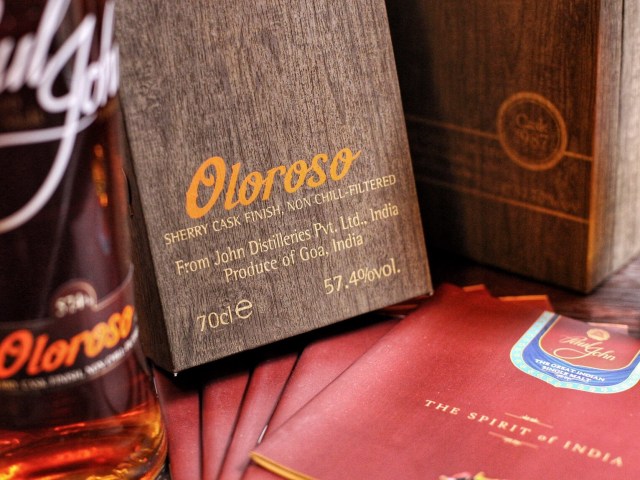
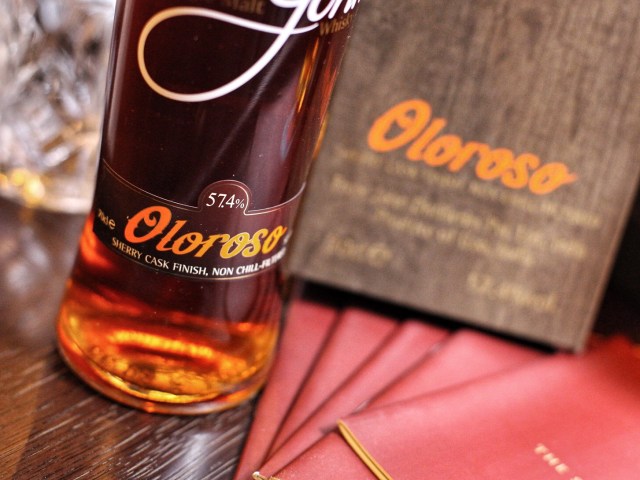
Paul John Oloroso Single Cask, 57.4%

I’m no stranger to Paul John Whisky having tasted, and thoroughly enjoyed, their whole core range here. Beyond that, I’ve also had the pleasure of tasting a special single cask release that was bottled exclusively for the Oak Barrel in Sydney (still available to purchase here). But I’ve never tasted a sherry matured Paul John before, with good reason. This is the very first one they’ve ever done. And by very first, I mean ‘very first’. This is the first ex-sherry cask that’s ever been filled at Paul John, a trial they were doing at the time when they weren’t really sure how it would pan out.

image

After spending three years maturing in an American Oak ex-bourbon bask, the spirit was transferred to a 55 year old ex-sherry butt for a further four years of maturation where it eventually yielded just 252 bottles. Let’s pause and mull over those numbers for a brief moment. A 500-550 litre sherry butt, yielding just 252 700mL/ 750 mL bottles in total after four years (around 175-190 litres of matured whisky). That’s some immense angel’s share!

Nose
On the nose there’s a huge bourbon character and I’m not referring to bourbon cask matured whisky. I mean notes you’d normally find in bourbon whiskey – leather, vanilla, maple syrup and liqueur cherries. But given time the Oloroso cask joins the party with a dry nuttiness, dried fruit and some spice.

Palate
The palate is full of those wonderful oily notes that are abundant across the whole Paul John range. It’s oily, creamy and rich, with spice and leather at the forefront followed by sweetness, dried fruits, wet brown sugar, cake batter and some tobacco notes. Despite the high ABV, it’s balanced and rich and is completely enjoyable.

image

Of the 252 bottles in existence just 18 will make their way to Australia, so if you’d like to get your hands on one you better start doing some leg work now.

It was a truly insightful and rewarding experience to be able to meet and chat with Paul John, so a special thanks is in order to both Dramnation for organising the event and to Mr Paul John and his team for their generosity and time.


Dramnation’s Southern BBQ Boilermakers

We’re pretty lucky here in Sydney when it comes to whisky tastings. It’s seems like every other week there’s a tasting happening somewhere catering to all tastes and all levels of whisky appreciation, from beginners to diehard fans. That’s great for the consumer, but it also means that the ‘market’ can feel a little saturated at times and some of the different offerings seem to meld into one. There are a few that continually stand out though and one of those are the events hosted by Dramnation.

Mainly based in Sydney’s Hills District (but also holding events closer to the CBD), Dramnation have carved a nice little niche for themselves by really focussing on the enjoyment of whisky, especially when it comes to enjoying it alongside food and other beverages.

Dramnation’s Southern BBQ Boilermakers

Ive been to a couple of their events now and was recently invited along as a guest to their Southern BBQ Boilermarkers session. The premise here was simple; three bourbon or rye whiskies matched with three craft beers and three bourbon inspired bites. For this particular event, the whiskey came courtesy of Brown Forman stable and the beers were all from Mountain Goat, so we knew we were in for some quality drinks.

As we entered the old pub section of The Fiddler we were treated to the Dramnation take on a Kentucky Mule, a refreshing and ridiculously drinkable cocktail made with bourbon, ginger beer fresh lime and mint.

A brief introduction followed before we jumped right in to the first pairing (is it still a pairing when there’s three items?). Old Forester’s original 86 proof bourbon was lined up with Mountain Goat’s Pale Ale and a fresh batch of Southern BBQ Beans. These were no ordinary beans though, jam-packed with flavour, a healthy dash of Old Forester bourbon and further cooked in the smoker for an hour with the lid off. Delicious!

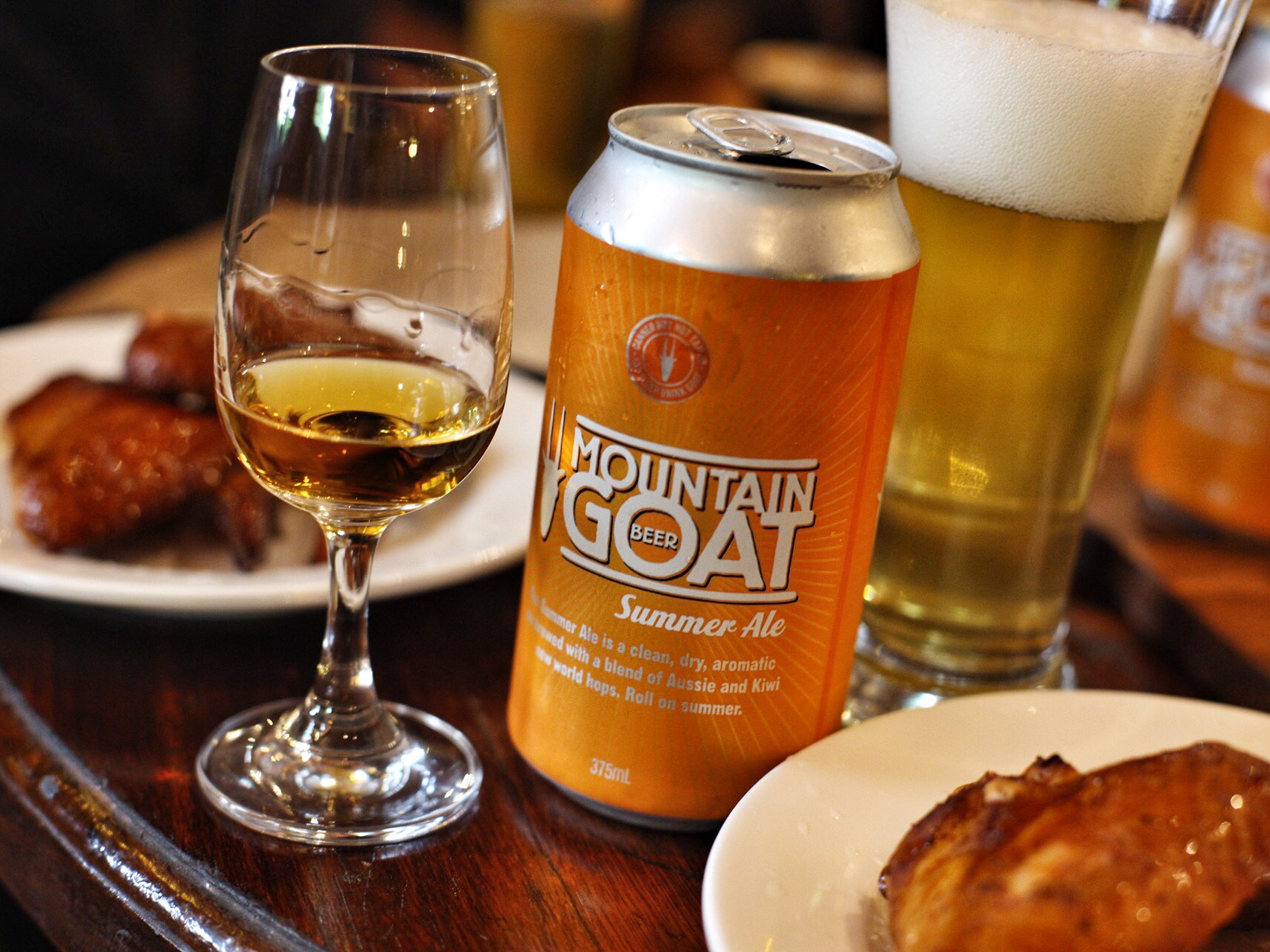
Brown Forman’s Stuart Reeves led us into the second tasting, talking us through the classic Woodford Reserve Bourbon before Dramnation’s Matt Wooler explained the flavour matching with Mountain Goat’s Summer Ale and his bourbon-injected, rubbed, smoked chicken wings.

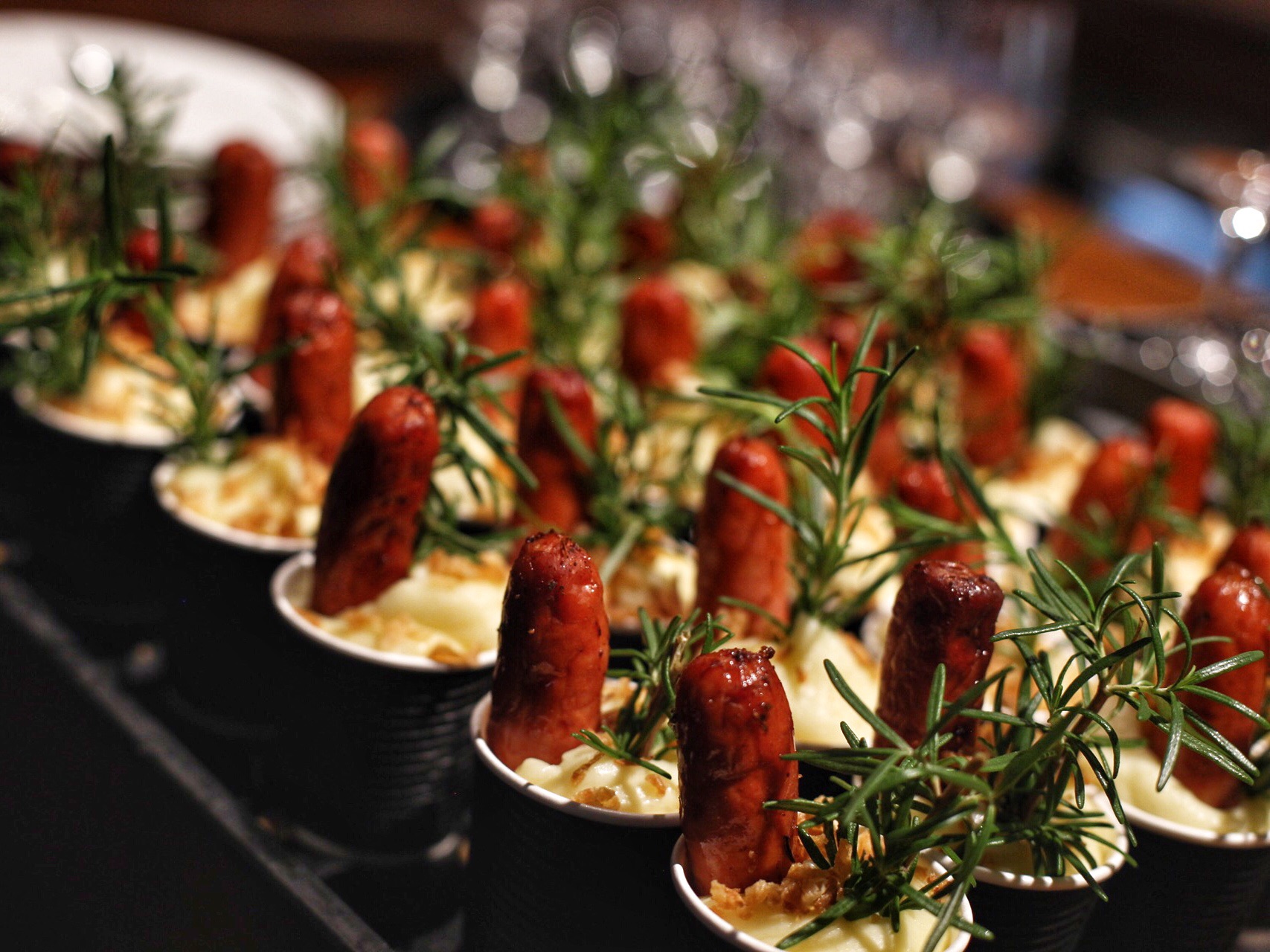
Rounding out the afternoon was my favourite of the trio, Woodford Reserve Rye paired with Mountain Goat’s Fancy Pants (a fantastically malty English style amber/ red ale) and Matt’s very own bangers and mash. Not just any old bangers and mash though! I’m talking sour cream whipped mash with a hot-smoked pork sausage, bourbon onion gravy and a sprig of rosemary. Seriously one of the most comforting things I’ve eaten in a long time!

I had to take off not long after, but the afternoon finished off with a lucky-door draw for a portable charcoal BBQ and I’m told many stayed put for a couple more rounds and some good banter.

I really like classroom or educational-style tastings, they definitely have their place and they’re great when you really want to sit down and study a dram. But let’s face it, the vast majority of the time when you pour a whisky at home that’s not the kind of environment you’re in. You’re more likely to be in an environment like this, one with some tasty food around or a cold brew on hand and Dramnation have really nailed it, playing nicely to that relaxed, comfy vibe – all for the very reasonable price of just $55, or even less ($45) if you booked yourself an early-bird ticket.

For good whisky, good food, good venues and good times, jump onto dramnation.com and book yourself and a couple mates into one of their many upcoming events. You won’t regret it.

An afternoon with Dr Bill Lumsden

The other week Dr Bill Lumsden was in town and the generous people at Moet-Hennessey Australia treated us to an afternoon on Sydney Harbour, hanging out with Dr Bill and celebrating the launch of the new Glenmorangie Bacalta.

image

If you’re not quite sure who he is exactly, he’s the Director of Distilling, Whisky Creation and Whisky Stocks for LVMH. In other words, he’s the creative genius responsible for the consistently great expressions that have been coming out of Glenmorangie and Ardbeg in recent times. He truly is a pioneer of the industry and you need only chat to him for a couple of minutes to realise how passionate and knowledgable he is about all things whisky.

If you’d like to find out more about Dr Bill, have a read of this and this.

image

In case you missed it, this is the Glenmorangie Bacalta. A new Private Edition release that’s been extra-matured in former Madeira wine casks. It’s therefore entirely appropriate that we spent the afternoon on the Søren Larsen, a 68 year old Danish tall ship which has actually been to Madeira.

image

There’s another nautical connection to the Bacalta as well, one I didn’t touch on in my previous post and it has to do with the history of Madeira wines. In my previous post I mentioned the way in which premium Madeira wines are stored in roof cavities in order to heat them (or bake them) in the sun. What I didn’t mention though is where this part of the production process originated.

image

If we go back a few hundred years to the Age of Exploration, the Madeira Islands were a port of call for ships heading east to the Americas and the East Indies. When they docked, casks of Madeira wine would be loaded into their hulls and would be used as ballast whilst out on the high seas. The ships were obviously well and truly exposed to the elements, including the heat of the sun beating down on their hulls, thus, baking the wine. It wasn’t long before someone caught on to the fact that this has a profound effect on the liquid inside, so back on land they tried to replicate it.

These days many Madeira wines are simply heated in stainless tanks. The more premium or traditional ones though are stored high up in the bodegas/ wineries so they were exposed to the sun and heat. This was the process used to create the wines that seasoned the casks used for Bacalta.

image

Speaking with Dr Bill about the Glenmorangie Bacalta he’s quite happy to tell you that this is very likely to be the last time we’ll see a Madeira wine-finished whisky from Glenmorangie. Well, under his reign, at least. The process he had to go through in order to get quality seasonsed casks was so difficult, expensive and time consuming that he can’t see it happening again. So if you’re still on the fence about this one, but you like the idea of it, don’t snooze too long.

image

A short while after heading out on the Søren Larsen some seriously ominous clouds started to roll in, thunder could be heard in the distance and we witnessed a pretty epic light show. As I hung off the ship’s bow I managed to snap this shot right before the heavens opened.

image

We then got wet. Very, very wet. But it was totally worth it.

As rain lashed us from every direction and as Dr Bill’s poncho flapped in the wind he proclaimed ‘I’ve never done a whisky tasting in the middle of a thunder storm before!’ Neither had I, but it was loads of fun. An afternoon I won’t be forgetting any time soon.