Diageo Special Releases Collection

Tasting and Review

There are so many so-called ‘special’ or ‘limited’ release bottles coming out these days that it’s virtually impossible to keep up with them all, even for someone like me who spends a good deal of time following everything whisky online. But if there’s one series that has the pedigree and really does deserve the ‘special/ limited’ moniker, surely it’s the annual Diageo Special Releases series.

Diageo Special Releases

Simon McGoram, Australian National Whisky Ambassador for Diageo, tells us that over the past 16 years there have been more than 143 different bottlings released under the annual series, including regular appearances by rarities including Port Ellen and Brora. This year’s (2016) release is no exception, with bottles from these two closed distilleries appearing again, alongside eight other distilleries from Diageo’s extensive portfolio. Before getting into my tasting notes, it’s worth exploring exactly what these bottles are and what they represent.

Diageo Special Releases Tasting

Diageo owns more distilleries in Scotland than any other company (27, not including closed distilleries). Whisky from some of these distilleries can be found in bars and on store shelves the world over. Others though are seldom seen as a single malt or grain (when was the last time you saw a Linkwood or Cambus on the shelf?). The annual Special Releases give Diageo a chance to change all of that though and they release official bottles of single malt (and grain) from their portfolio that are rarely seen, or considerably different to the standard core expressions you might encounter.

Port Ellen Brora

The 2016 Special Releases featured ten different bottles and I recently had the chance to sit down and taste the following five.

Caol Ila 2000 15 YO unpeated 61.5% ABV

Whilst Caol Ila is famed for their heavily peated whisky, for quite a few years now the Special Releases series has featured an unpeated Caol Ila expression. Interestingly it’s not just a case of producing standard Caol Ila with unpeated malt. Simon informed us that they actually use a longer fermentation to specifically develop more fruity esters in the unpeated spirit. This particular release has then been matured in a combination of refill American Oak casks and European Oak butts.
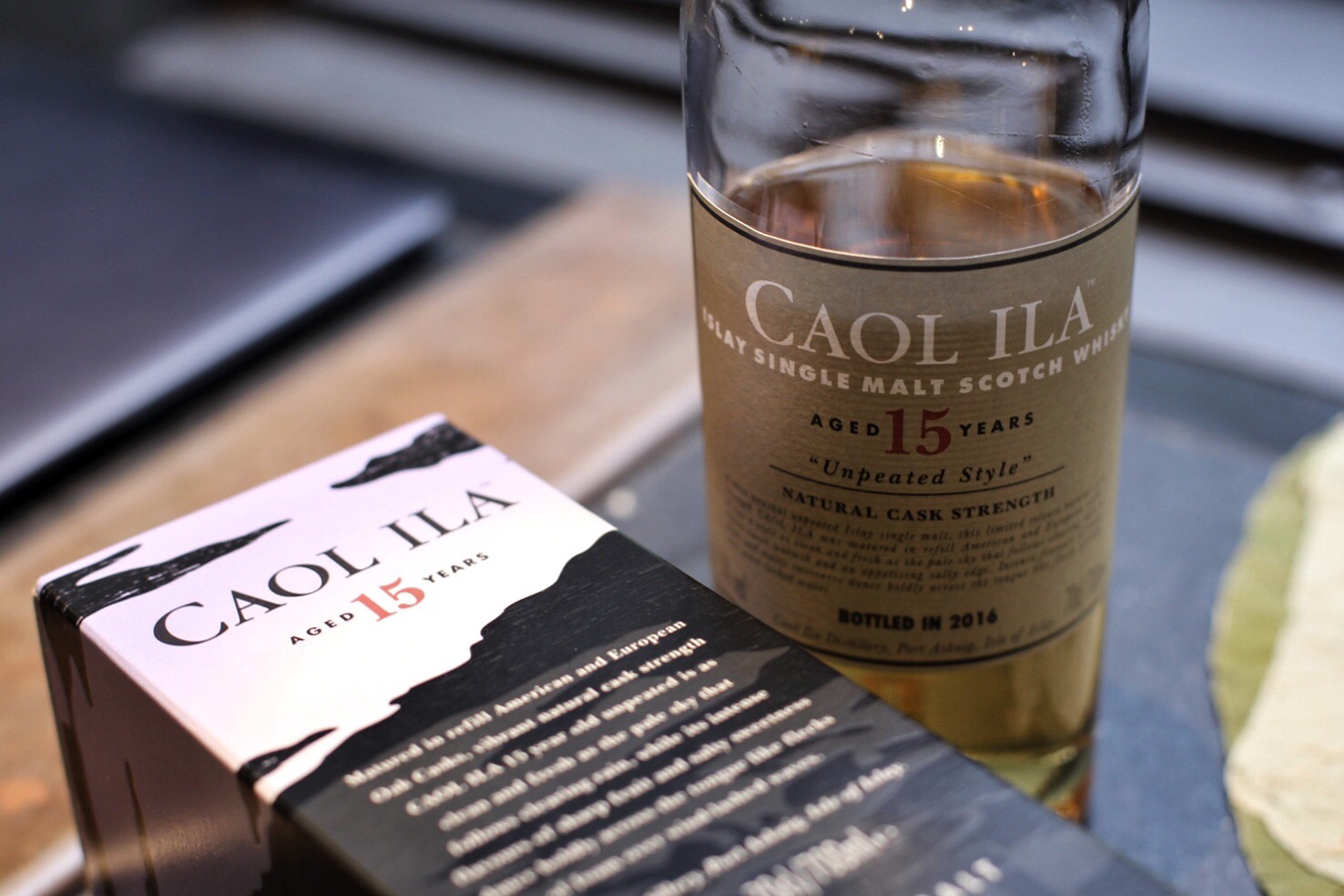
Caol Ila 2000 unpeated

On the nose it’s definitely quite vibrant and fruity, with waxy orchard fruits, pine , sweet grassy notes and toffee. Despite being unpeated, there’s still a good whiff of steam-train smoky soot in the background but overall it’s quite a clean nose. The palate was thick and oily, almost syrupy in mouthfeel. More of those waxy orchard fruits, quite a lot of dry cereal, nutty wood spice and lemon skins with that dry coal soot in the background.

I’ve always enjoyed these unpeated Caol Ilas (the Stitchell Reserve is one of my favourites) and this one was no exception. I would love to see a well-aged (20 year +) unpeated Caol Ila in this series one day. I suspect it would be pretty magical.

Cragganmore (No Age Statement) 55.7% ABV

We’re used to seeing Cragganmore with an age statement (the 12 year old and the annual Distillers Edition) but this year’s Special Release is the only one in the lineup presented with no age statement. That doesn’t mean it’s young, of course, but an interesting move, similar to last year’s Clynelish.

Cragganmore Special Releases

Thick and honeyed on the nose with porridge and spiced stewed fruits. I found it to be quite oily, earthy and almost savoury, with nutty cereal notes on the back. Sweet and rich on the palate with a savoury apple tart note, citrus pith, baked stone fruit, tannic and quite spicy on the finish.

It doesn’t exactly leap out of the glass, but it delivered such a rich spirit character with loads of texture. The milkshake of the lineup.

Glenkinchie 1991 24 YO 57.2% ABV

As with the Cragganmore, we normally only see two different expressions from this Lowland distillery. This release is the oldest Glenkinchie bottled by Diageo, having been matured in European Oak for 24 years.
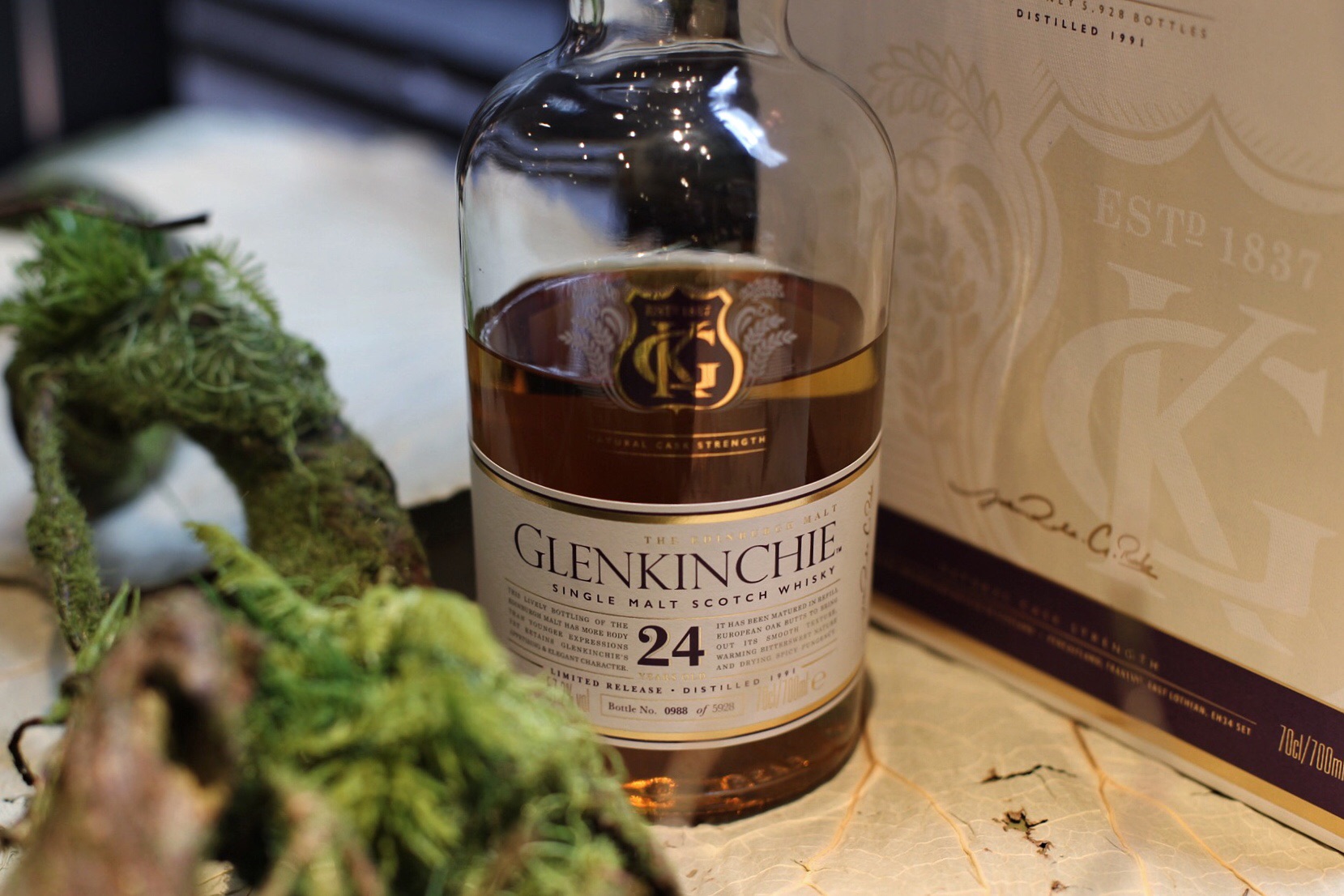
Glenkinchie 24 year old 1991

If you describe the Cragganmore before it as a bit of a slow mover, this would be it’s brighter, zingy counterpart. Sweet fruity citrus, green apple skins, dried flowers and furniture polish on the nose. Tropical fruits, prickly tart pineapple and hot oak on the palate and finish.

We’re told this was fully matured in European Oak, but I’m not sure I would have ever picked that as it’s missing the darker, spicier fragrant wood notes I would normally associate with something that’s spent 24 years slumbering in Quercus Robur (that’s botanical-nerd for European Oak).

Brora 1977 38 YO 48.6% ABV

First appearing in the Special Releases back in 2002, Brora has featured every year since and is always one of the most sought after. Although Brora closed in 1983, many don’t realise that the peated malt runs it’s famous for actually ceased in 1977, so given the vintage of this particular release, it’s a rarity indeed.

Brora 1977 38 year old

Immediately complex on the nose. After mere seconds you know this is the kind of dram you’d love to spend some time with. Thick and oily with a salty maritime note, waxy lemons, sooty coal ash, bees-waxed leather, poached pears and fermenting pineapple. It’s coastal, earthy and has a meatiness to it as well, like a quality wagyu Bresaola.

The delivery on the palate is calm, with big oils, smoked tropical fruits, papaya, green banana skins, shredded green mango, leather and honey and a long sooty, iodine finish. It’s balanced and stately. A dram that slows time down.

When quizzed on how much Brora Diageo still have in stock, Simon responded with ‘we’re told it has been depleted.. but as to what that actually means, I don’t really know’. I think it’s safe to say that there can’t be too much of this still lying around.

Port Ellen 1978 37 YO 55.2% ABV

Featuring every year since the Special Releases were launched back in 2001, these annual Port Ellen bottles are probably the most well-known bottlings from this long-lost distillery. It’s the only distillery that has featured every year and this year’s 37 year old is the not only the oldest Port Ellen bottled under the series, but at the time of writing, it’s the oldest Port Ellen bottled by anyone to date.

Port Ellen 1978 37 year old

On the nose it was surprisingly lively for something of that age. Rich honeyed biscuits, shortbread, oily brine, soft fragrant wood smoke, hessian sacks and ozone. It carries a coastal maritime note but definitely not something you’d describe a peaty. The palate is rich again, honey and cracked pepper, bright tropical fruits, pineapple chunks, smouldering cinders, soot and citrus finishing dry and oaky.

The Special Releases in Australia

Nine of the ten 2016 Diageo Special Releases will shortly be availably through specialist retailers in Australia, with pricing and available quantities listed below.

Auchroisk 25 year old, distilled 1990
RRP $520, 3.954 bottles worldwide, 216 in Australia

Brora 38 year old, distilled 1977
RRP $2,800, 2,984 bottles worldwide, 108 in Australia

Cambus 40 year old, distilled 1975
RRP $1,400, 1,812 bottles worldwide, 68 in Australia

Caol Ila 15 year old, distilled 2000
RRP $170, limited quantities worldwide, 450 in Australia

Cragganmore NAS
RRP $750, 4,932 bottles worldwide, 180 in Australia

Glenkinchie 24 year old, distilled 1991
RRP $520, 5,928 bottles worldwide, 282 in Australia

Linkwood 37 year old, distilled 1978
RRP $1,100, 6,114 bottles worldwide, 300 in Australia

Mannochmore 25 year old, distilled 1990
RRP $550, 3,954 bottles worldwide, 240 in Australia

Port Ellen 37 year old, distilled 1978
RRP $5,000, 2,940 bottles worldwide, 128 in Australia

It was an amazing experience to be able to taste these five and not one I’d be able to repeat without the generosity of Diageo Australia, so a sincere thank you for the great afternoon.
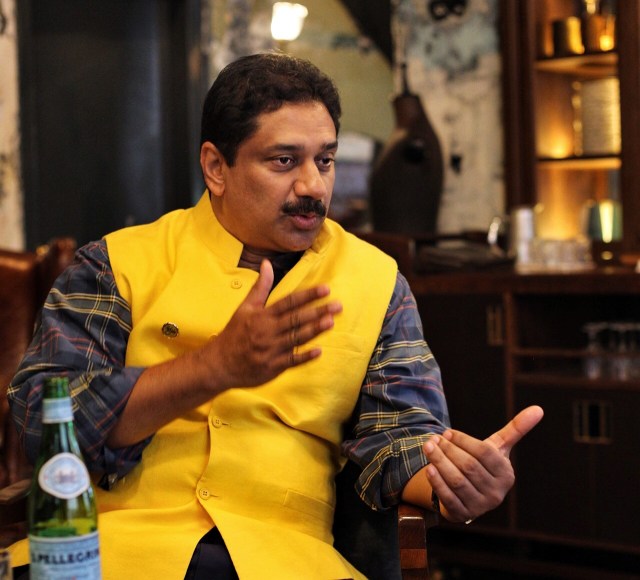
Paul John Single Malt and the man behind the name

If I go and pick up any whisky bottle on my shelf, more often than not there’ll be some story behind the name on the bottle. It might be named after a valley, a region, a water source or some other aspect related to the liquid inside. Less often though do I pick up a bottle that bares someone’s  full name and even less often than that have I had the chance to actually meet said person. But thanks to a very special invite from Dramnation I can now tick that one off the list after having met Mr Paul John, the man – and the namesake – behind Paul John Indian Single Malt Whisky.

image

He was in town recently to meet some of Sydney’s biggest whisky fans and to also give us a sneak peak at a rather special new release, but more on that shortly. During his fleeting visit I had the chance to sit down with a couple of other whisky regulars and have a casual chat with Paul John, picking up some fantastic insight into the man and the Paul John single malt brand.

Paul John and John Distilleries

To better understand Paul John Indian Single Malt, it’s worth noting that it’s just one of a number of brands in the John Distilleries Pvt Ltd (JDL) portfolio. A portfolio of brandy, wine and whisky that caters heavily to the local Indian market and includes ‘Original Choice’ whisky, which sells over 10 million cases per year in India alone.

Despite JDL’s huge success in their local market with their other brands, Mr John tells us that Paul John Indian Single Malt only launched in India around a year ago. “I’m rather surprised in the response we’ve got so far and how many people are interested in single malt. Especially because of the way they generally drink whisky, which is completely different to the way you’d appreciate a single malt”. When asked about the size of the local market for their single malt, Mr John tells us that in the first year along, around 30-35% of their total output was sold in India and that going forward he sees it as being their largest market. To keep up with future forecasted demand they’ve recently doubled the size of their distillery with the addition of new fermenters and stills, allowing them to now produce 6,000 litres per day.

image

So given that the Indian whisky-drinking culture hasn’t really been focussed on the appreciation of single malts, I asked Paul John what actually led him to setting up a single malt distillery there?

“My father was in the alcohol distribution business and when I got out of college, I worked there”. This led to an alcohol manufacturing licence, which in turn led to the creation of Original Choice which would go on to become one of the largest selling brands in the world.

The birth of Paul John Indian Single Malt

His work took him to the US for eight years and it was there where he was introduced to single malt whisky. “I had the volume of business coming in (from Original Choice) but from a production point of view it wasn’t really giving me the satisfaction, so I started thinking, I could make a world class single malt. Not for the money, but for the passion of being able to make one”.

Mr John started out by doing his homework, firstly to see whether there was any reason why a ‘world class’ single malt couldn’t be made in India. There were numerous trips to distilleries, he tasted their water sources and even carried some back to India to be lab-tested to see whether there was a marked difference between what other distilleries had and what was available to him at home. “If you look back at our history when we were ruled by the British, even the Maharajahs would carry water from India in big steel pots when they visited the UK. India does actually have excellent water”.

When he set out in 2004 to create the single malt that bears his name, the idea of it being of ‘world class’ quality was always at the fore. Mr John told us that although India doesn’t have any regulations on how whisky should be made, he took it upon himself to make sure that he followed all of the regs set out by the Scotch Whisky Association.

We further spoke of cask selection and India’s complex tax regime before we arrived at this, their latest release, the Paul John Oloroso Single Cask.

image

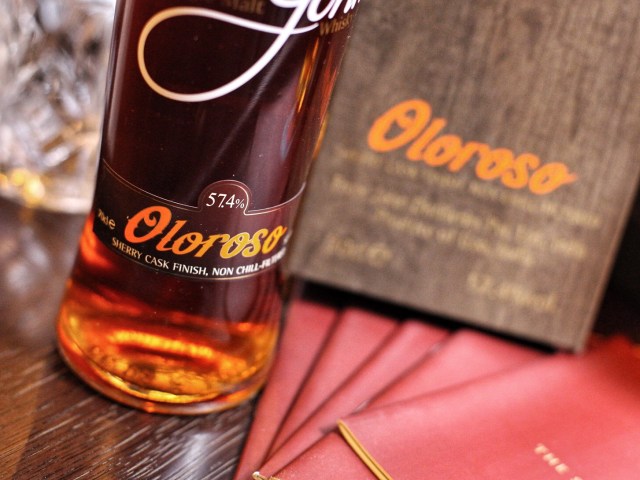
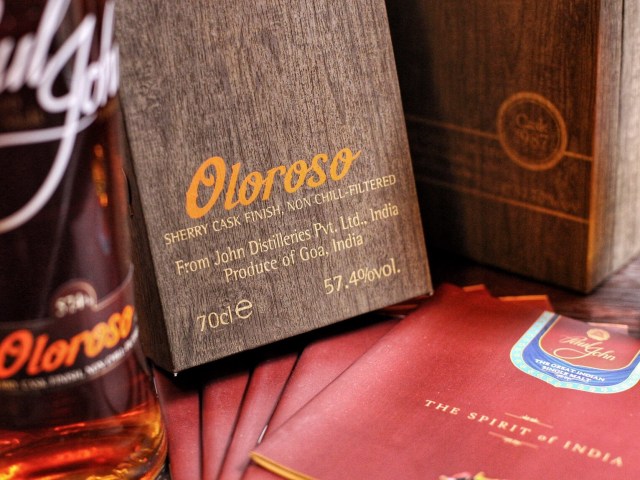
Paul John Oloroso Single Cask, 57.4%

I’m no stranger to Paul John Whisky having tasted, and thoroughly enjoyed, their whole core range here. Beyond that, I’ve also had the pleasure of tasting a special single cask release that was bottled exclusively for the Oak Barrel in Sydney (still available to purchase here). But I’ve never tasted a sherry matured Paul John before, with good reason. This is the very first one they’ve ever done. And by very first, I mean ‘very first’. This is the first ex-sherry cask that’s ever been filled at Paul John, a trial they were doing at the time when they weren’t really sure how it would pan out.

image

After spending three years maturing in an American Oak ex-bourbon bask, the spirit was transferred to a 55 year old ex-sherry butt for a further four years of maturation where it eventually yielded just 252 bottles. Let’s pause and mull over those numbers for a brief moment. A 500-550 litre sherry butt, yielding just 252 700mL/ 750 mL bottles in total after four years (around 175-190 litres of matured whisky). That’s some immense angel’s share!

Nose
On the nose there’s a huge bourbon character and I’m not referring to bourbon cask matured whisky. I mean notes you’d normally find in bourbon whiskey – leather, vanilla, maple syrup and liqueur cherries. But given time the Oloroso cask joins the party with a dry nuttiness, dried fruit and some spice.

Palate
The palate is full of those wonderful oily notes that are abundant across the whole Paul John range. It’s oily, creamy and rich, with spice and leather at the forefront followed by sweetness, dried fruits, wet brown sugar, cake batter and some tobacco notes. Despite the high ABV, it’s balanced and rich and is completely enjoyable.

image

Of the 252 bottles in existence just 18 will make their way to Australia, so if you’d like to get your hands on one you better start doing some leg work now.

It was a truly insightful and rewarding experience to be able to meet and chat with Paul John, so a special thanks is in order to both Dramnation for organising the event and to Mr Paul John and his team for their generosity and time.


Glenmorangie Bacalta Review

Around this time each year, Glenmorangie release a new, limited expression. An experimental and innovative whisky of sorts, if you will. It’s the one time of year Dr Bill Lumsden gets to showcase something a little bit different. A whisky that falls outside the bounds of what people normally think of when they look to Glenmorangie’s house-style. The whiskies released under this banner are known as the Private Edition releases and they’re always a bit of fun.

image

Last year I reviewed the Milsean, a Glenmorangie matured in toasted ex-wine casks that was packed with sweet-shop flavours. The year before, I had the great pleasure of attending a dinner with Dr Bill Lumsden for the launch of Glenmorangie Tusail. Beyond that, I’ve tried (or owned) every one of the Private Edition releases, so you could say that I’m a pretty big fan.

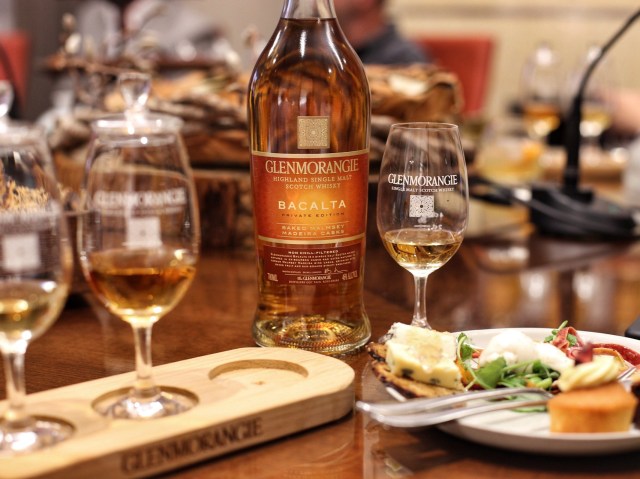
This year marks the eighth Private Edition release and in a way, Dr Bill and his team have taken us back in time to the early 2000s when Glenmorangie had a Madeira ‘wood finished’ whisky in their core range. Enter, the Glenmorangie Bacalta.

image

The launch event

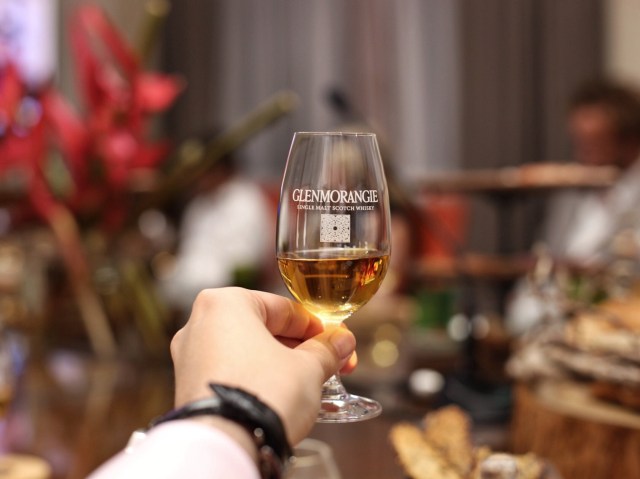
Here in Sydney, we’re pretty far away from the Scottish Highlands, so throwing together a tasting with Dr Bill isn’t exactly the easiest task. However, the wonderful world of technology solves that for us and the other week I had the pleasure of attending a Google-Hangout tasting. Invitees assembled in the classy surrounds of the Old Clare Hotel in Sydney and as the clock struck 9.00pm here, it had just ticked over 10.00am in the Highlands. The live feed came up, guests joined in from Mumbai and Seoul and we were greeted with the ever-jovial voices of Dr Bill Lumsden and Brendan McCarron (Head of Maturing Stocks).

What is Madeira exactly?

To better understand the magic of Glenmorange Bacalta (Scottish Gaelic for ‘Baked’), it helps to understand what Madeira wine is and how it’s produced. Thankfully, Dr Bill gave us the 101 on both and it went something a little like this.

image

Contrary to the way some people use the term, ‘Madeira’ isn’t really a form of wine in the same sense that sherry is. Madeira is actually an autonomous archipelago of Portugal found off the west coast of Morocco. On Madeira they make fortified wines from a variety of grapes, but the richest is Malmsey wine, made from the Malvasia grape.

What makes Madeira wine unique is the way in which it’s treated during maturation. Barrels are stored in the roof cavities of the bodegas where they’re heated by the sun and essentially ‘baked’ (hence the ‘Bacalta’ name). Leaving barrels of wine in these conditions has two distinct effects. First, it drastically changes the characteristic of the wine itself, oxidising it and bringing out the tart acidic characters that define Madeira wines. Secondly, the unforgiving conditions deteriorate the casks themselves and as time goes on, they actually start to fall apart and leak due to the harsh conditions.

With those harsh conditions very few ex-wine barrels make it out alive, so finding a consistent supply of casks in terms of quality and quantity is incredible difficult. It’s this challenge that ultimately led to the demise of the original Madeira wood finish expression back in the early 2000s.

image

Piecing together the Glenmorangie Bacalta

Not one to give up though, around seven or eight years ago Dr Bill embarked on a challenge to try things again. This time though it would be a bespoke project, one where he and his team would control every aspect of the process. A wine producer was found and Speyside Cooperage were engaged to construct a series of 250L hogsheads from tight grain, slow growth, air-seasoned American Oak. The casks were heavily toasted and shipped to Madeira to be filled with Malmsey wine, where they then sat and seasoned for two whole years.

After being brought back to Scotland they were filled with ten year old Glenmorangie and were set aside for what Dr Bill thought would be a three to four year extra maturation period. He and Brendan McCarron began tasting the casks around the two year mark and believed that at that point they’d already hit the sweet spot they were looking for. One where the balance was just right between the strong notes of the Madeira wine and the house character of the Glenmorangie spirit. So for those who like numbers, the Bacalta is essentially 12 years old.

image

Glenmorangie Bacalta Review

So with that context in place, we tasted our way through the Glenmorangie Original 10 year old, the Glenmorangie Lasanta (extra-matured in ex-sherry casks) and finally, the hero of the evening, the new Glenmorangie Bacalta.

Nose

On the nose there’s an immediate juxtaposition of aromas, from dryness (like oak, dried tobacco leaves and cedar wood spice), to sweetness (hard toffee, baked apples, tarte tatin and pastry dough), to an acidic element (citrus skins and aged sherry vinegar). It has a complex nose that flits between sweet and savoury.

Palate

Oily, creamy and sweet on entry, but immediately backed up by spice and stone fruit. Think peaches and apricots, orange marmalade, honeycomb, hard toffee and citrus zest. There’s a nuttiness on the finish with a peppery spice. The addition of water rounds out the palate and opens up the nose nicely.

image

I’ve enjoyed each of the Private Edition expressions I’ve tried to date. Some more-so than others, but this year’s release has really stepped up to the plate. The Bacalta is genuinely, genuinely good. It strikes this wonderful balance between sweetness, acidity, fruit and oak. To my nose and palate it’s expressive, comes across as maturely integrated and nothing dominates too heavily. I’ve not tasted the original Glenmorangie 15 year old Madeira wood finish, but I struggle to imagine it being any better than this.

The new, limited edition Glenmorangie Bacalta is available in global markets now.

Westland Whiskey

Craft distillers of the world, take note

It seems like every other month or two someone, somewhere in the world is setting up the newest, craftiest ‘craft’ distillery. Don’t let the term ‘craft’ fool you into thinking that they’re all created equally though. Some of these ventures are far better thought-out than others and one of the ones that has really caught my eye is Seattle’s Westland Distillery. But we’ll get to that in a sec.
Often when I’m trying a new whisky for the first time I like to do a bit of homework and find out as much as I can about what’s in my glass. No, it doesn’t always add to my enjoyment, but occasionally it does provide me with new-found appreciation for what I’m drinking and it also helps to satisfy my inner whisky nerd.

Westland Whiskey.jpg

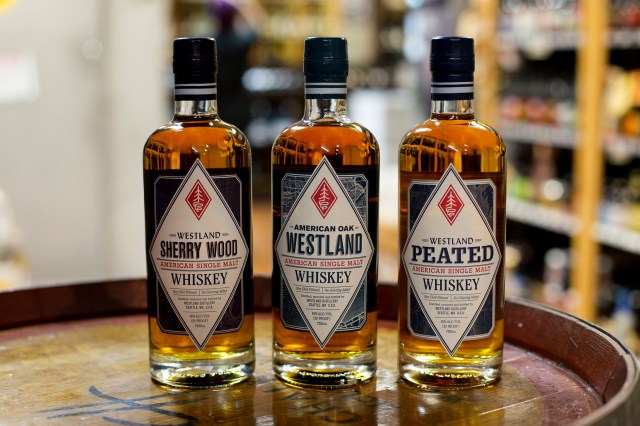
So when I was recently sent a few samples of Westland’s core range by the new Australian importer – Alba Whisky – I went on this same homework journey and the amount of information that was forthcoming really surprised me. With many big, established whisky brands, getting any kind of detail out of them can sometimes be like pulling teeth. But a few emails back and forth between Alba and myself yielded a goldmine of information and in my mind, it would be a total shame not to share it. It’s a long post, but I reckon it’s worth it.

Westland’s grain bill

All single malt whisky starts off with the same base ingredient of malted barley. But at Westland they’ve taken this slightly further and have come up with a “five-malt” grain bill which is used in their American Oak expression (among others), and it contains:
– 70% Pale malt from Washington State
– 10% Munich malt from Washington State
– 12% Extra Special Malt from Wisconsin
– 4% Brown malt from the UK
– 4% Pale Chocolate malt from the UK

The whole concept of a grain bill is not something you hear about that often with Scottish whisky and is far more prevalent in the bourbon and beer worlds. But Westland believe that each one of these malts adds a slightly different dimension of malt flavour, which is something they want you to taste in their whiskeys.

The source of their malt

You’ll note in the above list that most of the malt is sourced locally from Washington State and there’s a good reason for that. According to Westland, Washington State has two distinct growing regions that make it one of the best places in the world to grow barley. The first being the Skagit Valley (about 60 miles north of Seattle) and the second being Palouse (about 250 miles east of Seattle), which roughly correlates to a UK and continental European climate respectively. Climate is just one aspect of it though. Many of the farmers in Washington State operate outside of the commodity system which allows them to grow barley varietals that aren’t accepted on the commodity market. What that means is that in Washington State there’s effectively a system of academics (barley breeders), farmers, maltsters and distillers who are all working together outside of the commodities and can focus on new varietals. For Westland, this means that they’ve already been able to lay down casks with three new varietals of barley that no other distiller anywhere in the world has access to. And they supposedly have many more coming.

Westland Single Cask.jpg

Peated malt is absent from the above, but in the case of Westland’s peated expression, sometimes their peated malt comes from Scotland’s Baird’s Maltings, alternatively they source it locally from Washington State at Skagit Valley Malting. Irrespective of where the malt is coming from, they target their peating levels to 55 parts per million (PPM).

The yeast

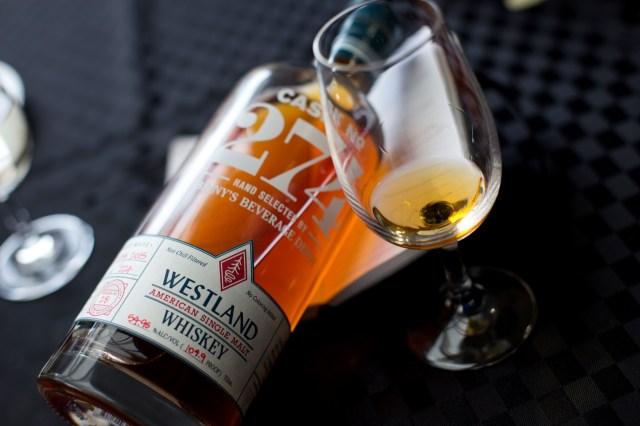
At Westland they use nothing but brewer’s yeast, specifically a Belgian saison strain which they believe gives them “amazing citrus, red fruit, and spice element that balances the malt components quite nicely”. I’ve tasted a single cask expression that was bottled for Binny’s in the US and it had the most outrageous stout profile I’ve ever tasted in a whiskey, with bucket loads of roasted, toasty malt, chocolate stout notes. No doubt the chocolate malt barley played a big role in this, but I’m convinced that the brewers yeast was also a big contributor to that true, stout flavour profile.

Wood and maturation

For their new oak casks, Westland fill exclusively into casks made from slow-grown, air-dried oak which has been dried for a minimum period of 18 months where they believe they see more refined oak notes and less bitter and resinous flavours. When it comes to their ex-sherry casks, they work with Toneleria del Sur to source both PX and oloroso sherry casks. In a rather costly move, they ship the casks whole from Spain instead of breaking them down into staves for transport.
If you’re wondering why – Westland believe it provides them with a certain depth and fresh sherry character that can’t be imitated. They’ve also recently released a pioneering whiskey in the States that has been matured in a local species of white oak, Quercus garryana. This oak only grows in the Pacific Northwest around the cities of Seattle, Vancouver B.C. and Portland.

When it comes to maturation, Westland mature their casks outside of the city of Seattle, in a coastal town called Hoquiam, where humidity is always high, rainfall is prevalent, it rarely gets warmer than 23 C and it never freezes.

The whiskey

One of Westland’s chief concerns is balance.  They want the wood to be a part of the whiskey but not all of it and they’re upfront in saying that they want their whiskey to derive flavour from three sources: the malt, the yeast/ fermentation, and the cask. On that note, let’s see how that actually plays out.

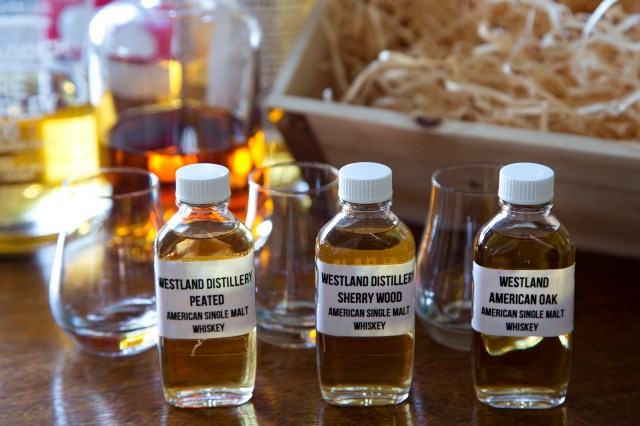
Westland samples.jpg

Westland American Oak

The nose is loaded with rich malt notes, stewed apples and pears, light citrus and pastry sprinkled with cinnamon and sugar (the thick kind you’d find in the crust of a homemade apple pie). There’s a sweetness to it as well that I can’t quite put my finger on. It’s balanced, integrated and cosy.

Sweet, round and creamy on entry with some nice oily notes followed immediately by a massive malt attack. Those heavier roasted/ dark malts really burst through here with flavours of chocolate-coated coffee beans, powdered drinking chocolate and roasted nuts. Anyone who’s a fan of a good dark beer (or even the Glenmorangie Signet) will find much to love here.

Westland Sherry Oak

The sherry influence is immediately apparent on the nose here, especially off the back of the American Oak expression. There’s an elevated sweet note, malt again, tart mixed dried fruits (dehydrated apples and apricots included!)

Sweet, round and creamy again on entry, showing a whole lot more restraint when it comes to the malt notes. There are still hints of those roasted, toasty notes (especially on the finish), but it seems softer, more balanced and integrated on the palate than the American Oak expression. Liquified pastry with a hint of boozy cherry-chocolate brownie (go on, imagine it!)

Westland Peated Whiskey

Malty and oily on the nose with an underlying soft smoke, char-grilled pears and citrus. It’s quite a dry nose. It’s creamy, sweet and oily again on entry, but there’s a tangy, sooty, earthy peat note that soon becomes apparent. I’m not sure I’d call it smoky and I definitely wouldn’t call it coastal (like I would a Caol Ila), but it’s more mature and earthy. Again, a really nicely balanced and integrated palate that shows off those roasted chocolate notes on the finish.

In the words of Westland “We do not want to simply replicate Scottish whiskey in the United States, we want to make as authentic a single malt whiskey as we can. The sum total of Westland is a mixture of tradition, local terroir in the ingredients and the innovative culture of the Pacific Northwest and America at large. All of these factors come together to make our single malt whiskey as authentic and compelling as possible”.

I think that sums it up pretty nicely. Westland might be fairly young in the scheme of things, but boy are they already hitting home runs and they still have plenty of rock-solid ideas up their sleeve. Whilst it can be difficult for the established players to experiment to this degree, it’s something that smaller ‘craft’ distillers can certainly do and Westland are producing some mighty impressive results.

The Balvenie Craft Bar is back!

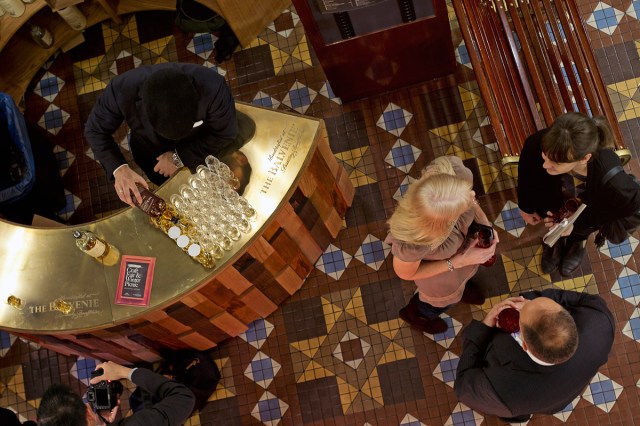
The Balvenie will be hosting their annual pop-up Craft Bar next week (25-28 August) at the historic Strand Arcade in Sydney. I went along last year and had a great time (you can check it out here!)

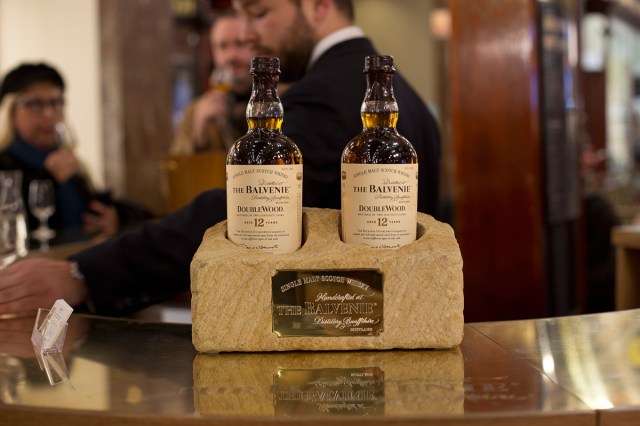
Balvenie display

This time ‘round the 12 year old Balvenie DoubleWood will be on taste alongside a series of craft masterclasses hosted by some very well-respected local artisans. From guitar makers, to book binders, to milliners and shoe makers, there’s bound to be something for everyone.

Bar

As always, it’s completely free, so if you like the sound of sipping a Balvenie whilst hearing about your favourite (or perhaps a new) craft, visit this link to see the full programme and sign yourself up!